Does the heart have its own brain? Yes, a little one
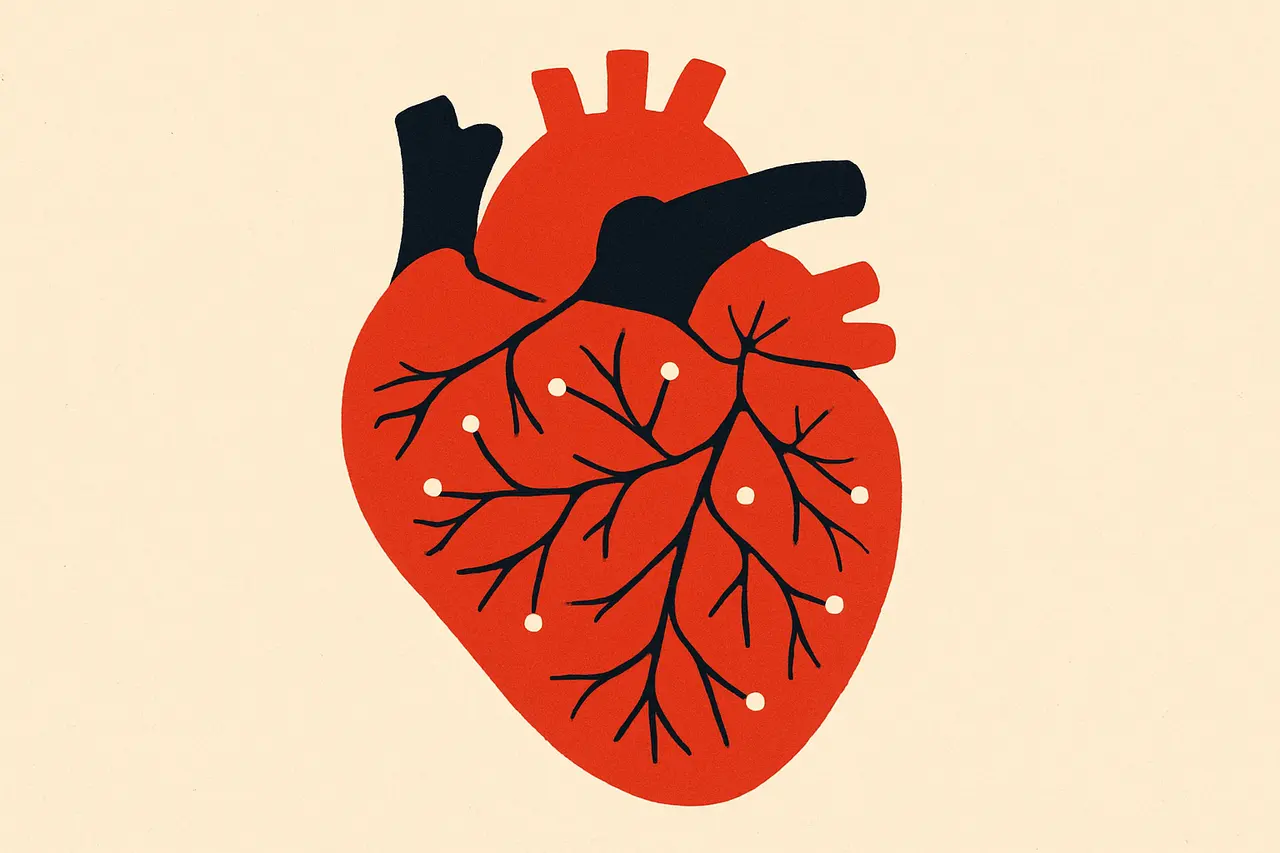
A sparse web of neurons in the heart wall adjusts every beat locally, and a 2026 Yale study found animal hearts fail without some of them.
Your heart has its own intrinsic cardiac nervous system, a network of neurons and ganglia in its walls that researchers nickname the heart’s “little brain.” It fine-tunes heart rate, conduction and contraction, working alongside, and under the control of, the brain and spinal cord.
Despite the nickname, it does not think or feel. It is a local reflex network built from three classes of nerve cell: sensory (afferent) neurons that monitor conditions in and around the heart, motor (efferent) neurons that adjust rate and force, and local circuit neurons that wire the ganglia together. Having sensors, processors and effectors on site lets the heart make some adjustments locally instead of waiting for orders from above.
How little is the little brain?
Very. Cardiac neurons make up less than 0.01% of the cells in heart tissue, and they are scattered thinly across the organ. A detailed map of the rabbit heart counted just over 2,200 neurons in six regions. The human heart carries around 700 ganglia, against 19 in a mouse, and each ganglion holds roughly 200 to 1,000 neurons.
Small does not mean optional. In 2024, Karolinska Institutet and Columbia University researchers working in zebrafish found several distinct neuron types, including a small group with pacemaker properties. In July 2026, a Yale team reported in Cell that, in animal studies, the heart relies on two key populations: Npy+ neurons that maintain normal function, and Ddah1+ neurons that help it cope with stress. When the researchers removed the Npy+ neurons, the heart stopped functioning completely.
“Our knowledge of the intrinsic cardiac nervous system is still minimal.” — Rui Chang, Yale School of Medicine
The network already matters in the clinic. Four of its ganglionated plexi sit beside the pulmonary veins, and the system helps start and sustain atrial fibrillation. Clinical trials found that targeting these plexi on top of standard pulmonary vein isolation reduced recurrences, although targeting them alone was not better than the standard procedure.
Sources & references
5 referencesWell-established. Corroborated by 3 independent sources.