Do inner-ear hair cells grow back? Not in humans
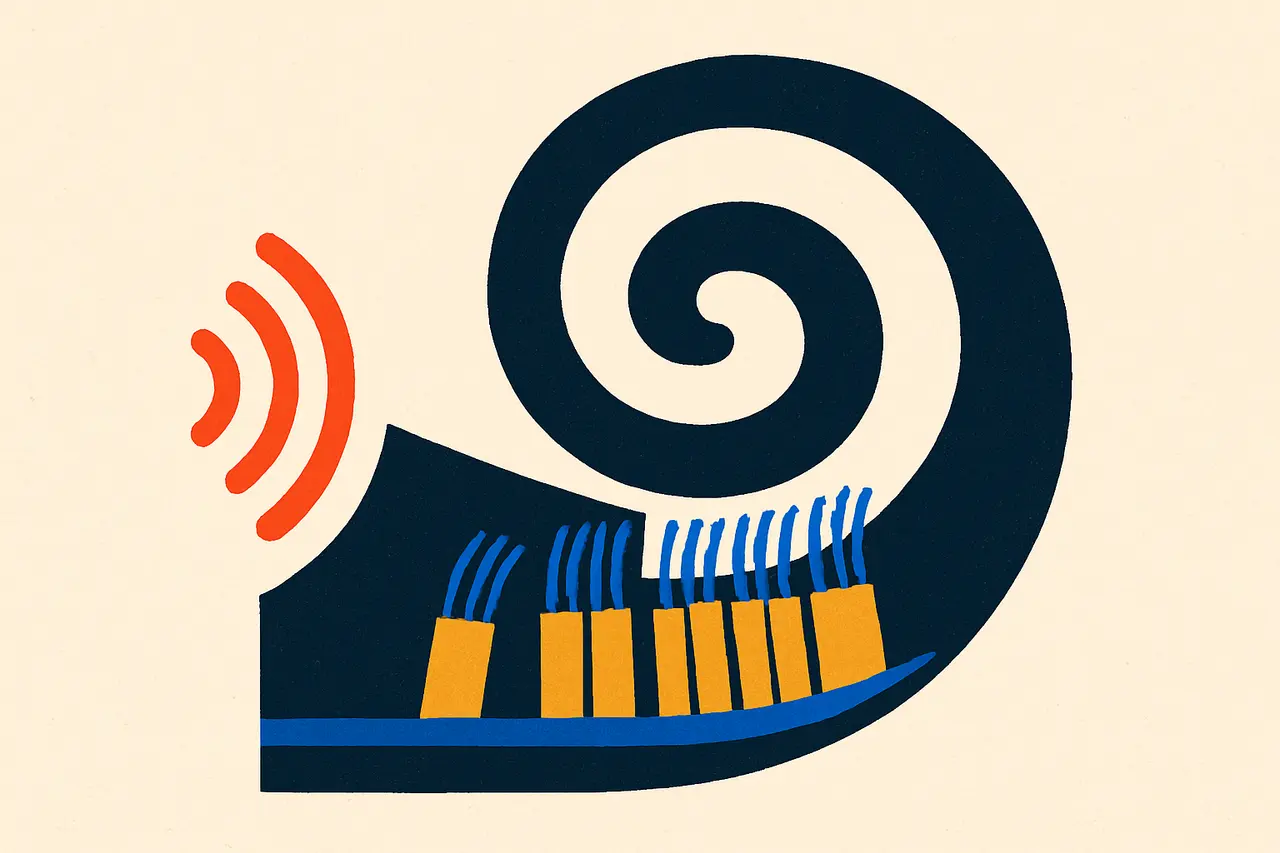
Each cochlea has only about 14,500 sensory hair cells. Birds regrow theirs; humans can't — and even new gene therapies don't change that.
Humans cannot regrow the sensory hair cells of the inner ear: once these cells in the cochlea are killed by loud noise or certain drugs, the body never replaces them, which is why that kind of hearing loss is permanent.
The supply is smaller than most people imagine. Each human cochlea holds only about 3,500 inner hair cells, the main sensory cells wired to the auditory nerve, plus roughly 11,000 outer hair cells arranged in three or four rows. When sound makes the fluid inside the cochlea ripple, tiny bundles called stereocilia on top of each cell bend and open channels that fire a signal to the brain. Cells near the base of the spiral pick up high pitches; those near its tip, low ones.
Can any animals regrow hair cells?
Yes: birds and amphibians can, but in mammals, hair cells lost after embryonic development are gone for good. In 1987, researchers showed that the cochleas of chicks repair themselves after damage from loud noise or ototoxic antibiotics: neighbouring supporting cells start dividing again and produce replacement hair cells. Nearly four decades later there is still no therapy that prompts the human ear to regrow them, and labs such as Stanford’s are still working out the signals that switch regeneration on in birds.
Doesn’t gene therapy restore hearing now?
Only for one kind of deafness, and it regrew nothing. Since 2024, gene therapy has restored hearing to children born deaf because of mutations in the OTOF gene; in the first trial, five of six children improved. Those children’s hair cells were physically intact but could not pass signals on to the nerve without the protein otoferlin, and researchers chose the condition precisely because it involves no physical damage to the cochlear cells. Ears damaged by noise, where the cells themselves are dead, remain an unsolved problem.
That permanence makes noise-induced hearing loss serious, and also preventable: turning the volume down protects cells you cannot replace.
Sources & references
5 referencesWell-established. Corroborated by 4 independent sources.