Your stomach lining replaces itself every 3 to 6 days
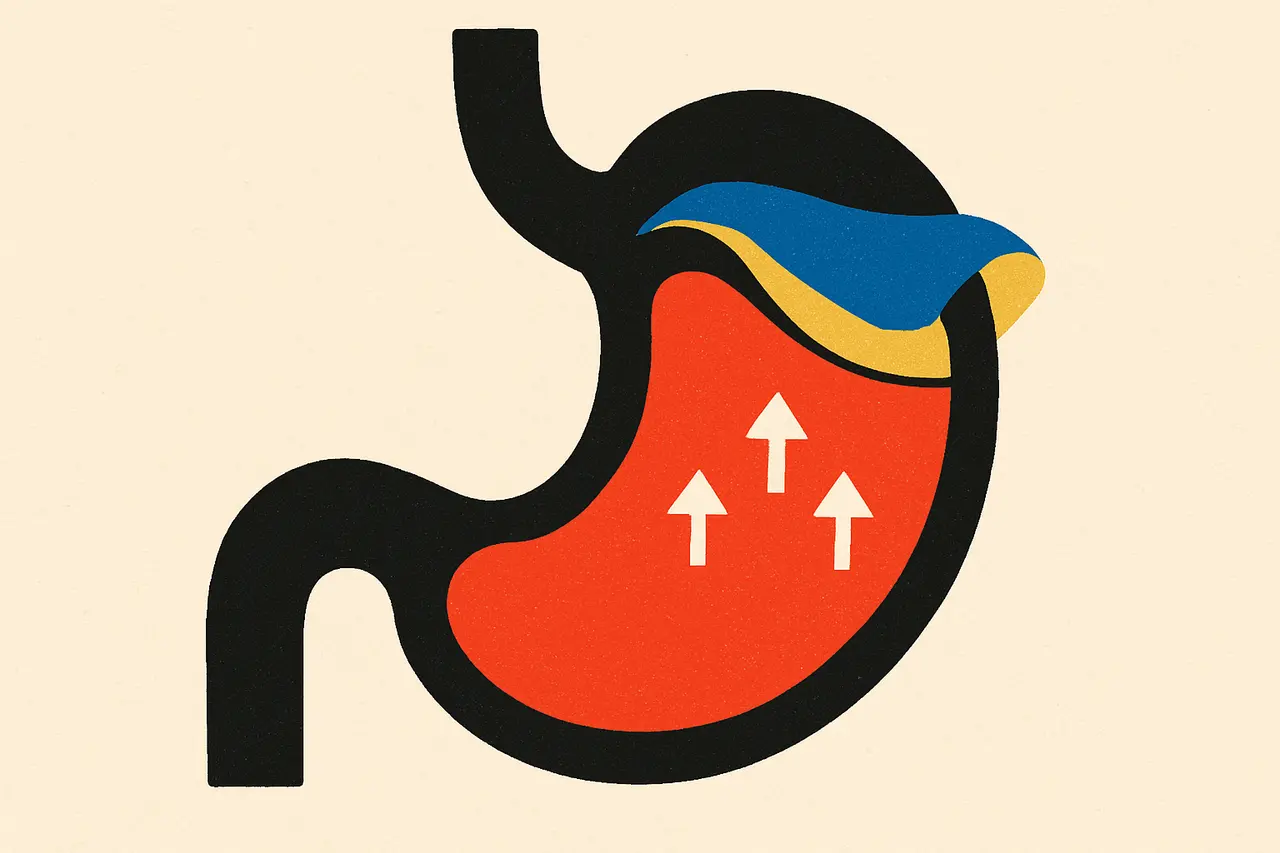
Acid and pepsin could digest your stomach wall, so its surface rebuilds every few days, and when that defence fails, the usual culprit is a bacterium.
The surface lining of your stomach is completely replaced every 3 to 6 days, a constant rebuild that keeps the organ from being eaten away by its own digestive juices. Hydrochloric acid drives the stomach’s contents to a pH of roughly 1.5 to 3.5, and the protein-digesting enzyme pepsin, which that acid activates, can digest the stomach wall itself.
The first line of defence is the mucosal barrier. A thick coat of bicarbonate-rich mucus blocks and neutralises acid at the surface, and tight junctions between lining cells stop gastric juice seeping into the tissue below. The cells on the front line still take a beating, so the body relies on brute-force replacement: stem cells in the narrow isthmus of the gastric glands divide constantly, sending fresh cells up toward the surface and down toward the gland base as they mature.
Not everything renews that fast, though. “Your stomach lining replaces itself” really means the surface layer:
| Part of the lining | How long it lasts |
|---|---|
| Surface lining as a whole | 3 to 6 days |
| Surface mucous cells (mice) | 3 to 5 days |
| Deeper enzyme-producing chief cells (mice) | Several months |
When the barrier fails
Damage that eats through the lining into deeper tissue becomes an ulcer. When Perth pathologist Robin Warren and Barry Marshall identified a curved bacterium, Helicobacter pylori, in stomach biopsies in 1982, stress and lifestyle were considered the main causes of ulcers. The pair showed that ulcers healed with acid-suppressing drugs kept coming back because the infection remained, and that patients were cured only once the bacteria were cleared.
They shared the 2005 Nobel Prize in Physiology or Medicine. H. pylori is now known to cause more than 90% of duodenal ulcers and up to 80% of gastric ulcers. Together with heavy use of anti-inflammatory painkillers (NSAIDs) such as aspirin, it accounts for the majority of all ulcers, cases where the damage outruns the lining’s rapid repair.
Sources & references
4 referencesWell-established. Corroborated by 4 independent sources.