Skin is the body's largest organ — by weight, not area
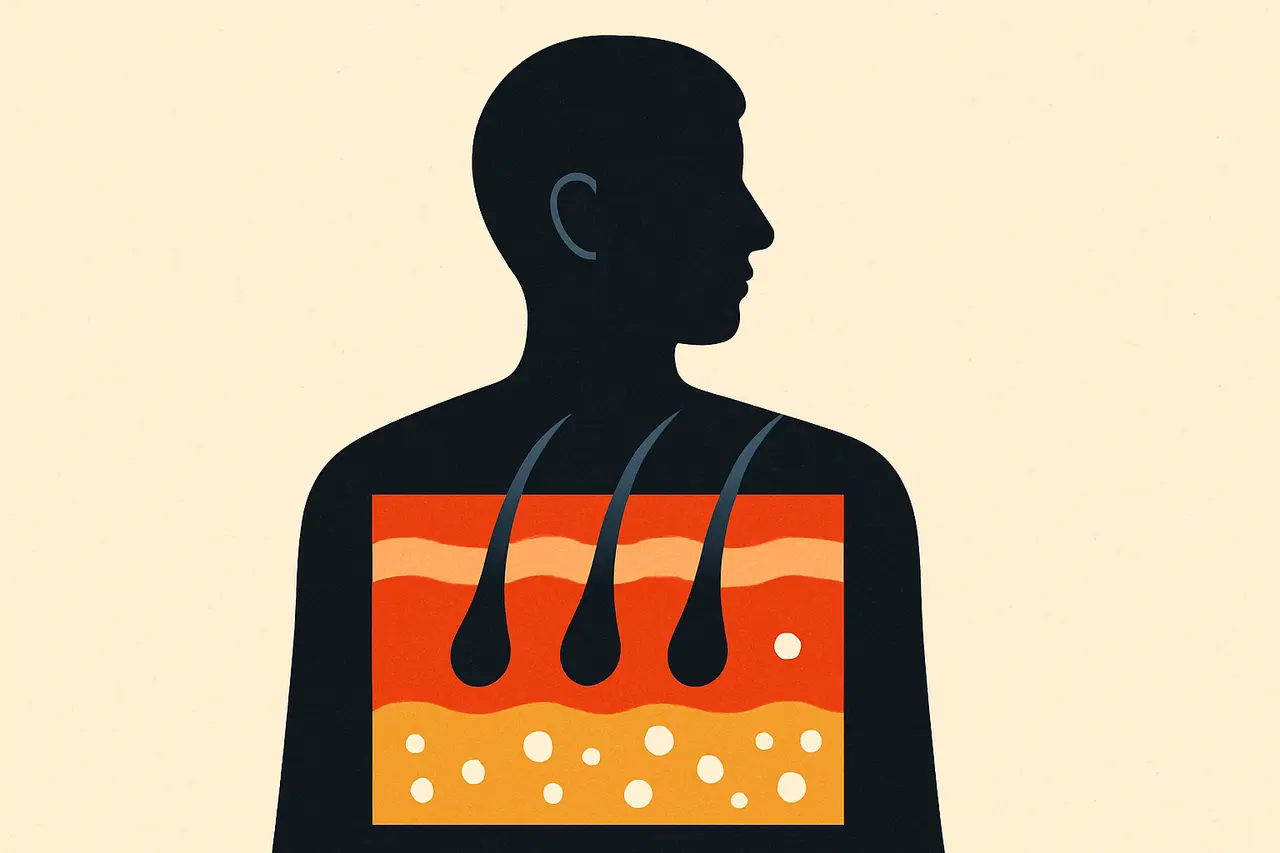
At up to 10 kg, skin outweighs every other organ, though your gut and lungs have far more surface — and 'organ' itself is a moving target.
The skin is the largest organ of the human body: in an adult it covers about 1.5 to 2 square meters and weighs roughly 3.5 to 10 kilograms, around one-seventh of total body weight.
“Largest organ” needs a qualifier, and that is where most confusion comes from. By weight, the skin wins easily; by surface area, it loses:
| Organ | Surface area | Weight |
|---|---|---|
| Skin | about 2 m² | 3.5 to 10 kg |
| Liver (largest internal organ) | — | 1.4 to 2.3 kg (3 to 5 pounds) |
| Lungs, inner surface | about 50 m² | — |
| Gut, folded lining | about 30 m² | — |
So the skin’s title rests on weight, not area: the folded lining of the gut and the lungs are many times its 2 m², while the liver is a fraction of its heft.
Even the list itself is negotiable. In 2018 pathologist Neil Theise argued that the interstitium, a network of fluid-filled spaces under the skin and around organs, should count as an organ; his paper drew some 2,400 news stories and plenty of pushback. Asked who decides, he said:
“There’s no governing body that says, ‘Yes, this meets the definition of an organ.’ It’s how the collective community treats it over time.”
For now, the skin’s claim rests on that same consensus. It earns the label because it is a coordinated system of tissues with defined jobs. It keeps out germs and holds in water, regulates temperature through sweat and blood flow, shields deeper tissue from ultraviolet light, makes vitamin D, and carries the sensors for touch, pressure, heat and pain.
It is also thinner than its size suggests: the outer layer, the epidermis, is only about 0.3 mm thick on the elbows and up to 4 mm on the palms and soles. And it is constantly replacing itself, as new cells made in its lower layers reach the surface within about four weeks, harden, and flake away.
Sources & references
5 referencesWell-established. Corroborated by 4 independent sources.