The Three Sisters Feed the Soil While They Grow
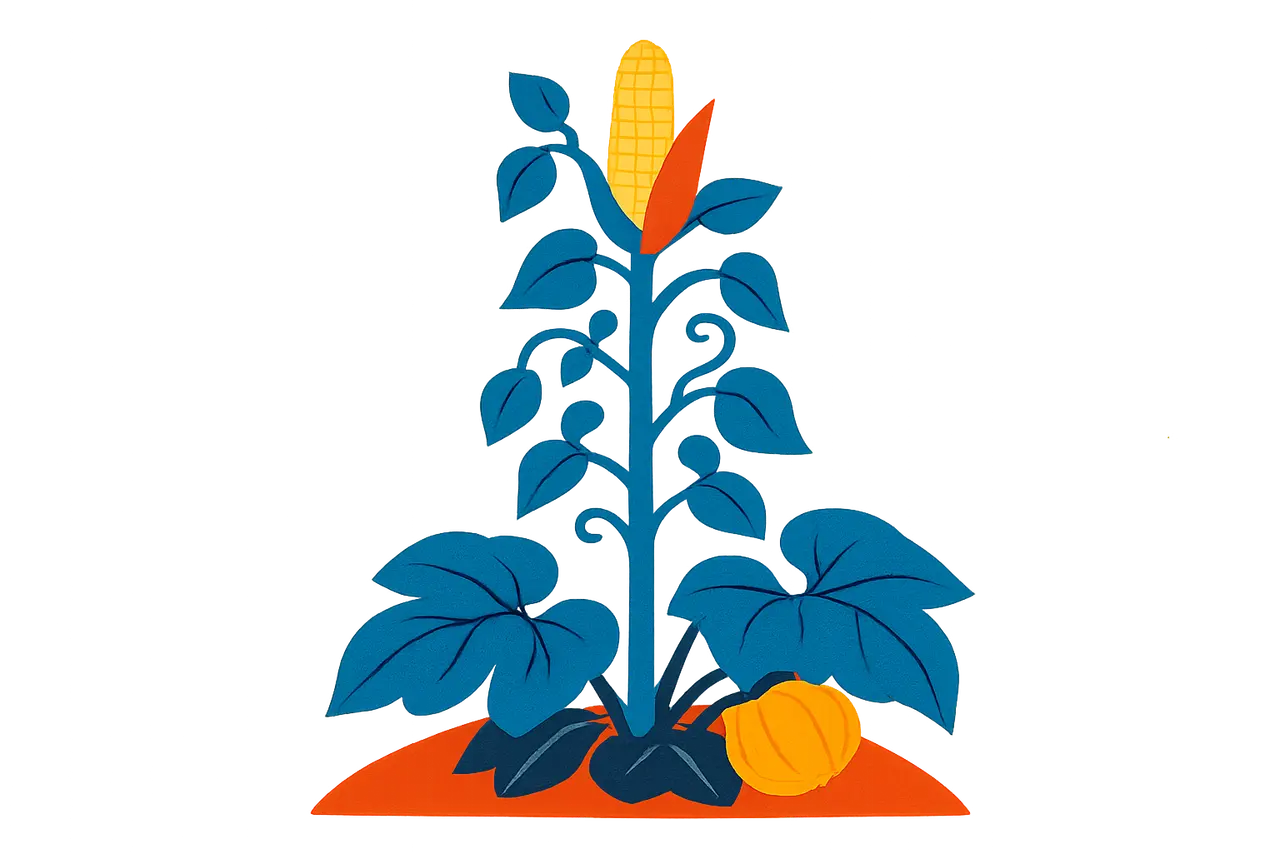
Indigenous farmers planted corn, beans and squash together so the three crops would fertilize, support and shelter one another.
For centuries, Indigenous peoples across North America grew corn, beans and squash together in a single mound, a practice the Haudenosaunee (Iroquois) call the Three Sisters. The combination is a small, self-supporting ecosystem in which each crop does a job for the other two.
The corn shoots up first and becomes a living trellis, giving the climbing beans a pole to wind around. The beans, in turn, are legumes that pull nitrogen from the air and convert it into nitrates in the soil, naturally fertilizing the corn and squash. Sprawling squash spreads broad leaves across the ground as a living mulch, shading out weeds and keeping moisture locked in.
Three plants, one mound, each feeding the next.
Archaeological evidence places the method in North America by around 1070 AD, and it remains a textbook example of companion planting. Modern extension scientists note the agronomic gains are debated, but the cultural and ecological logic endures: the crops were treated as sacred sisters who, like people, thrive when they look after one another.
Sources & references
2 referencesWell-established. Corroborated by 2 independent sources.