Corn was bred from a scraggly grass with a handful of hard kernels
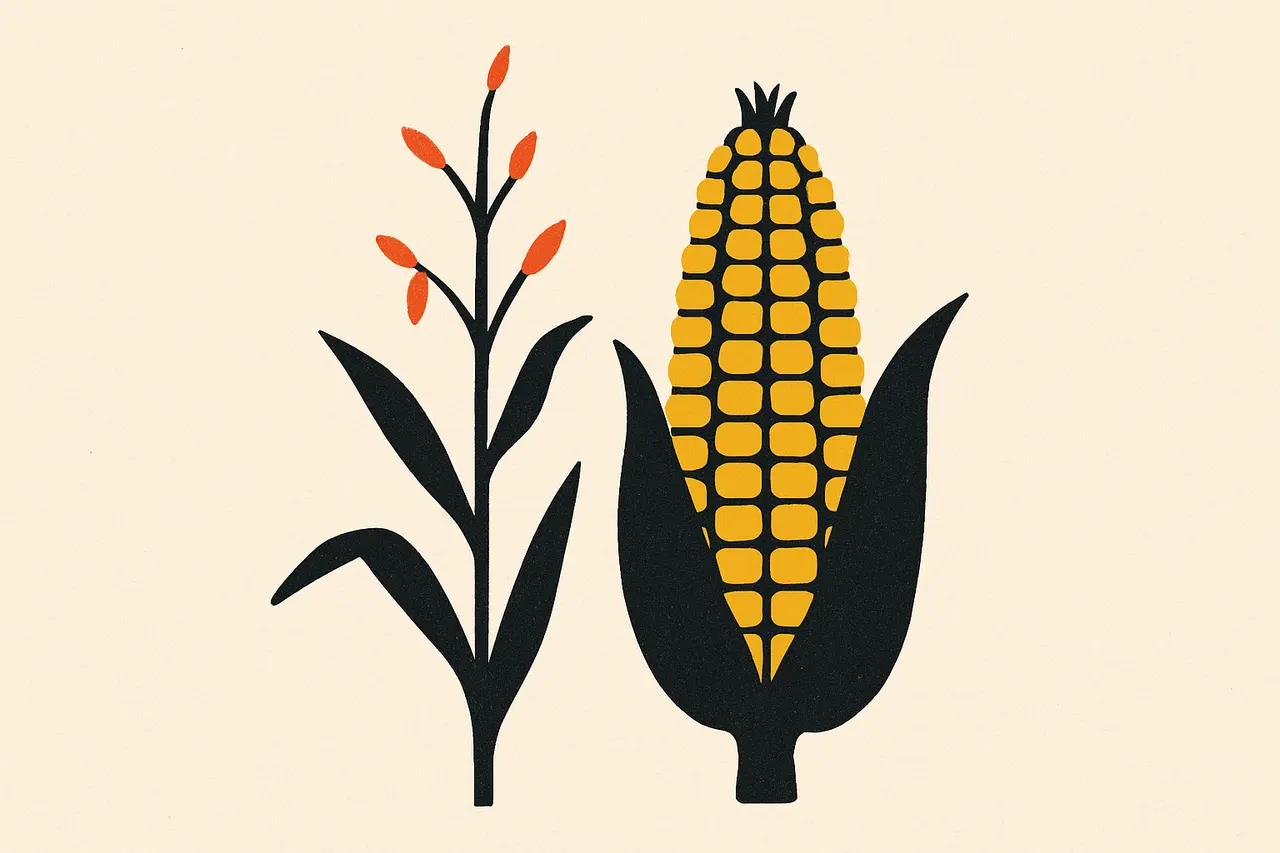
Modern maize looks nothing like its wild ancestor - it is one of humanity's most dramatic feats of plant breeding.
The towering ears of corn (maize) on a cob are a human invention, in the sense that they did not exist in nature. Maize was domesticated from a wild Mexican grass called teosinte, beginning around 9,000 years ago.
Teosinte barely resembles corn. Its “ear” is a tiny spike of perhaps 5 to 12 hard kernels, each sealed in a stony casing, on a branching, bushy plant. Through thousands of years of selecting and replanting the best individuals, the farmers of southern Mexico gradually transformed it into a single thick stalk bearing large cobs of soft, exposed kernels.
The genetic differences are surprisingly few - changes in just a handful of key genes account for much of the dramatic transformation.
That slow, patient work made maize one of the world’s most productive staple crops, and today it is grown on every inhabited continent.
Sources & references
2 referencesWell-established. Corroborated by 2 independent sources.