The Peanut Is a Legume That Ripens Underground
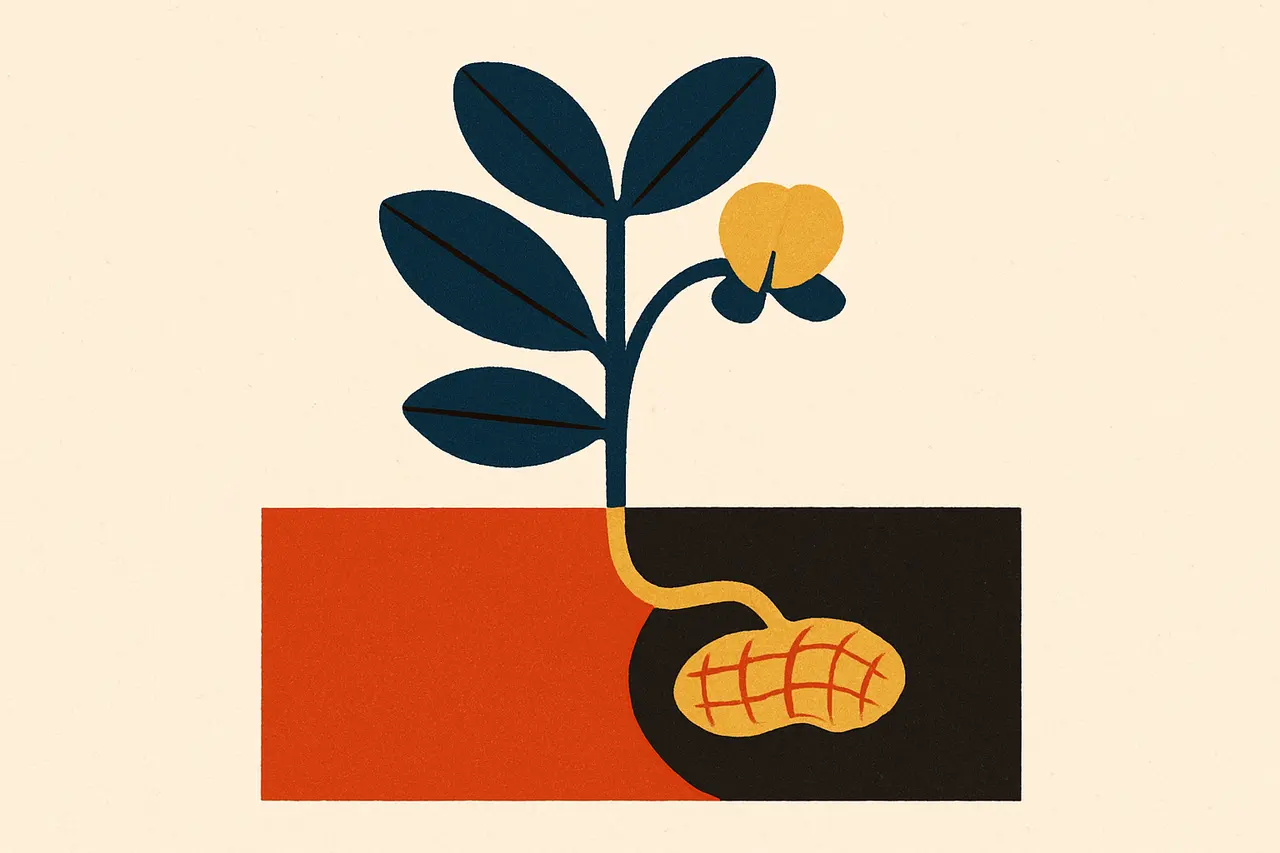
Botanically a bean, not a nut, the peanut buries its own developing pods by pushing them into the soil to mature.
Despite its name, the peanut is not a true nut. It is a legume — a relative of beans, peas, and lentils — and its scientific name, Arachis hypogaea, literally means “under the earth,” a nod to the strangest thing about it.
The peanut flowers above ground, but the magic happens after the blossom withers. From the base of each fertilized flower, an elongated stalk called a peg (botanically a gynophore) grows downward, exhibiting positive gravitropism so it actively bends toward the soil and penetrates it. The young pod is then carried below the surface, where it swells and ripens entirely underground.
The peanut grows its own fruit down rather than up — a habit so unusual it has its own name.
This trait is called geocarpy: the production of fruit underground. It is rare among the world’s plants and almost unheard of among legumes, which is exactly why botanists gave the species its subterranean name. So the snack on your table began life as a flower in the air and finished it as a pod in the dirt.
Sources & references
2 referencesWell-established. Corroborated by 2 independent sources.