Almost every banana you eat is a clone of the same plant
The world's most exported banana can't reproduce on its own - which makes it dangerously vulnerable to disease.
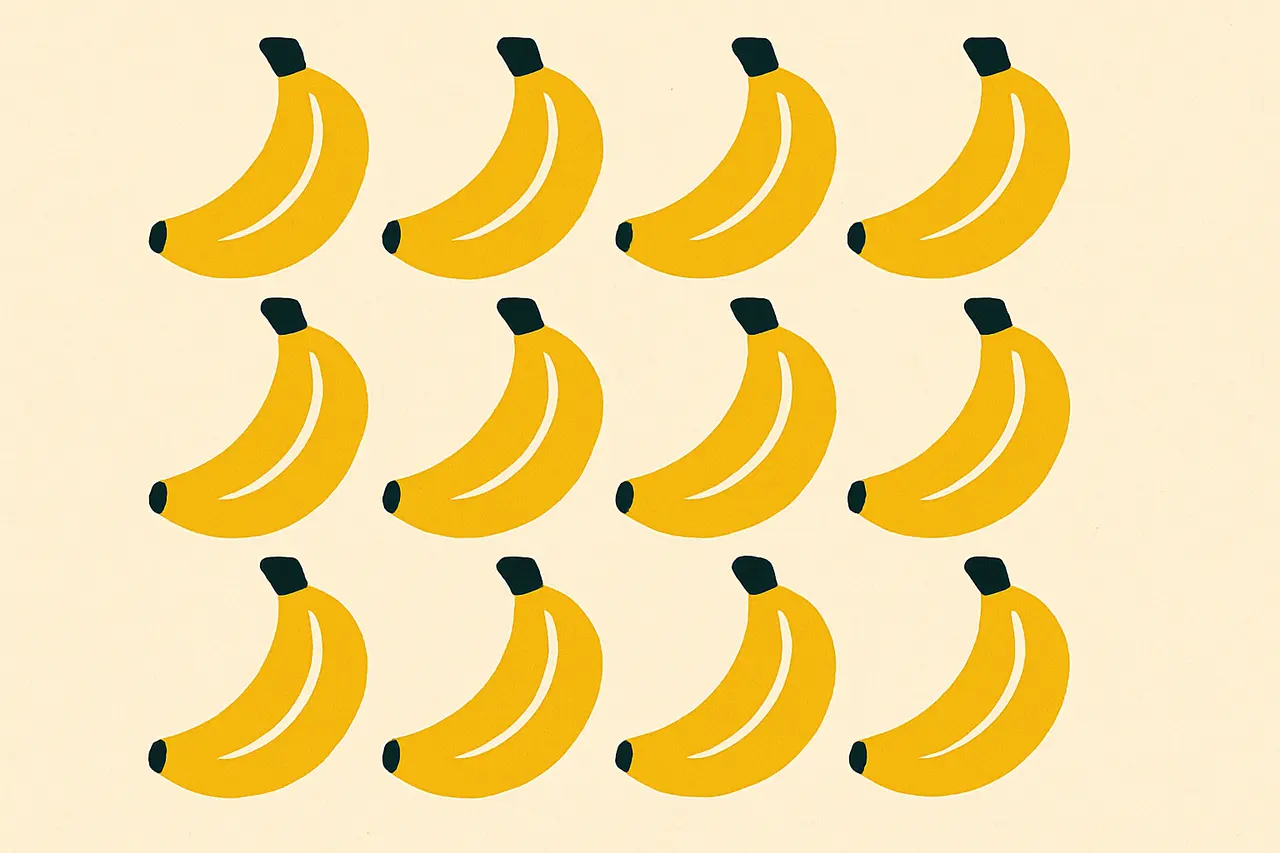
The Cavendish banana that dominates global supermarkets is seedless and sterile: it cannot reproduce through seeds. Instead, every plant is grown from a cutting of another, so the bananas you buy are essentially genetic clones of one another.
That uniformity is convenient - identical size, taste and ripening - but it is also a weakness. Because the plants are genetically identical, a disease that can kill one can kill them all. This is not hypothetical: the previous global export banana, the Gros Michel, was wiped out commercially by a fungal infection (Panama disease) by the 1960s, and the Cavendish replaced it.
Now a new strain of the same fungus, Tropical Race 4, threatens the Cavendish in the same way.
Scientists warn that the banana’s lack of genetic diversity leaves the world’s most traded fruit perpetually one outbreak away from crisis.
Sources & references
2 referencesWell-established. Corroborated by 2 independent sources.