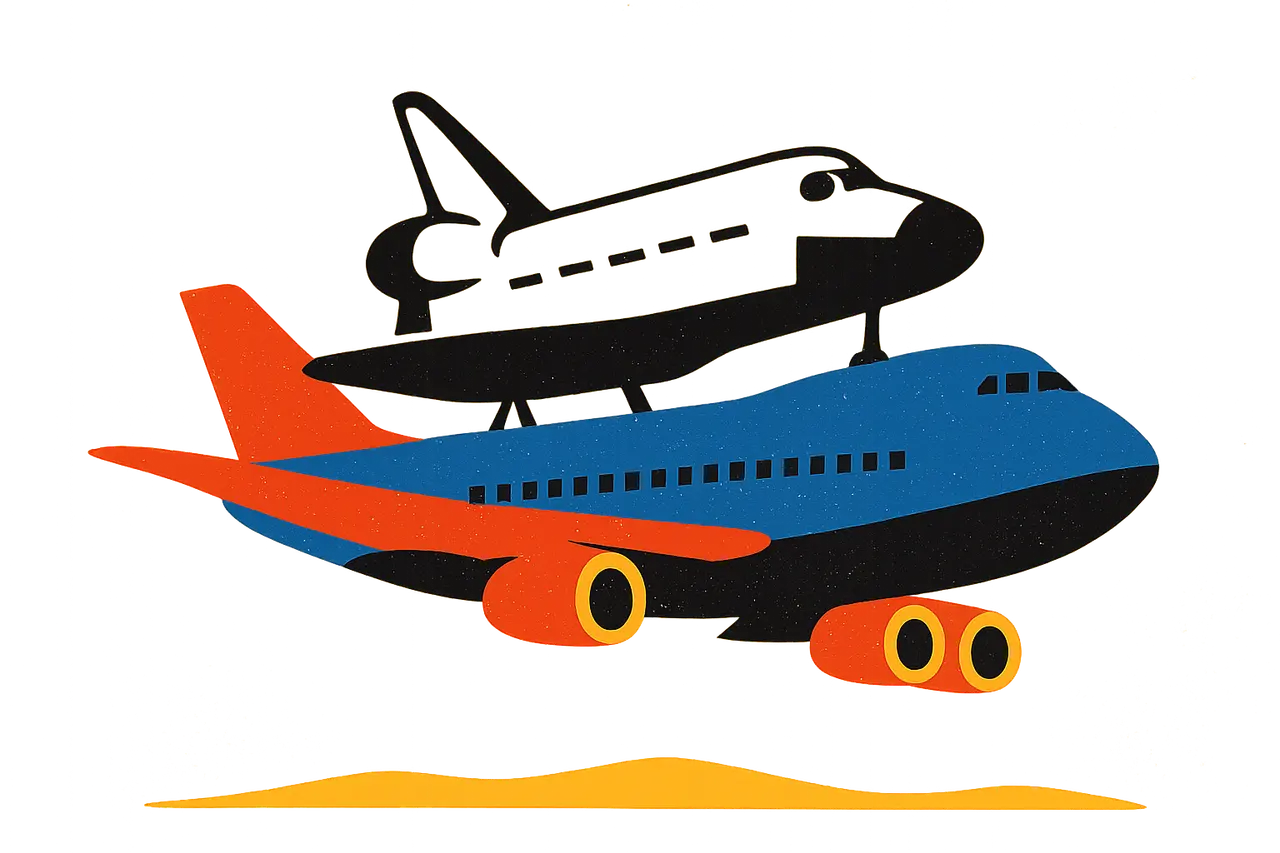
Hubble was deployed on April 25, 1990, with a flawed mirror
On this day · 25 April 1990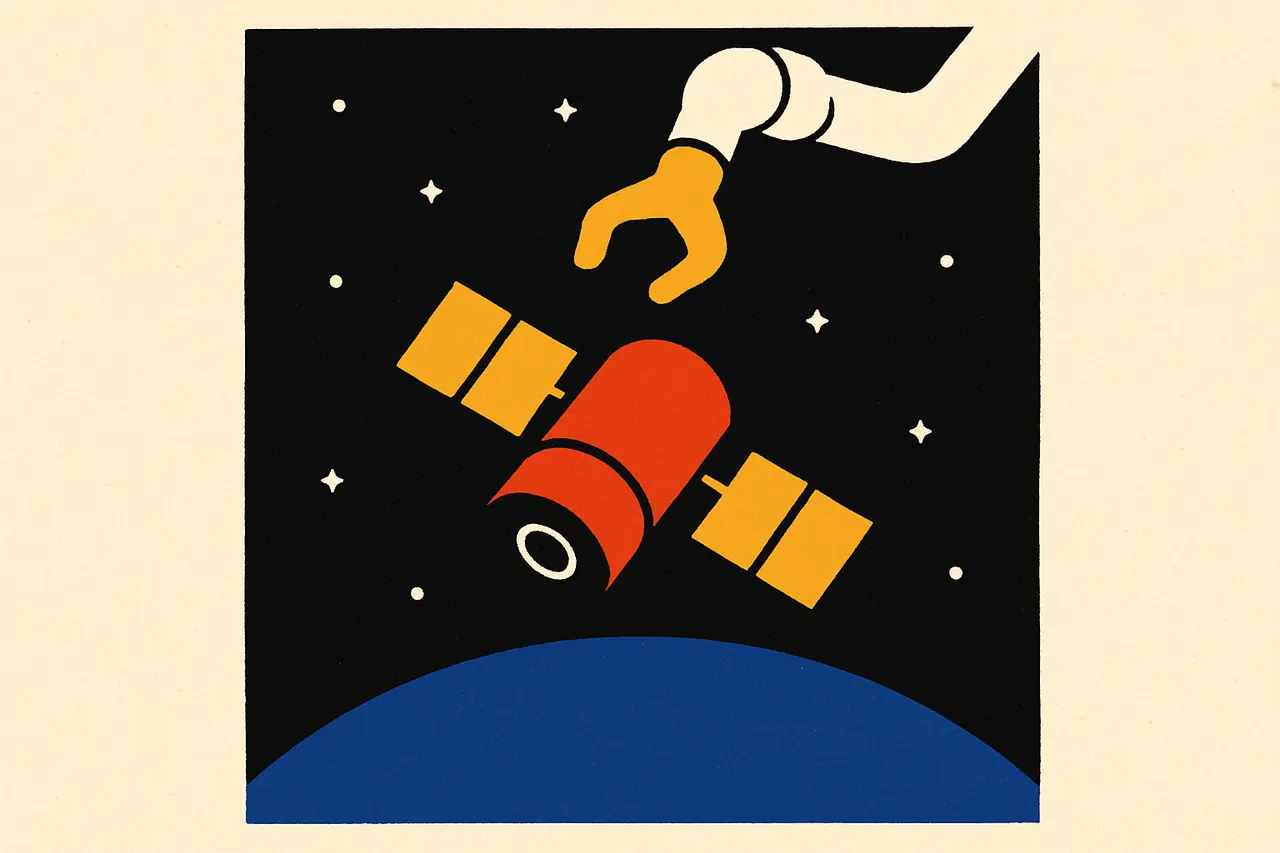
Discovery released Hubble on April 25, 1990; two months later NASA admitted its mirror was misshapen by a 1.3 mm testing error.
The Hubble Space Telescope was deployed into orbit on April 25, 1990, when the crew of Space Shuttle Discovery used the Canadian-built robotic arm to lift it out of the cargo bay and let it go, the day after mission STS-31 launched. To give Hubble an orbit that would last, Discovery climbed to a then-record shuttle altitude of about 600 km.
The crew was unusually distinguished: pilot Charles Bolden later ran NASA (2009–2017), and mission specialist Kathryn Sullivan later led NOAA (2014–2017). Before release, the arm held the telescope above the bay while its solar arrays and antennae were extended.
The blur nobody saw coming
By late June it was clear that Hubble’s images were blurred. Its 2.4-meter primary mirror had been polished to the wrong shape, too flat near its outer edge, so light hitting the rim focused at a different point from light near the centre. Opticians call this spherical aberration.
An investigation board traced the fault to the null corrector, the device used to test the mirror’s curve during polishing. Found untouched nine years after the test, it had a lens spacing error of 1.3 millimeters.
From flaw to fix
- June 27, 1990: two months after launch, NASA announces that the telescope is flawed.
- December 1993: astronauts on the first servicing mission install COSTAR, a refrigerator-sized package of corrective optics for the other instruments, along with a replacement camera, WFPC2, that carries its own correction. It works like a pair of glasses, and every instrument installed afterwards has corrective optics built in.
- Mid-1990s: the repaired telescope, a joint project of NASA and the European Space Agency, produces the Hubble Deep Field.
- 2011: it has made its millionth observation and fed its 10,000th scientific paper.
Sources & references
4 referencesWell-established. Corroborated by 3 independent sources.