The Hubble Deep Field found 3,000 galaxies in "empty" sky
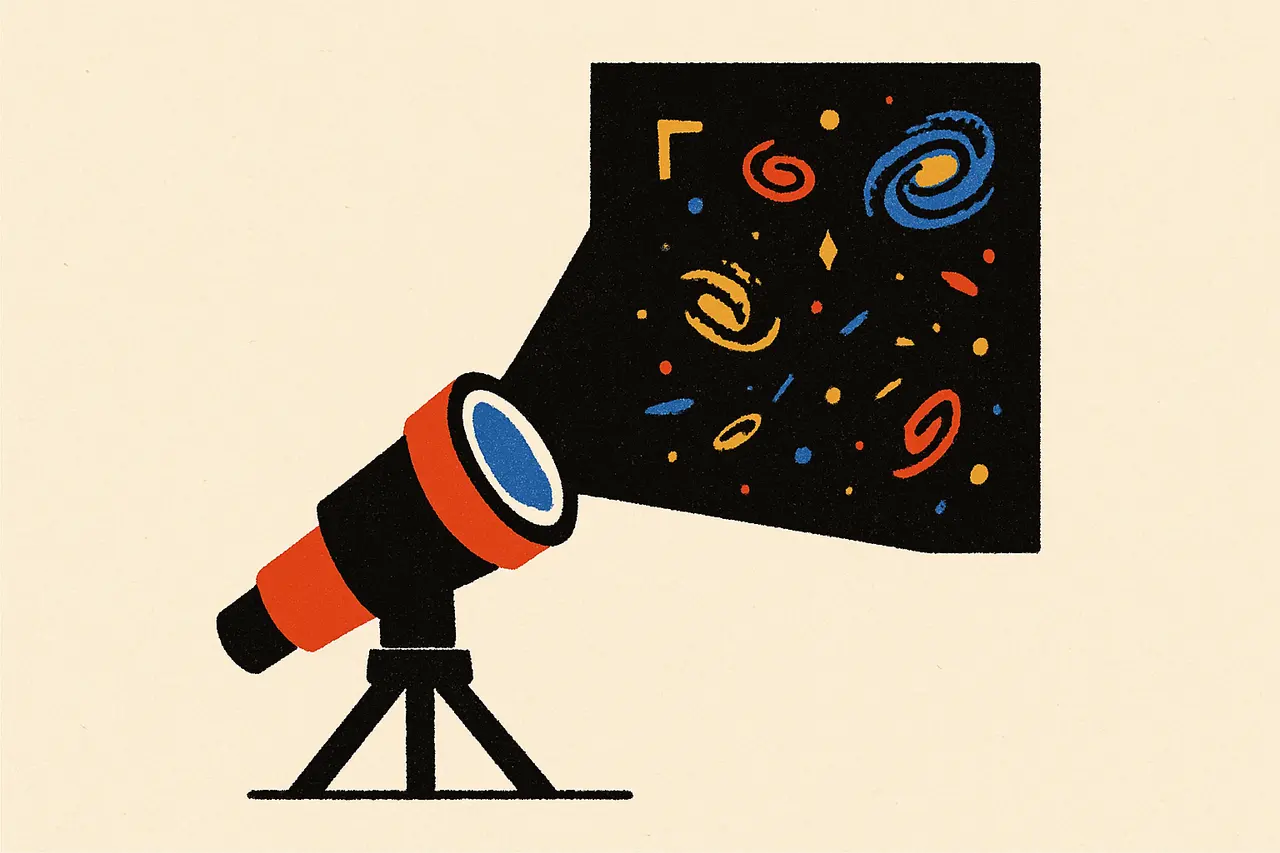
In December 1995 Hubble stared for ten days at a patch of sky the size of a pinhead at arm's length and found about 3,000 galaxies.
The Hubble Deep Field, taken over ten days in December 1995, revealed roughly 3,000 galaxies in a patch of sky in Ursa Major chosen because it looked empty, a spot about 1/13th the width of the full Moon, or a pinhead held at arm’s length.
The result surprised people for good reason: there were doubters. In 1990, the year Hubble launched aboard Space Shuttle Discovery on April 24, astrophysicist John Bahcall, a Hubble advocate, co-wrote a paper in Science arguing that the telescope would not reveal galaxies beyond those visible from the ground. So when Space Telescope Science Institute director Robert Williams committed ten consecutive days to a blank field, STScI itself later called it a controversial use of Hubble’s time.
Williams controlled about 10% of Hubble’s observing time as director’s discretionary time, so he could schedule the observation himself instead of waiting for a proposal to clear the usual approvals. He also broke with custom by releasing the data to all astronomers immediately. His team spent nearly a year picking a field free of bright stars and galaxy clusters, inside a zone Hubble could watch without Earth, Sun or Moon in the way. The camera took 342 exposures between December 18 and 28, totalling more than 100 hours.
As the images came in, Williams said his team could not help “wondering if we might somehow be seeing our own origins in all of this.”
Most of the galaxies were around four billion times fainter than the human eye can detect. Newspapers reported that Hubble had seen back to the Big Bang; it had not, but it had reached young galaxies that were smaller and more irregular than nearby ones, evidence that galaxies grow by merging. A southern deep field in 1998 checked that the first was not a fluke, and the Ultra Deep Field of 2004 found an estimated 10,000 galaxies.
Sources & references
5 referencesWell-established. Corroborated by 3 independent sources.