A Rio Grande ambush gave Polk his Mexican-American War
On this day · 25 April 1846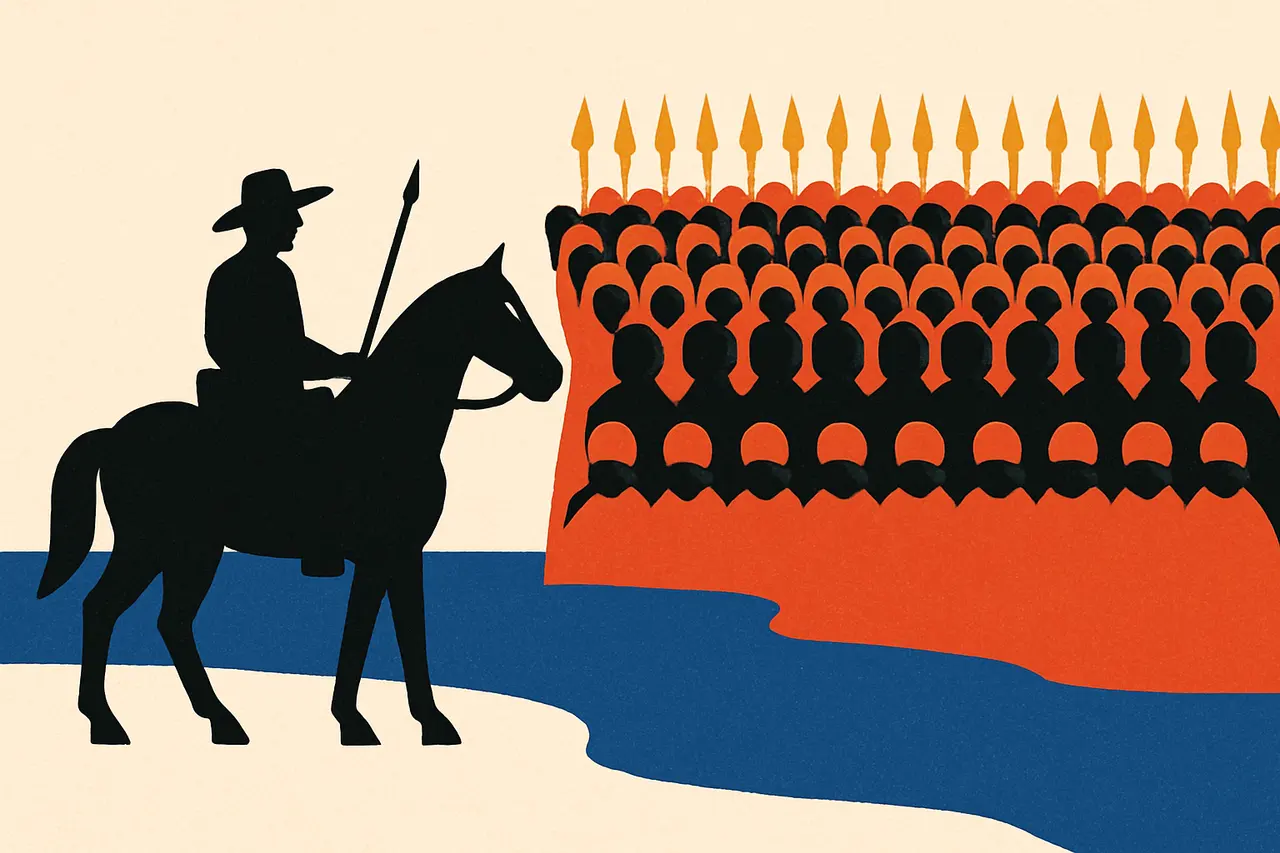
Mexican troops trapped 63 U.S. dragoons on April 25, 1846 — handing President Polk the pretext for a war message he had already drafted.
The Mexican-American War effectively began on April 25, 1846, when about 1,600 Mexican troops under Gen. Anastasio Torrejón trapped a patrol of 63 U.S. dragoons under Capt. Seth Thornton at Rancho de Carricitos, on the north bank of the Rio Grande about 28 miles upriver from Fort Texas.
The dragoons were caught in a field fenced by dense chaparral and surrendered after failing to cut their way out. The National Park Service counts 11 Americans killed and 46, including Thornton, captured; the National Archives gives five killed, eleven wounded and 47 captured. Early reports disagreed, and both tallies circulate.
What the skirmish changed was Washington’s timing, not its intent. President James K. Polk had already drafted a message asking Congress for war over Mexico’s unpaid damage claims and its refusal to receive his envoy, John Slidell. At a cabinet meeting on May 9 he said he would ask within days; only Navy Secretary George Bancroft urged waiting for a Mexican attack. That evening, news of Thornton’s defeat arrived, and Polk rewrote the message:
“Mexico has passed the boundary of the United States, has invaded our territory and shed American blood upon the American soil.” — President James K. Polk, May 11, 1846
The line is often paraphrased, including by the park service, as blood “spilled upon the American territory.” Congress declared war on May 13 by votes of 40–2 in the Senate and 174–14 in the House.
Was it really American soil?
That was the disputed point. Spain, and mapmakers after Mexican independence, had placed Texas’s border at the Nueces River; Texas claimed an extra 150 miles to the Rio Grande, and the United States adopted that claim when it annexed Texas in 1845. Polk argued the strip had been represented in the Texas congress. A freshman Whig congressman from Illinois, Abraham Lincoln, was unconvinced. On December 22, 1847, the future president introduced his “Spot Resolutions,” questioning whether the spot where blood was shed was really U.S. soil. Congress never acted on them, and an Illinois newspaper nicknamed him “spotty Lincoln.”
Sources & references
5 referencesWell-established. Corroborated by 3 independent sources.