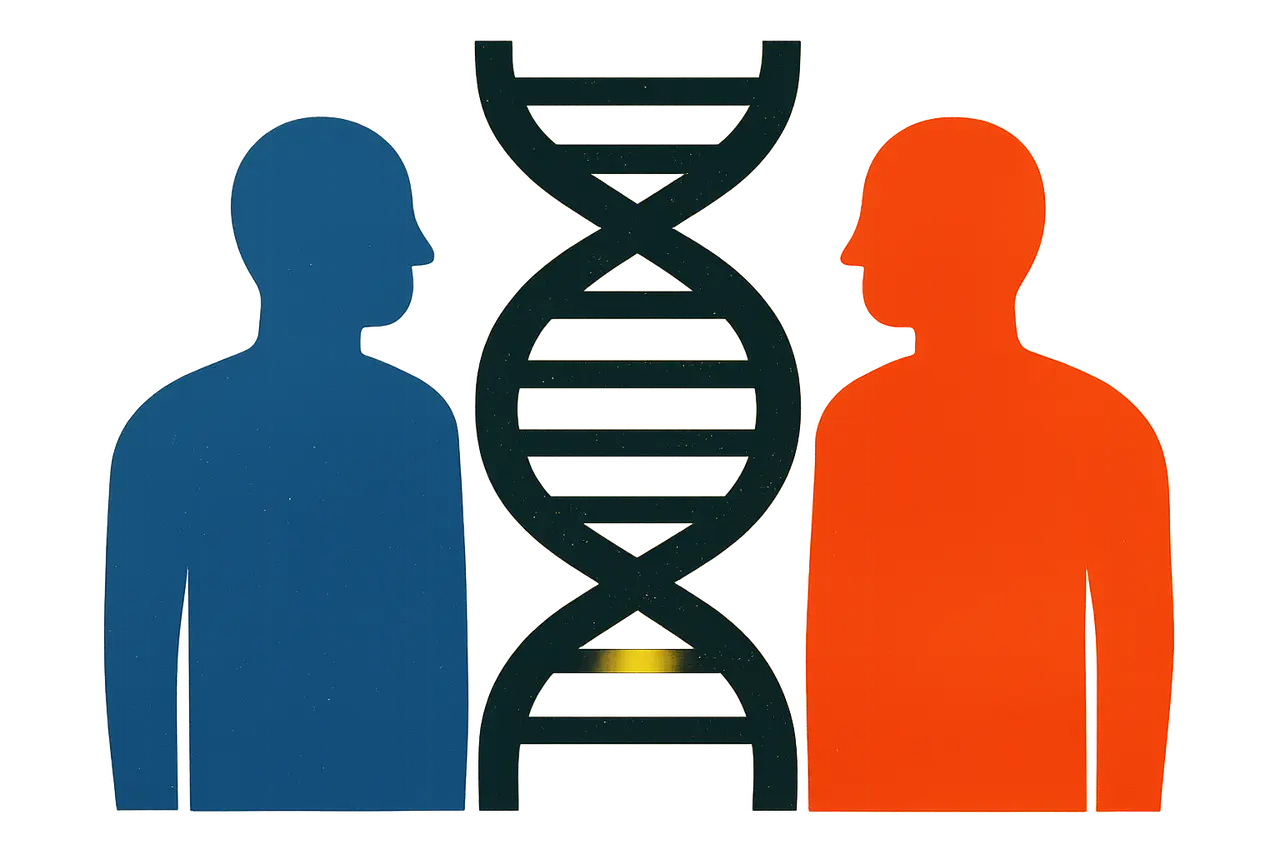
Franklin was an equal partner in the 1953 DNA double helix
Watson and Crick's 1953 paper shared a Nature issue with Rosalind Franklin's data, and a 2023 study of her notes calls her an equal partner, not a victim.
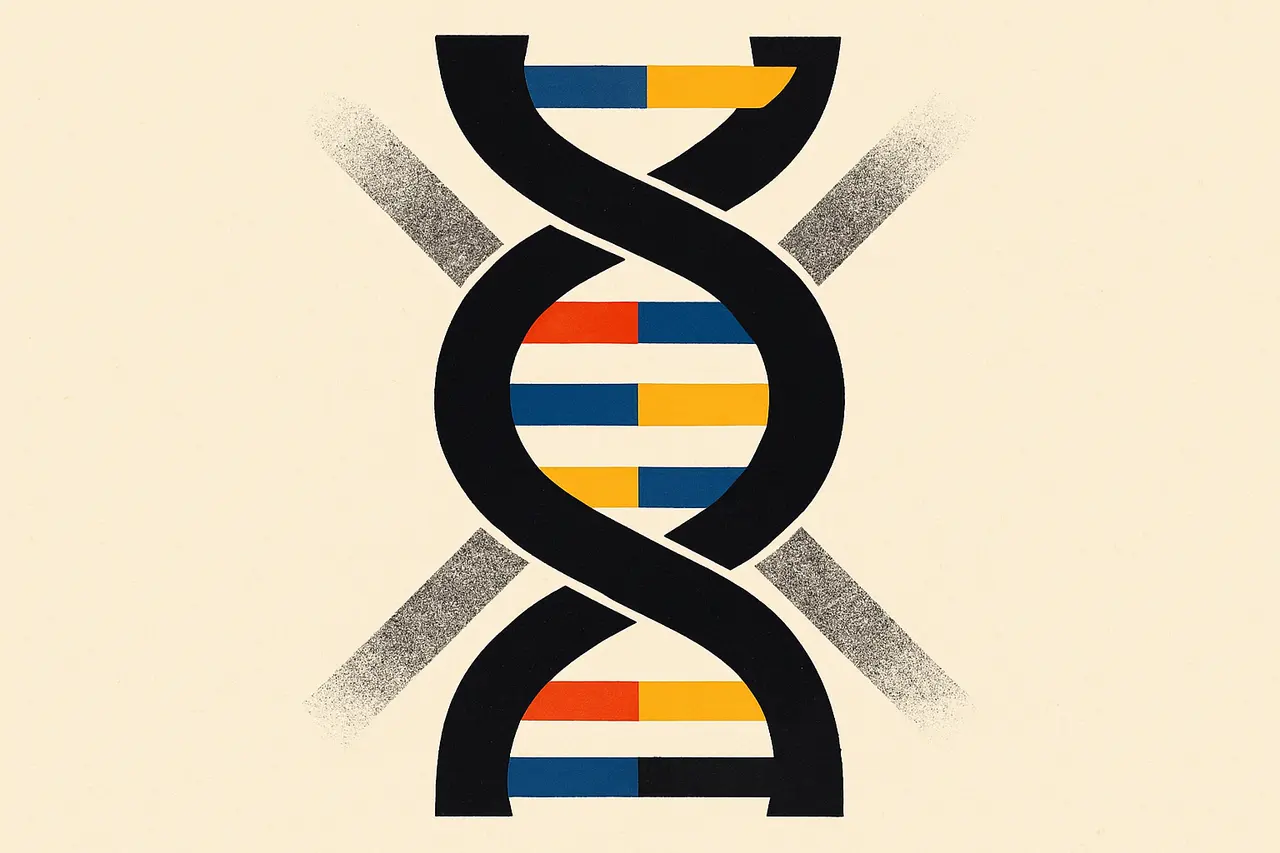
The double-helix structure of DNA was published on 25 April 1953 in Nature by James Watson and Francis Crick: two strands winding around each other, joined by paired bases, with A always opposite T and C always opposite G.
What many retellings leave out is that theirs was one of three papers printed together in that issue. The other two came from King’s College London, one from Maurice Wilkins and colleagues and one from Rosalind Franklin and her student Raymond Gosling, presenting X-ray diffraction evidence the model had to match.
Did Watson and Crick use Photograph 51 behind Franklin’s back?
Not in the way the popular story says. That story has Watson and Crick solving the structure after Watson was shown Franklin’s X-ray image, Photograph 51, without her knowledge, and claims she never grasped what her own data meant. In 2023, Matthew Cobb and Nathaniel Comfort, biographers of Crick and Watson, studied Franklin’s notes and wrote in Nature that “this is not what happened”.
The photo had been taken eight months earlier and set aside while Franklin concentrated on DNA’s drier “A” form; Gosling, by then supervised by Wilkins, had passed it on. Watson and Crick also used an informal report on the King’s lab, handed over by Crick’s supervisor Max Perutz, which included a page from Franklin. Cobb and Comfort’s new evidence included a never-published 1953 article for Time magazine, written with Franklin’s input, that described the work of two teams. Their verdict: she was “an equal contributor”.
Why didn’t Franklin share the Nobel Prize?
Because she had died. Franklin died of ovarian cancer in 1958, aged 37, and Nobel Prizes, as a rule, go only to living nominees, so the 1962 prize went to Watson, Crick and Wilkins.
“It has not escaped our notice that the specific pairing we have postulated immediately suggests a possible copying mechanism for the genetic material.” (Watson and Crick, 1953)
Sources & references
4 referencesWell-established. Corroborated by 3 independent sources.