Your body makes about 2 million red blood cells a second
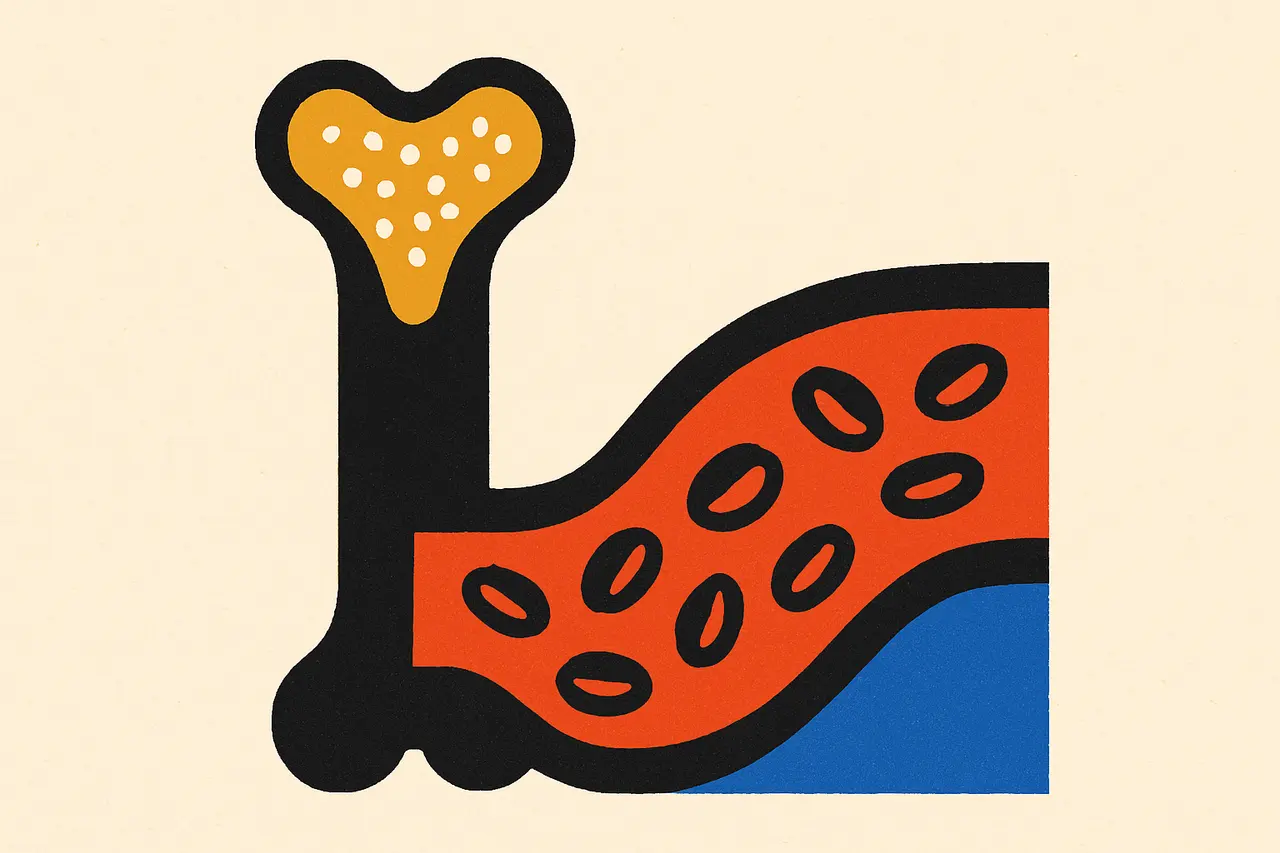
Bone marrow turns out roughly 200 billion red cells a day, the biggest single slice of your body's daily cell replacement, recycling iron from the old ones.
Your bone marrow makes roughly 2 million new red blood cells every second, or about 200 billion a day, to replace cells that wear out after around 120 days in circulation. Published estimates of the rate run from about 2 to 2.5 million per second.
Red blood cells dominate your body by headcount and by churn. A 2016 census of the human body by Weizmann Institute researchers estimated that they make up the large majority of all your cells, even though each one is tiny, at about 100 cubic micrometres. The numbers at a glance:
| Measure | Figure |
|---|---|
| New red cells made | About 2 million a second (200 billion a day) |
| Lifespan in circulation | Around 120 days |
| Share of all your cells (2016 census) | 84% |
| Total cell replacement, all types (2021 follow-up) | Around 330 billion a day, about 90% of it red and white blood cells |
| Aged red cells cleared over about 60 years (2021 review estimate) | Roughly 400 kg |
| Iron needed for new red cells | About 25 mg a day, around 90% recycled |
Because blood cells are so light, the whole daily turnover weighs a little under 100 grams. The aged cells are removed mostly by scavenger cells (macrophages) in the liver and spleen, which salvage the iron, so most of what new cells need comes from recycling rather than from your diet.
The production line can also speed up. When oxygen levels in the blood fall, after a blood donation for example, cells in the kidneys release erythropoietin, a hormone that tells marrow stem cells to make more red cells. Even so, refilling a donated unit takes time. NHS Blood and Transplant says most donors’ haemoglobin is back to normal after 6 to 12 weeks, which is why it asks men to wait 12 weeks between whole-blood donations and women 16.
The reason for all this turnover is design. To make room for haemoglobin, red cells eject their nucleus as they mature, so they cannot divide or repair themselves. They are built to be used up and replaced.
Sources & references
5 referencesWell-established. Corroborated by 4 independent sources.