Tarim Basin mummies: DNA shows locals, not Western migrants
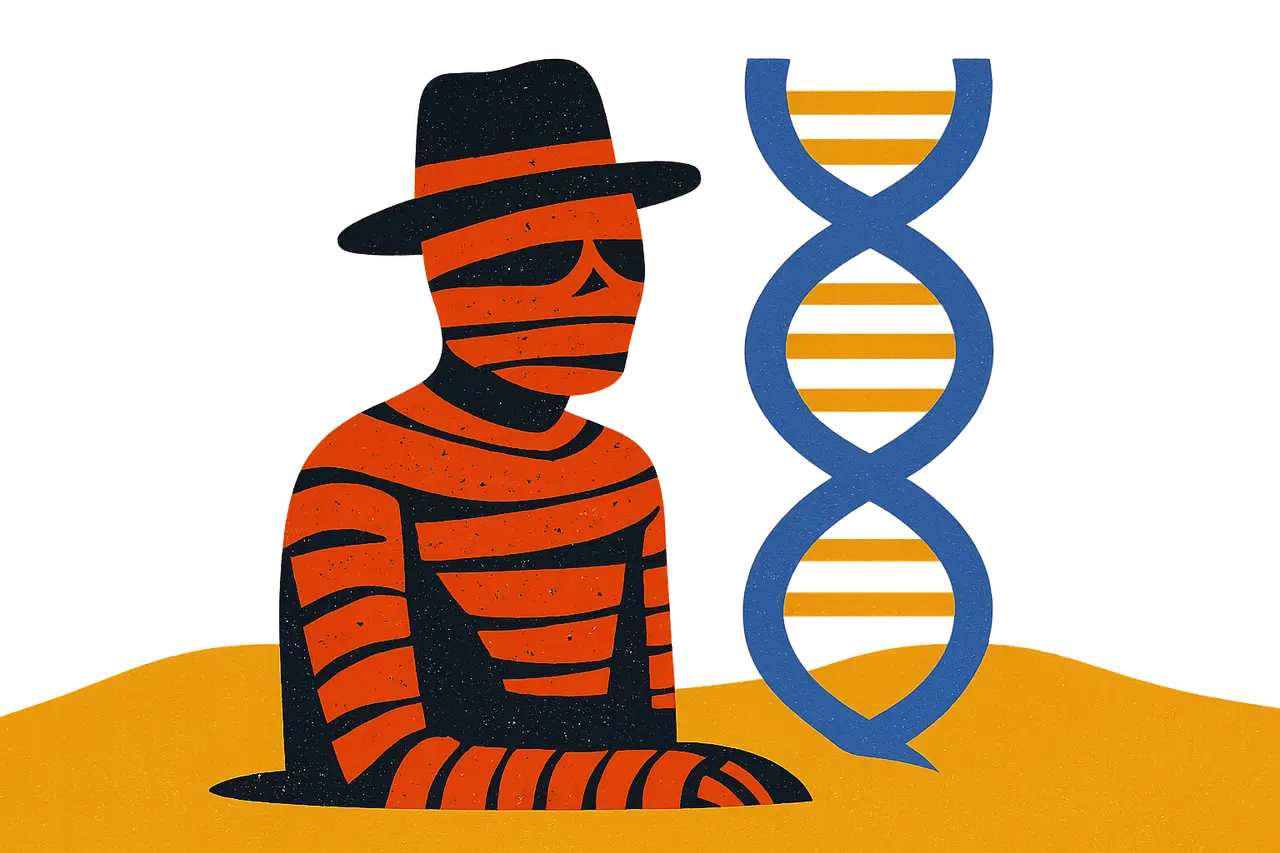
China's 'Western-looking' Bronze Age mummies turned out to be a genetically isolated local people descended from Ice Age Ancient North Eurasians.
The Bronze Age Tarim Basin mummies of western China were not migrants from the West, despite their “Western” looks: a genomic study published in Nature on 27 October 2021 found they descended from a local, genetically isolated population with deep Asian roots and no detectable mixing with any other Holocene group.
Since the late 1990s, hundreds of naturally mummified bodies dating from about 2000 BC to AD 200 have been recovered in Xinjiang’s Taklamakan Desert, many buried in boat-shaped coffins. Their so-called Western features, felted and woven wool clothing and herding economy led scholars to propose two origin stories: descendants of Yamnaya-linked herders from the Black Sea steppe, perhaps speakers of the Indo-European Tocharian languages, or migrants from the oasis cultures of Central Asia.
The team, from Jilin University, the Max Planck Institute for Evolutionary Anthropology, Harvard and others, sequenced 13 of the earliest mummies (about 2100–1700 BC), from sites such as Xiaohe, plus 5 older individuals from the neighbouring Dzungarian Basin. Neither theory survived. The Tarim people carried only local ancestry, tracing back to the Ancient North Eurasians, an Ice Age population that had otherwise largely vanished. Today that ancestry survives mostly in fragments: Indigenous peoples of Siberia and the Americas carry the most, about 40%.
Isolation in genes did not mean isolation in habits. Milk proteins in their dental plaque show cattle, sheep and goat dairying from the founding generation, and their food combined West Asian wheat, East Asian millet and Central Asian ephedra.
“We have found one in the most unexpected place.” — geneticist Choongwon Jeong, on finding a surviving Ancient North Eurasian population
What the DNA did not settle
The genes overturned one language theory without resolving another. The Dzungarian neighbours, just to the north, did carry mostly Afanasievo steppe ancestry, so the authors suggest Tocharian may have reached the region with them instead. Who first spoke it in the Tarim Basin remains open. As with Ötzi the Iceman, ancient DNA reveals ancestry, not the language a people spoke.
Sources & references
3 referencesWell-established. Corroborated by 3 independent sources.