Tut's burial chamber was likely peeked into before it opened
On this day · 16 February 1923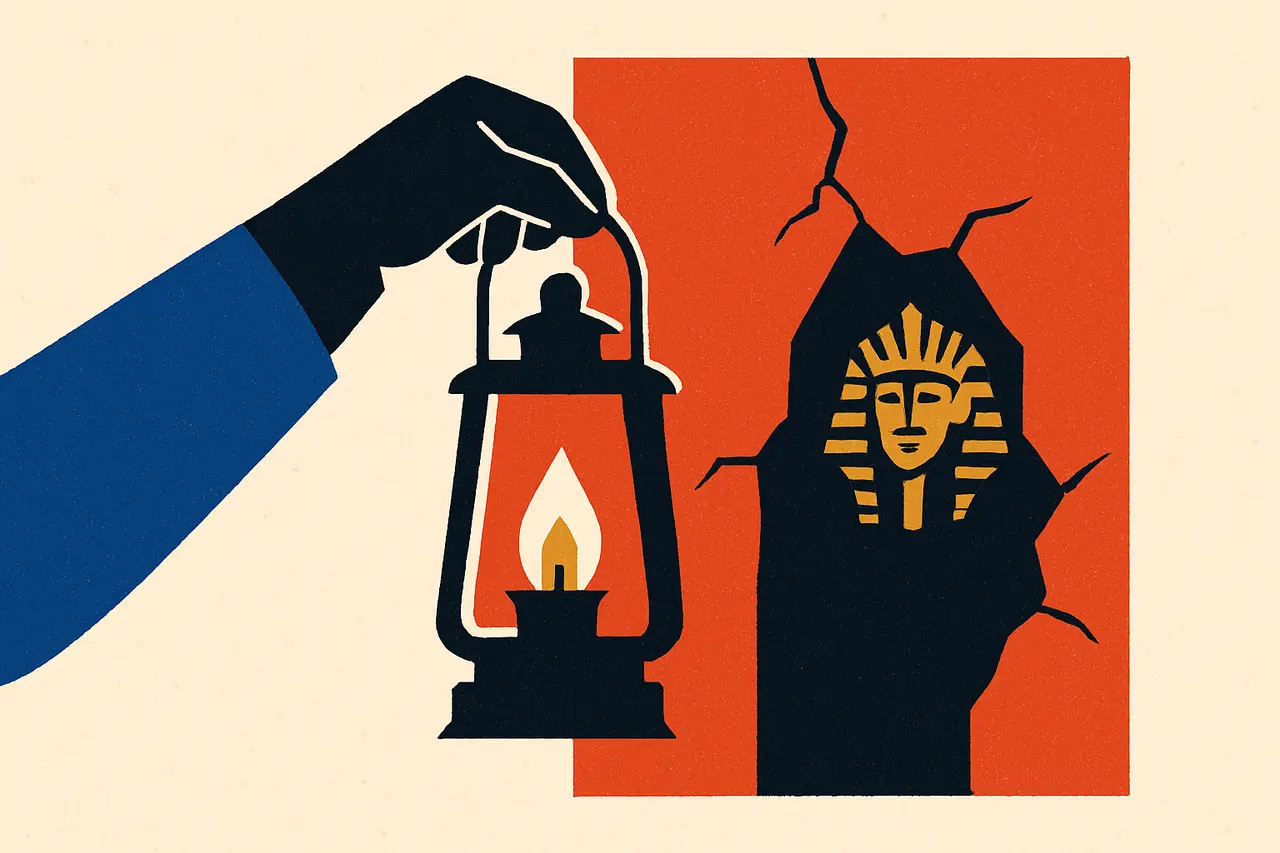
Carter officially opened Tutankhamun's burial chamber on 16 February 1923, but Carnarvon's private letter shows the team planned an earlier peep.
Tutankhamun’s burial chamber was officially opened on 16 February 1923, when Howard Carter and his colleague Arthur Mace took down the sealed wall at the back of the antechamber before about twenty invited guests, including Pierre Lacau, head of Egypt’s Antiquities Service. It was almost certainly not the first time anyone from the dig had looked inside.
The evidence comes from Lord Carnarvon himself. Two days after the first glimpse into the tomb, he sent the Egyptologist Alan Gardiner a hurried “most private” letter, now held by the University of Oxford. Describing the still-sealed room he hoped held the mummies, he wrote:
“Tomorrow the official opening & before I leave we peep into the walled chamber.” — Lord Carnarvon to Alan Gardiner, November 1922
Carter later denied any unofficial entry. If the peep happened, the February ceremony, watched tensely by officials and the expedition team, revealed a room some of its hosts had already seen.
How the chamber was opened, step by step:
- 26 November 1922: Carter makes a small breach in the tomb’s inner doorway and sees the packed antechamber by candlelight.
- 29 November 1922: The tomb’s official opening for invited guests; Carnarvon’s letter says the “peep” was to follow before he left.
- 16 February 1923: The burial-chamber wall comes down, revealing the first of the gilded shrines that nested around the king’s sarcophagus.
- 5 April 1923: Carnarvon dies in Cairo, seven weeks later.
- 1923–24 season: The shrines are dismantled and the sarcophagus lid lifted, amid a bitter dispute with the Egyptian authorities over access and control.
- November 1925: The king’s mummy is finally unwrapped and examined.
What lay beyond the wall belonged to a modest tomb, KV62, crammed with about 5,000 artefacts. Egypt’s antiquities ministry calls it the only royal tomb in the Valley of the Kings found relatively intact. The earlier moment, when Carter peered in and saw “wonderful things”, is a story of its own.
Sources & references
4 referencesWell-established. Corroborated by 3 independent sources.