The Rosetta Stone was found built into a wall in 1799
On this day · 15 July 1799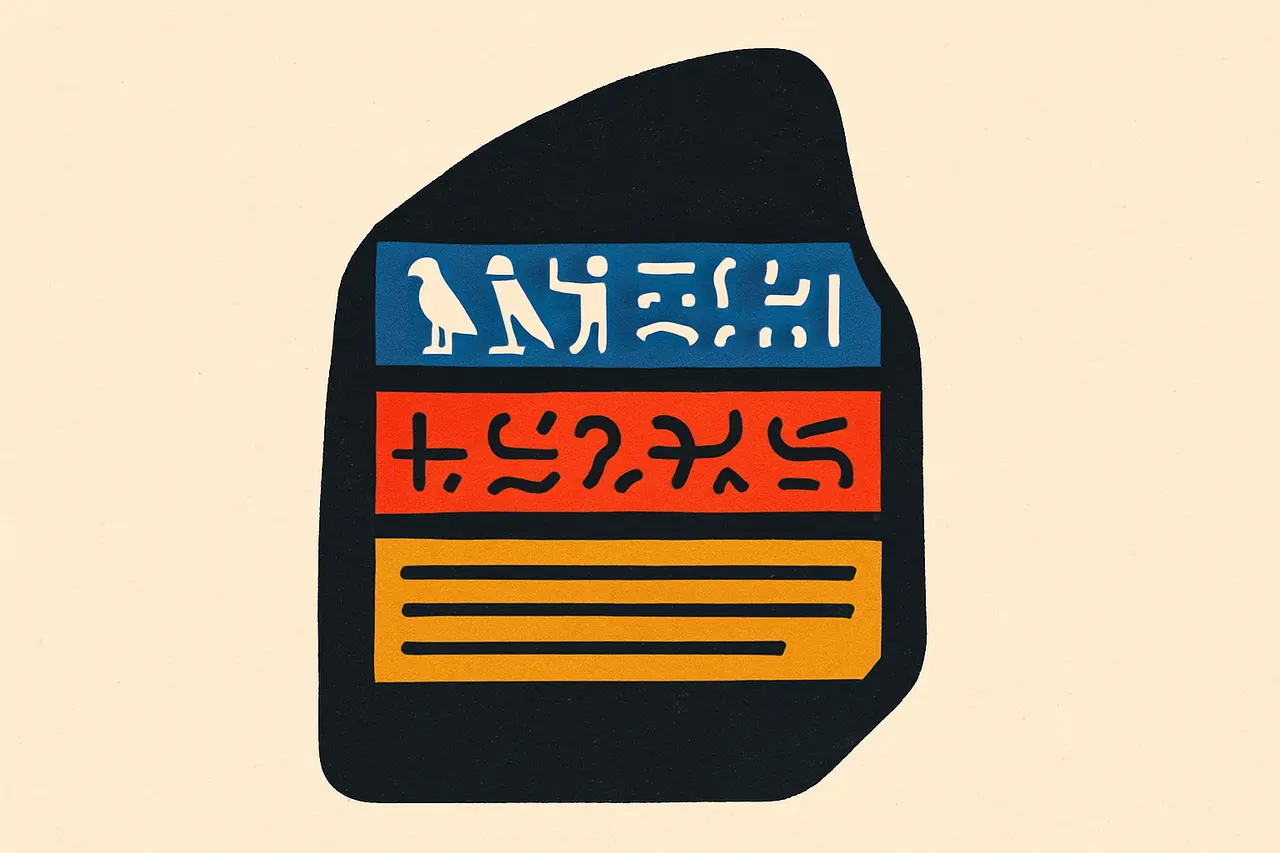
French soldiers pulled the Rosetta Stone from a wall at Rashid in July 1799; Britain seized it two years later under a surrender treaty.
The Rosetta Stone was found in July 1799 by French soldiers under engineer officer Pierre-François Bouchard, who pulled it from an old wall being demolished for fort works at Rashid (Rosetta) in the Nile Delta. The exact day is disputed: most accounts give 15 July, while the Fondation Napoléon says 19 July.
The slab was not made at Rosetta. The ground there built up from river sediment after the stone was carved, so it was almost certainly hauled in as rubble from a site further inland, already broken. The surviving piece is only a fragment: the original stela was at least twice as large, and searches for the rest at Rosetta have found nothing.
The French grasped its value at once, though not its content. The Cairo newspaper Courier de l’Égypte reported that General Menou had part of the Greek translated and read it as an account of a Ptolemy reopening Egypt’s canals at vast expense. Its verdict on the hieroglyphs was better:
“Maybe it will even prove to be the key to understanding them.” — Courier de l’Égypte, 1799
What happened next:
- Mid-August 1799: The stone reaches the scholars of the Institute of Egypt in Cairo, who use it as a printing block to pull ink copies.
- Autumn 1800: Those prints reach Paris and soon circulate across Europe.
- 2 September 1801: Menou surrenders Alexandria. Article 16 of the capitulation hands French-collected antiquities to Britain; Menou argues the stone is his private property and loses.
- February 1802: Colonel Tomkyns Hilgrove Turner, who had carted it from Menou’s house using an artillery “devil cart”, lands with it at Portsmouth aboard a captured French frigate.
- 1802: After a stay at the Society of Antiquaries, it enters the British Museum, where it remains.
- 1824: Champollion, two years after using its copies to decipher hieroglyphs, sees the stone in person for the only time.
Sources & references
3 referencesWell-established. Corroborated by 3 independent sources.