Lascaux was found by four teens in 1940 — the dog is legend
On this day · 12 September 1940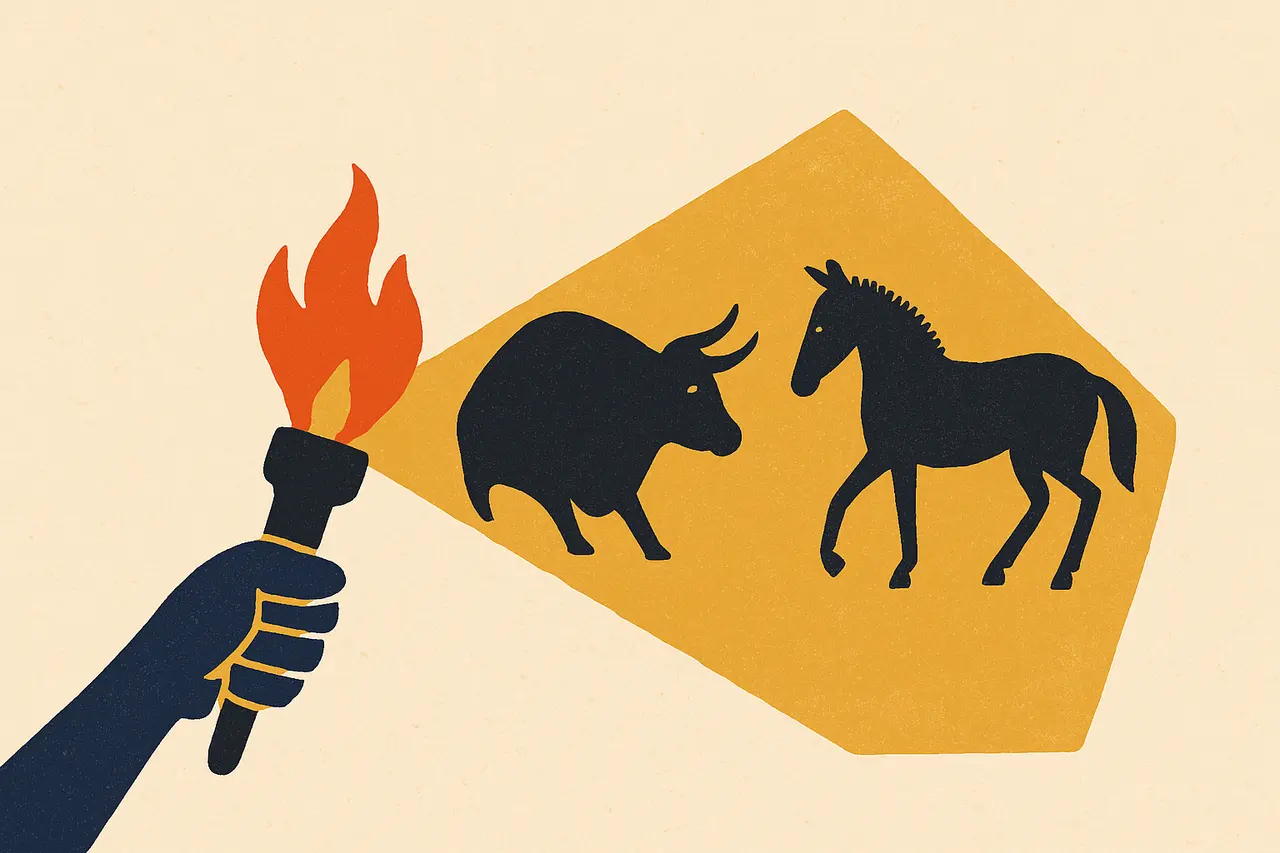
Four boys found Lascaux's 21,000-year-old paintings in September 1940; the famous dog appears in retellings, not in France's official account.
The Lascaux cave paintings in southwestern France were discovered on 12 September 1940 by four teenagers at Montignac: Marcel Ravidat, 17, Georges Agniel, 16, and Simon Coencas and Jacques Marsal, both 15. The art on its walls is now dated to roughly 21,000 years ago, older than many popular accounts still say.
Did a dog really find Lascaux?
Not in the official record. Popular versions have the boys following a dog down a hole. The French Ministry of Culture’s account of the discovery mentions no dog at all. It describes a foxes’ den halfway up the hill, which local legend said hid a tunnel to the Lascaux manor. Ravidat, an apprentice mechanic, tried it first, gave up for lack of tools, and came back four days later with his friends. They widened the hole, slid down a scree slope and walked about 30 metres to the first paintings. The next day they lowered a rope into an 8-metre shaft, where Ravidat found the scene of a man facing a bison.
Their teacher, Léon Laval, went down on 18 September, and the prehistorian Henri Breuil two days after him. The friendship broke apart almost at once: within days Coencas, a refugee from Montreuil, was swept up with his family in the deportations of Jews from occupied France. The four were not reunited until November 1986.
How old are the paintings?
The first lab date came in 1951, when charcoal from the Shaft was tested in Chicago at the laboratory of Willard Libby, inventor of radiocarbon dating. The result, around 19,000 years before present, placed the art in the Magdalenian period. Later charcoal samples gave 21,000 to 18,000 years, and recent dating puts the cave’s use at about 21,000 years ago, which is why figures of “15,000 to 17,000 years” now look out of date.
The cave opened to visitors in 1948. Ravidat and Marsal, by then guides, were the ones who noticed green algae spreading in 1958 and 1959, and it closed in 1963. Visitors now see replicas: Lascaux II from 1983 and Lascaux IV from 2016.
Sources & references
4 referencesWell-established. Corroborated by 2 independent sources.