Ötzi the Iceman was likely bald, dark-skinned and murdered
The 5,300-year-old glacier mummy keeps yielding surprises: an arrowhead found in 2001, Tuscan copper, and a 2023 genome that redrew his face.
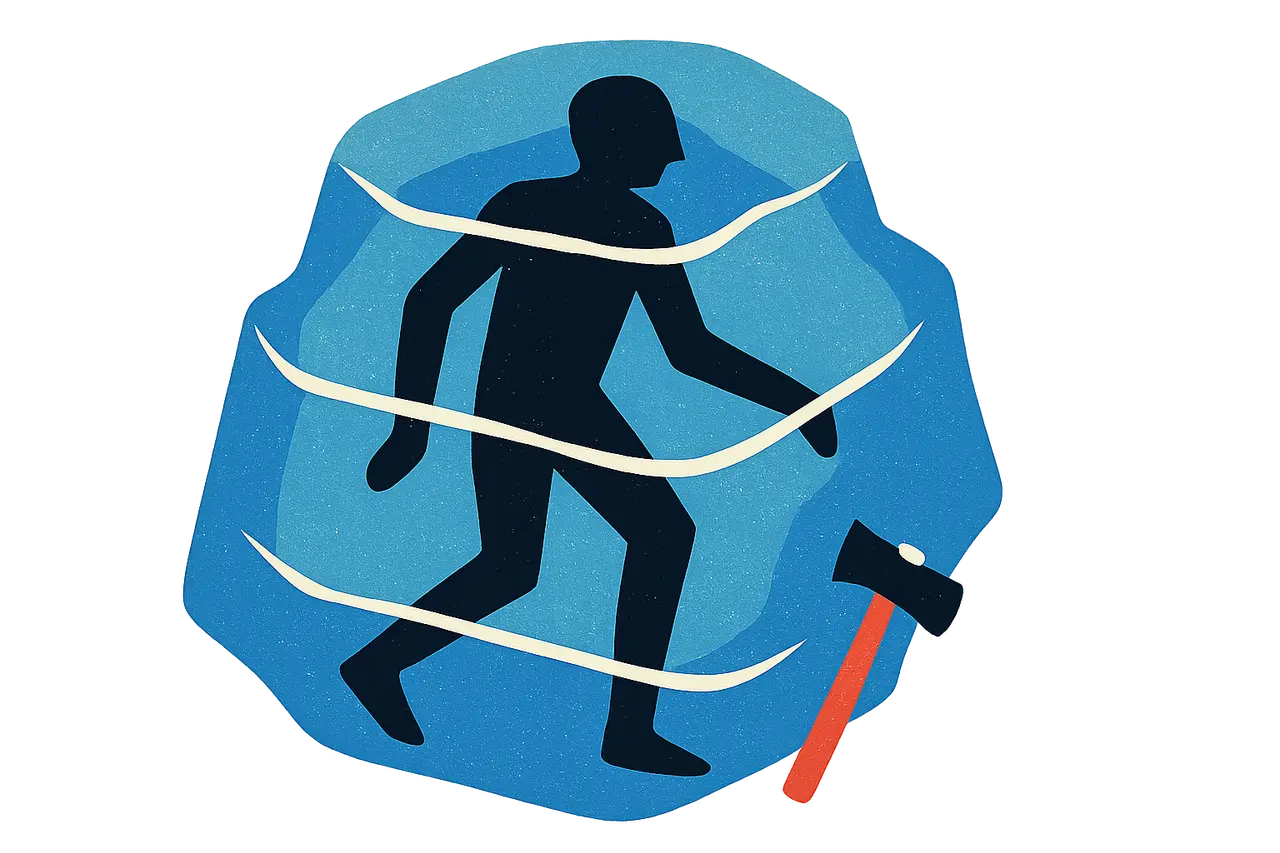
Ötzi the Iceman died on an Alpine pass more than 5,300 years ago, in the Copper Age, killed by an arrow that cut an artery in his left shoulder. His 2023 genome shows he was probably balding and darker-skinned than the long-haired figure in most reconstructions.
He is a natural “wet” mummy, preserved almost whole by glacier ice. That has let scientists keep testing his body since hikers found it in September 1991. Many of the details that matter most were only found decades later:
| Year | Finding | What it changed |
|---|---|---|
| 2001 | X-ray shows a flint arrowhead in his left shoulder | An assumed mountain accident became a murder |
| 2017 | His axe’s copper traced to southern Tuscany | Not local Alpine copper, as had been assumed |
| 2018 | Stomach holds ibex and deer meat, einkorn wheat and bracken fern | His last meal was unusually fatty |
| 2023 | High-coverage genome | Mostly Anatolian-farmer ancestry, dark skin, a tendency to baldness |
The genome result corrected an earlier one. The first sequencing, more than ten years before, seemed to show ancestry from Eastern European steppe herders. That turned out to be contamination with modern DNA. According to the South Tyrol Museum of Archaeology, most of his ancestors had come from Anatolia about 8,000 years ago. The few people alive today who share a common ancestor with him live mostly on Sardinia and Corsica. Albert Zink of Eurac Research said Ötzi had “the darkest skin tone that has been recorded in contemporary European individuals”. The mummy’s dark colour is largely his own skin.
He was about 46, around 1.60 m tall and roughly 50 kg. He had worn joints, soot-blackened lungs, whipworm and the oldest known evidence of Lyme disease. His 61 tattoos are short lines and crosses rubbed with charcoal, and they sit over painful, worn joints. Researchers think they may have been a treatment for pain rather than decoration.
His axe blade is 99.7% pure copper, valuable enough for the museum to ask if he was a tribal leader. Yet whoever shot him left it behind, and nobody has explained why.
Sources & references
5 referencesWell-established. Corroborated by 3 independent sources.