Egypt's 3,000-year-old wooden toe is a working prosthetic
A wood-and-leather big toe from a Luxor tomb was refitted to its owner's foot — and modern volunteers showed it actually helps you walk.
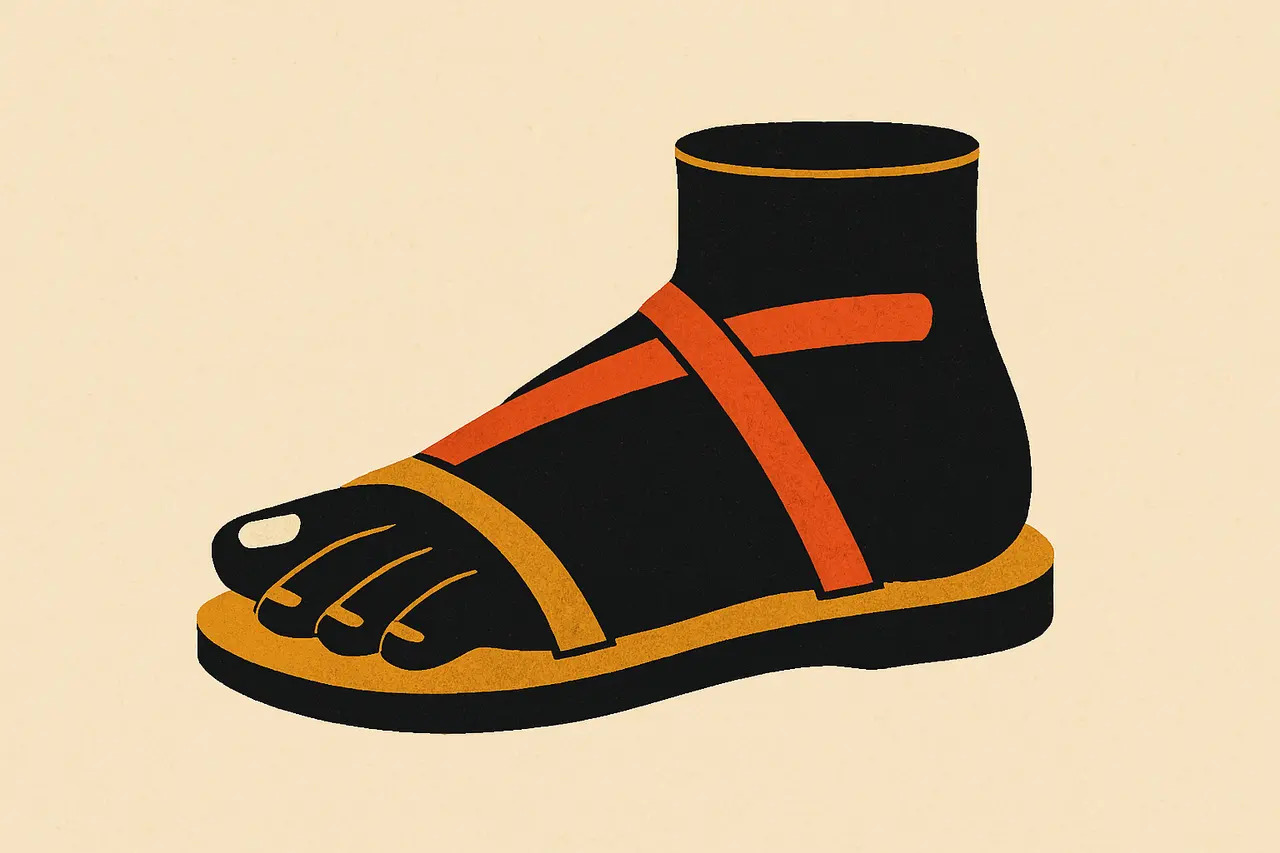
The Cairo Toe, a carved wooden big toe strapped to the right foot of a priest’s daughter buried near Luxor about 3,000 years ago, is one of the oldest known working prosthetics. A Swiss-led study in 2017 showed it had been refitted to her foot several times, so it was used in life rather than added for burial.
Her right big toe appears to have been amputated. The replacement was found in a plundered shaft tomb cut into an older rock-cut chapel at the Sheikh ‘Abd el-Qurna necropolis, a cemetery built for an elite close to the royal family. Egyptologists from the University of Basel, with the Egyptian Museum in Cairo and the University of Zurich, examined it under microscopy, X-ray and CT. They found a movable tip, a robust strap and signs of repeated refitting: the work of an artisan who knew feet well.
“They often wore sandals, so you can imagine that a well-formed foot was important.” — Egyptologist Andrea Loprieno-Gnirs, University of Basel
How we know it actually worked
Egyptians had reason to make the body whole for eternity, as mummification shows, so a false toe could simply have been a funeral fitting. Manchester researcher Jacky Finch settled the question in a gait lab. Two volunteers missing their right big toe walked in replica Egyptian sandals fitted with exact copies of the Cairo Toe and a second example, the Greville Chester toe in the British Museum, made of cartonnage, a papier-mâché of linen, glue and plaster.
Finch notes the big toe carries about 40% of body weight and drives forward propulsion. Neither copy raised pressure under the foot significantly, one volunteer walked “extremely well” in both, and both volunteers found the Cairo Toe particularly comfortable.
That pushes practical prosthetics back before 600 BC, several centuries earlier than the Roman Capua Leg, previously the earliest known. For prosthetic medicine, Finch concluded, the credit belongs firmly “at the feet of the ancient Egyptians”.
Sources & references
3 referencesWell-established. Corroborated by 3 independent sources.