Botticelli probably didn't burn his art in the 1497 bonfire
On this day · 7 February 1497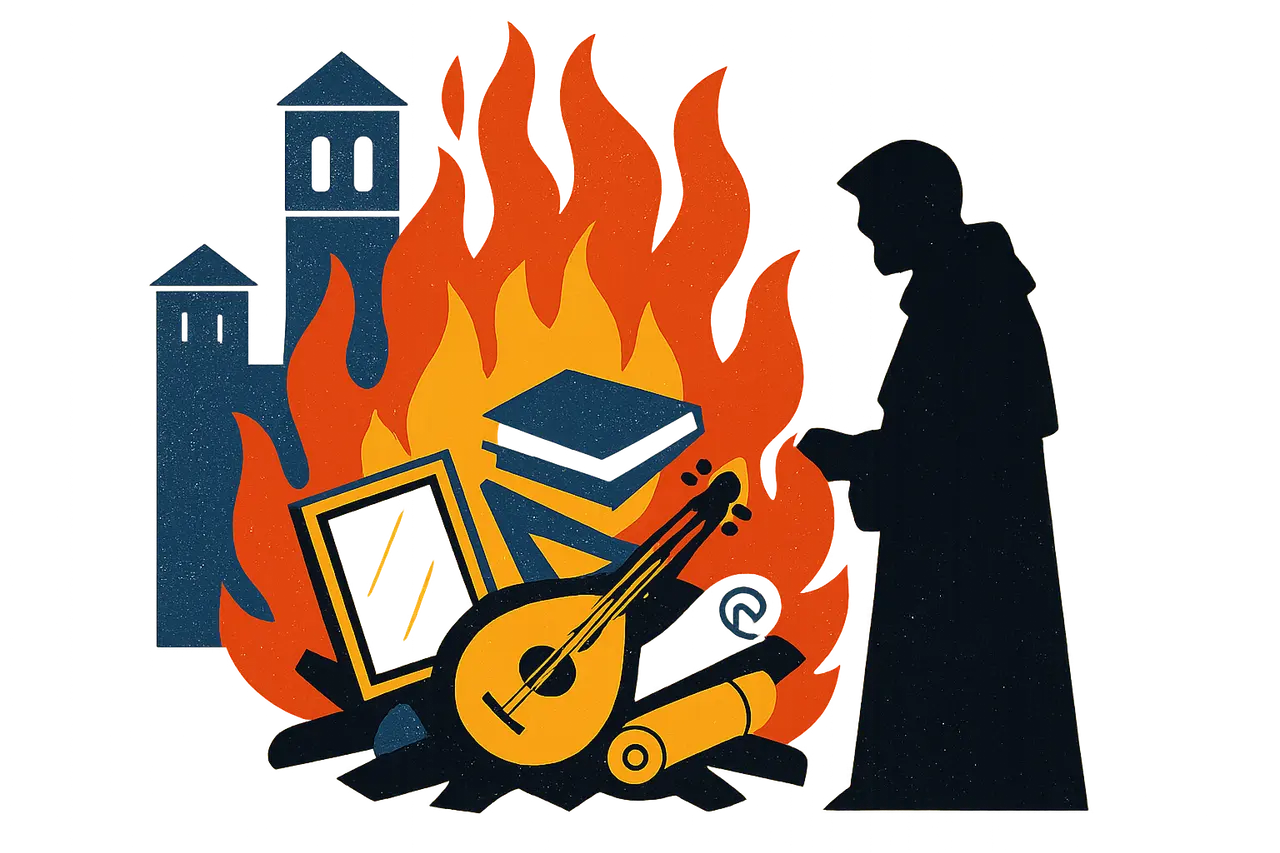
Savonarola's bonfire of the vanities blazed in Florence on 7 February 1497 — but the tale of Botticelli feeding it his paintings lacks evidence.
Florence’s most famous bonfire of the vanities was lit on 7 February 1497, Shrove Tuesday, in the Piazza della Signoria, where followers of the Dominican friar Girolamo Savonarola burned dice, playing cards, cosmetics, mirrors, false hair, profane books and paintings. It was not the only one: a second followed on 27 February 1498.
Carnival was usually Florence’s last indulgence before Lent. Savonarola turned it into a purge. Bands of children — more than a thousand, by one account — went through the city collecting “vanities” for the pyre, and the National Gallery in London describes him urging Florentines to burn all their profane books, paintings and jewels.
The best-known story about the fire is the least supported. It is often said that Sandro Botticelli threw his own mythological paintings onto the flames, yet no contemporary evidence backs the claim; it was already a popular legend by the 19th century. Botticelli was drawn to Savonarola’s preaching — the National Gallery counts him among the friar’s followers, along with the painter Fra Bartolommeo — but he apparently never became a full piagnone, or “weeper”, as the devoted were called. His brother Simone did.
The friar’s fall was fast:
- 1494: Piero de’ Medici is driven out of Florence, and Savonarola’s crusade against luxury gives him great power in the new republic.
- 1497: After the February bonfire, his attacks on clerical corruption lead Pope Alexander VI to excommunicate him, and the popular tide turns.
- 1498: A second bonfire burns on 27 February. A Franciscan, Francesco da Puglia, then challenges his supporters to an ordeal by fire; when the test collapses, a mob seizes Savonarola and hands him to the authorities.
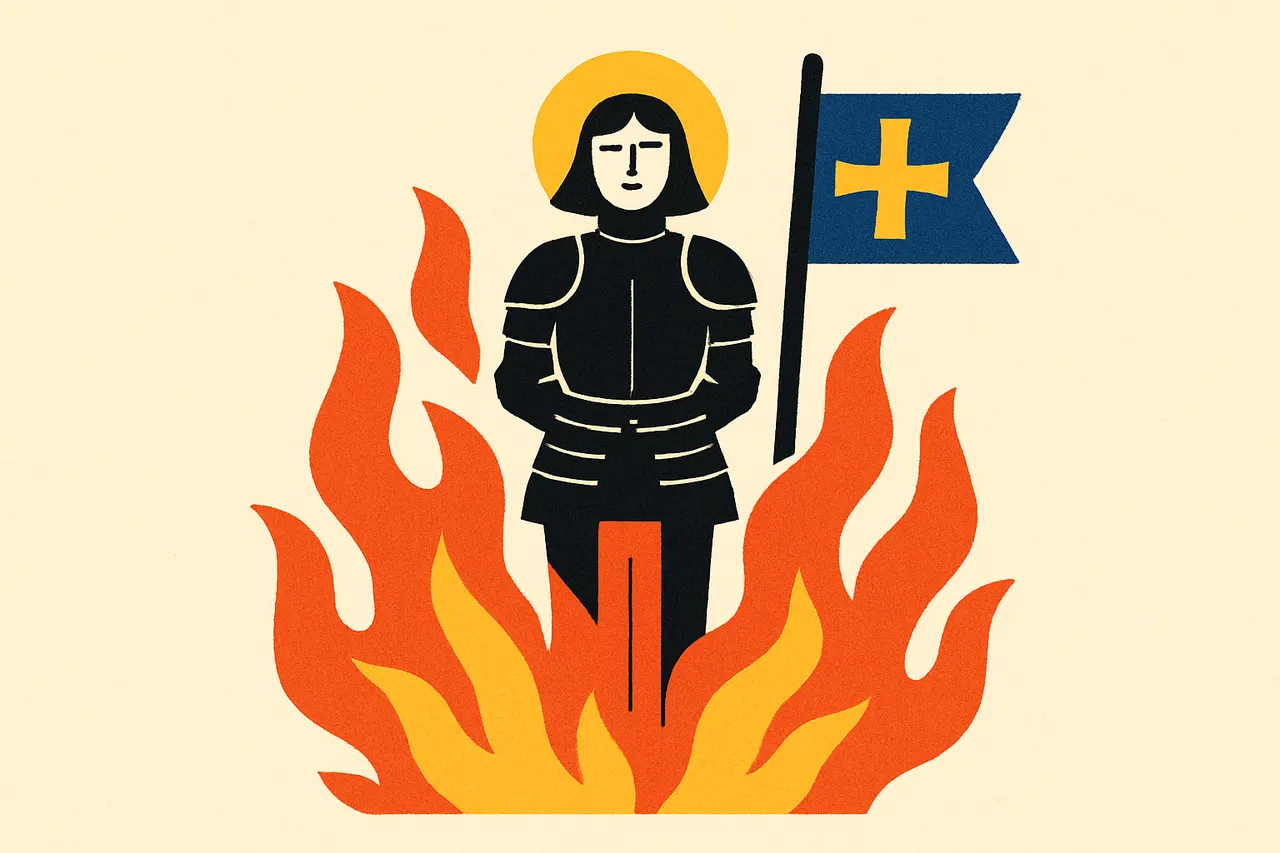
- 23 May 1498: Savonarola and two companions, Domenico da Pescia and Silvestro Maruffi, are executed and their bodies burned in the same piazza — a heretic’s death like Joan of Arc’s at Rouen.
His death opened the way for the Medici’s eventual return to the city.
Sources & references
4 referencesWell-established. Corroborated by 4 independent sources.