How many Gutenberg Bibles survive? About 49 of maybe 180
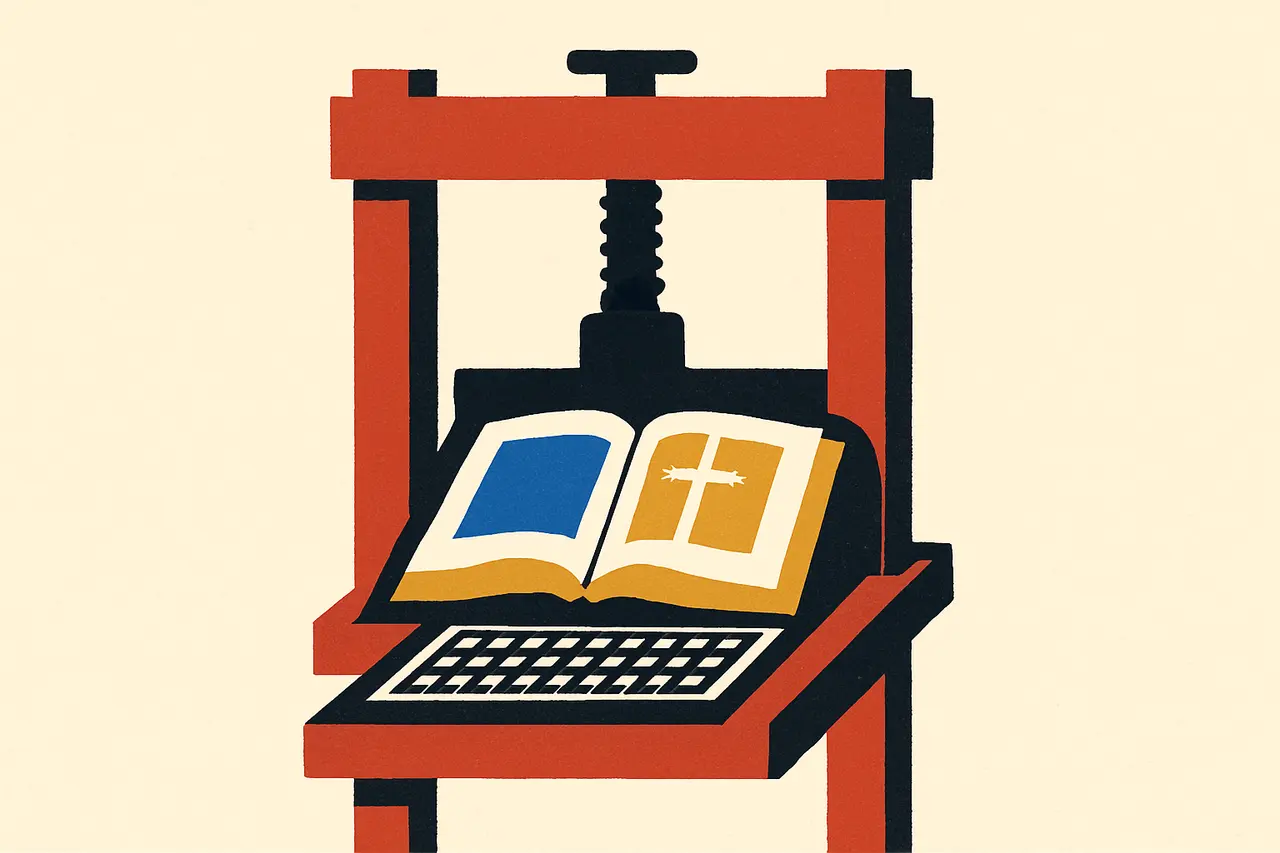
Gutenberg's Mainz Bible of the mid-1450s is Europe's first major printed book, but its print run rests on one letter and its survivors are counted differently by every library.
The Gutenberg Bible, printed at Mainz by Johannes Gutenberg and his financial partner Johann Fust in the mid-1450s, was the first major book printed in Europe with movable metal type, and about 49 copies survive. How many were printed in the first place is one of the shakiest numbers in book history.
The usual figure of 180 copies rests on a single letter by Enea Silvio Piccolomini, the future Pope Pius II, who saw samples of the work at Frankfurt in 1455. Harvard’s library gives estimates ranging from 70 to as many as 270. Even the completion date of 1455 rests on one notation on the binding of a paper copy in Paris.
The survivors are counted differently too:
| Measure | Figure | Counted by |
|---|---|---|
| Copies printed | ~180 (one 1455 letter) | Bavarian State Library |
| Range of print-run estimates | 70 to 270 | Harvard Library |
| Surviving copies | 48–49 | Harvard; Bavarian State Library |
| Survivors on vellum / paper | 12 / 37 | Bavarian State Library |
| Complete copies | 20–23 | Harry Ransom Center; Harvard |
| ”Perfect” vellum copies | 3 | Library of Congress |
The counts differ partly because libraries define a “complete” copy differently: Harvard counts 48 survivors but only 23 of them complete.
The workshop’s own experiments show through. Gutenberg cut a typeface of 290 different characters, modelled on a Gothic missal script. He meant to print the book headings in red, gave up, and instead printed a guide table so rubricators could add them by hand. That table survives in only two copies, in Munich and Vienna.
It was not the first book printed with metal type. Korea’s Jikji, a Buddhist text now in the Bibliothèque nationale de France, was printed with cast metal characters in 1377, 78 years earlier. What the Mainz Bible proved was that such a press could mass-produce large books in Europe. Scribes went on copying by hand for generations, but printing shops soon spread across the continent.
Sources & references
5 referencesWell-established. Corroborated by 5 independent sources.