William the Conqueror landed at Pevensey on 28 Sept 1066
On this day · 28 September 1066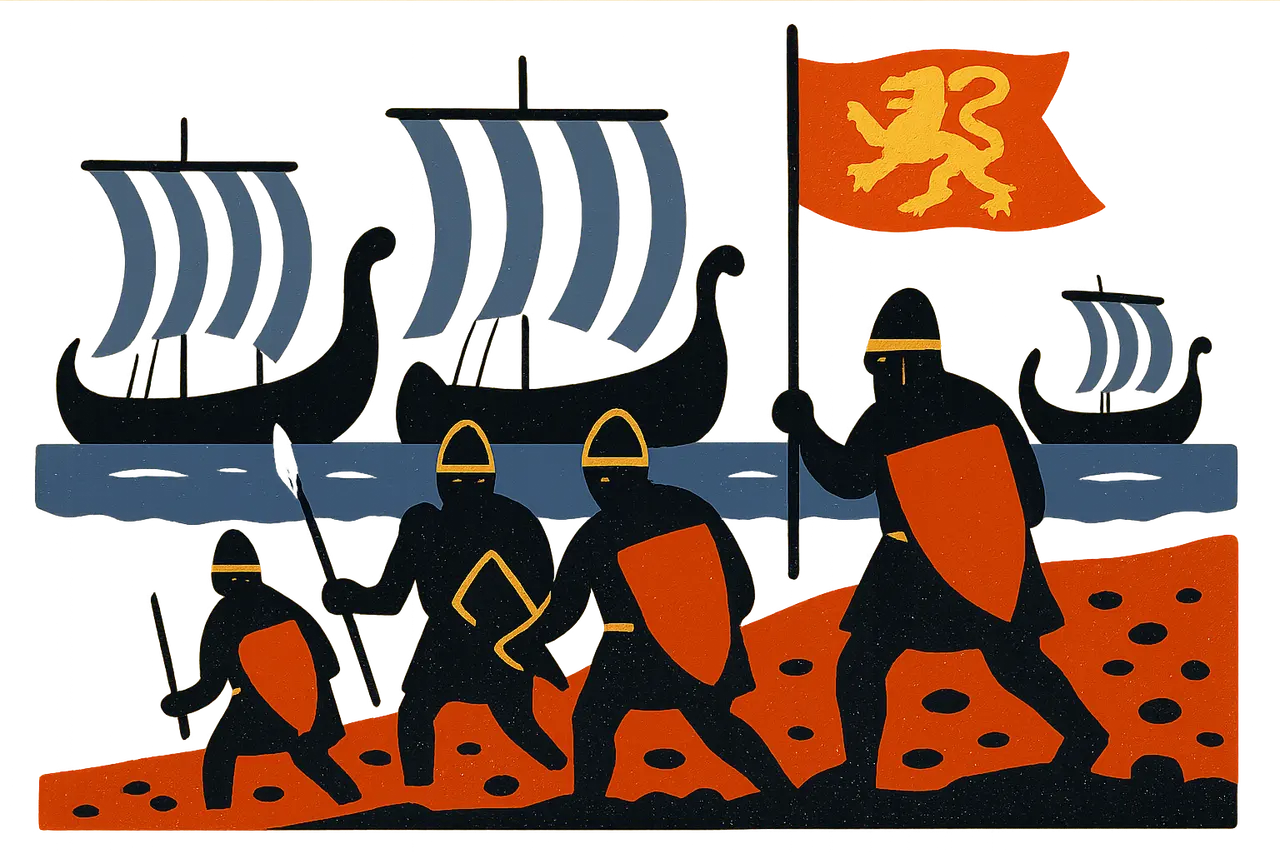
Norman invasion fleet of 700 to 1,000 ships came ashore unopposed in Sussex while King Harold was still in the north after Stamford Bridge.
William, Duke of Normandy, sailed into Pevensey Bay before dawn on 28 September 1066 and landed unopposed at Pevensey on the Sussex coast, three days after King Harold II had destroyed a Norwegian invasion at Stamford Bridge in Yorkshire. With Harold’s army hundreds of miles to the north, nobody was there to stop the Normans coming ashore.
The invasion was a big one. English Heritage estimates a fleet of 700 to 1,000 ships, many of them fishing and cargo boats pressed into service, carrying probably about 8,000 fighting men and more than 2,000 horses. History.com gives a lower figure of about 7,000 troops. Either way, it took weeks to get them across the Channel:
- August 1066: army and fleet gather at Dives-sur-Mer, then wait more than a month while westerly winds block the crossing.
- September: a first attempt to sail goes badly wrong. The fleet is blown about 100 miles east along the Normandy coast, loses ships in wrecks, and ends up at Saint-Valery-sur-Somme, where William has the dead buried in secret to protect morale.
- 27 September: at sunset the fleet sets out on the 91-mile night crossing, anchoring at sea so as to arrive in daylight.
- 28 September: the landing. William throws up a temporary fortification, almost certainly inside the walls of Anderida, a Roman shore fort built about AD 290.
- 29 September: the army marches along the coast to Hastings, where within days it raises fortifications.
The best-known story of the landing, in which William trips on the beach, cuts his nose, and is saved from a bad omen by William fitz Osbern’s remark that he had already taken England in his hands, comes from twelfth-century writers rather than eyewitnesses.
The beach itself has gone. Pevensey in 1066 was a peninsula on a tidal bay, and the sea now lies about a mile from the fort’s walls. Sixteen days after the landing came the Battle of Hastings.
Sources & references
4 referencesWell-established. Corroborated by 3 independent sources.