Röntgen, born 1845, was expelled from school over a cartoon
On this day · 27 March 1845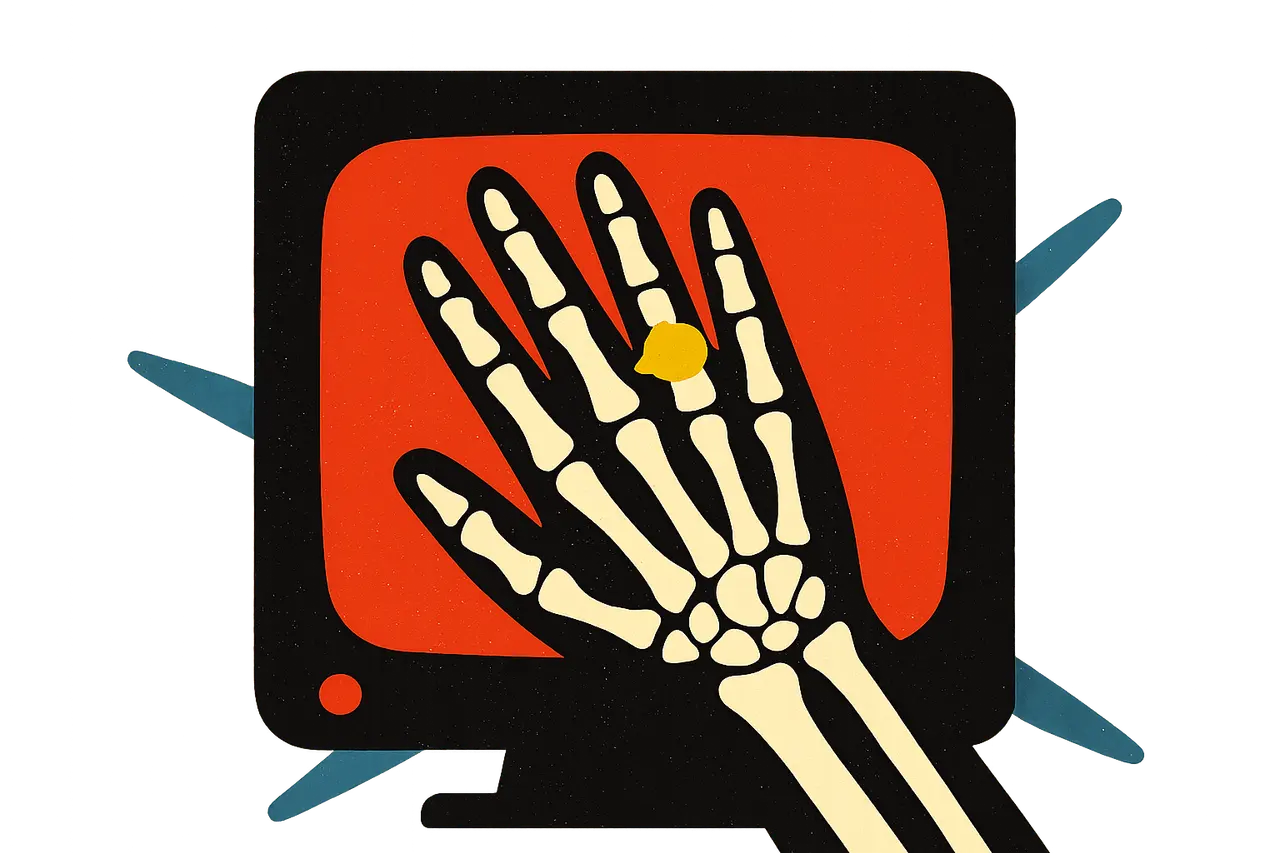
Born on 27 March 1845, the future discoverer of X-rays lost his school diploma over a caricature he didn't draw — and died nearly bankrupt.
Wilhelm Conrad Röntgen, the physicist who discovered X-rays, was born on 27 March 1845 in Lennep, in Germany’s Lower Rhine Province, the only child of a cloth merchant and manufacturer. He grew up largely in the Netherlands, where he showed little academic promise but a knack for building mechanical gadgets.
His scientific career nearly ended before it began. In 1862, at a technical school in Utrecht, he was expelled after being accused of drawing a caricature of a teacher. The Nobel Foundation’s biography says the punishment was unfair: someone else had drawn it. Without the diploma needed to enrol as a regular university student, he took the entrance examination for the Zurich Polytechnic instead, studied mechanical engineering, and earned a doctorate from the University of Zurich in 1869. Even then, the missing diploma initially kept him from a post at the University of Würzburg.
He got there eventually, becoming its professor of physics in 1888. On 8 November 1895, while studying electrical discharges in low-pressure gas, he spotted a screen glowing across his darkened lab and identified a new, penetrating radiation he called X-rays. In 1901 he received the very first Nobel Prize in Physics.
What he did with the fame
Röntgen turned down most of the rewards on offer:
- He declined a title that would have made him a member of the German nobility.
- He gave his Nobel Prize money to the University of Würzburg.
- He took out no patents, so anyone could build X-ray equipment.
Rival physicist Philipp Lenard later claimed Röntgen had taken credit for his work, an accusation the German Patent and Trade Mark Office describes as groundless. Röntgen died in Munich on 10 February 1923, nearly bankrupt after the inflation that followed the First World War.
Sources & references
5 referencesWell-established. Corroborated by 4 independent sources.