Michael Faraday was born in 1791 and began as a bookbinder
On this day · 22 September 1791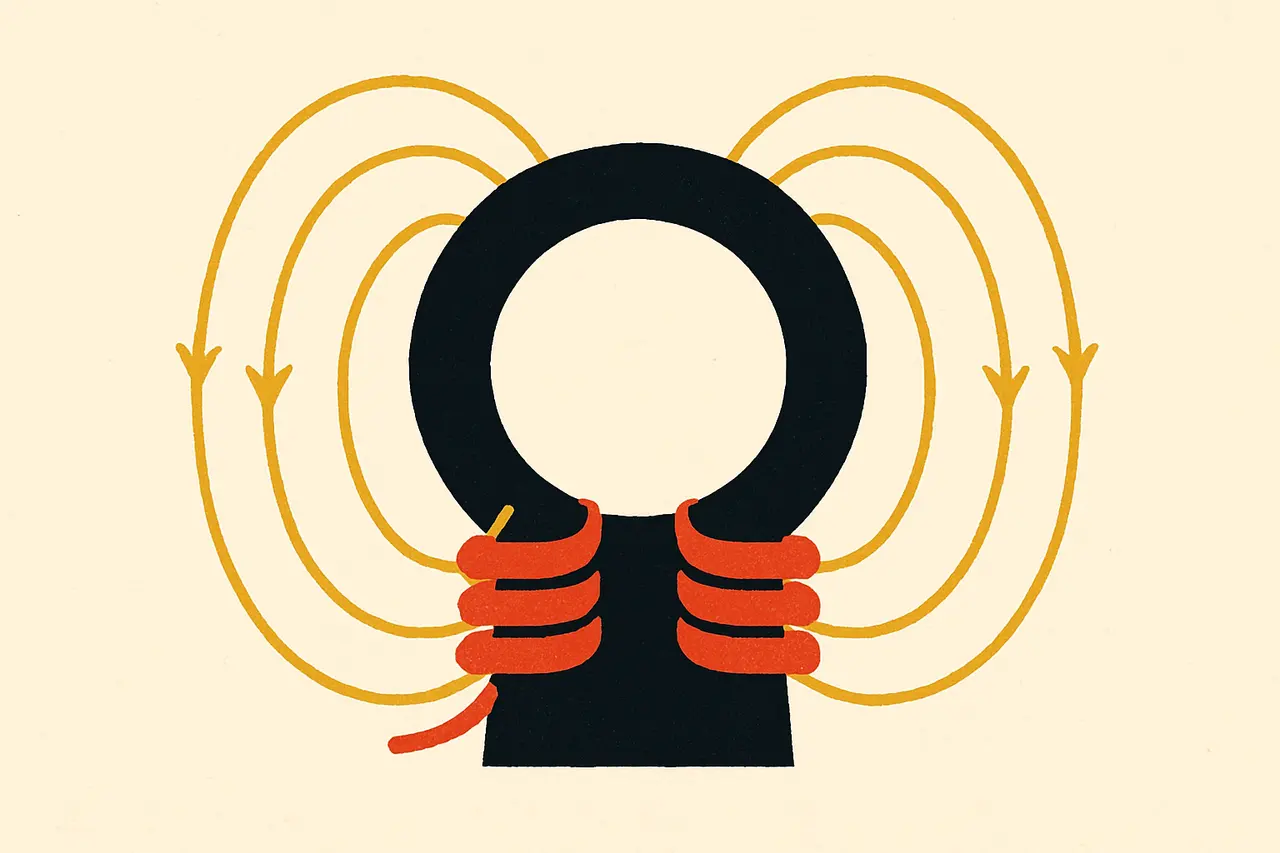
Born in 1791 to a London blacksmith, Faraday bound books for seven years before a set of lecture notes won him a job with Humphry Davy.
Michael Faraday was born on 22 September 1791 in Newington Butts, then a village just south of London, to James Faraday, a Yorkshire blacksmith, and Margaret Hastwell, a farmer’s daughter, who had moved there only months earlier.
He is often described as having no schooling at all. That overstates it slightly: he attended a day school where he learned to read, write and count, and very little else. At 13 he went to work as an errand boy for the bookseller George Riebau, and in 1805 Riebau took him on as an apprentice bookbinder. He served seven years, binding books by day and reading them, with a growing fascination for electricity and magnetism.
From bookbinder to the Royal Institution
- 1810: attends lectures on electricity and mechanics at John Tatum’s house.
- 1812: after attending Humphry Davy’s lectures at the Royal Institution, he writes up and illustrates his notes and sends them to Davy.
- 1813: Davy’s assistant is sacked for fighting, and Faraday is offered the post. That October he leaves on an 18-month European tour as Davy’s assistant, meeting Ampère and Volta.
Davy had first advised him to keep binding books:
“Science [is] a harsh mistress, and in a pecuniary point of view but poorly rewarding those who devote themselves to her service.” (Humphry Davy to Faraday)
The warning did not stick. In 1831 Faraday discovered electromagnetic induction, the principle behind the generator and the transformer, despite never learning higher mathematics; James Clerk Maxwell later supplied the equations.
The class barrier never fully lifted. Davy, then President of the Royal Society, opposed his former assistant’s election as a Fellow in 1824 and was overruled. Faraday later declined the Society’s presidency in 1857. From 1991 to 1999 his portrait appeared on the £20 note, and the unit of capacitance, the farad, still bears his name.
Sources & references
4 referencesWell-established. Corroborated by 4 independent sources.