factsmate.

Why Babies Worldwide Say Mama and Papa
50 sec read
Why Babies Worldwide Say Mama and Papa

In language after unrelated language, "mother" sounds like mama and "father" like papa, not from a shared root but from a baby's mouth.

Verified · University of Sussex

From Swahili (mama, baba) to Mandarin (mama, baba) to Basque (ama, aita), the words for mother and father look eerily alike across languages with no common ancestor. In the 1950s, anthropologist George Murdoch surveyed 470 languages and found a ma-type syllable in the word for mother 52% of the time, and a pa- or ta-type syllable in the word for father in 55%.

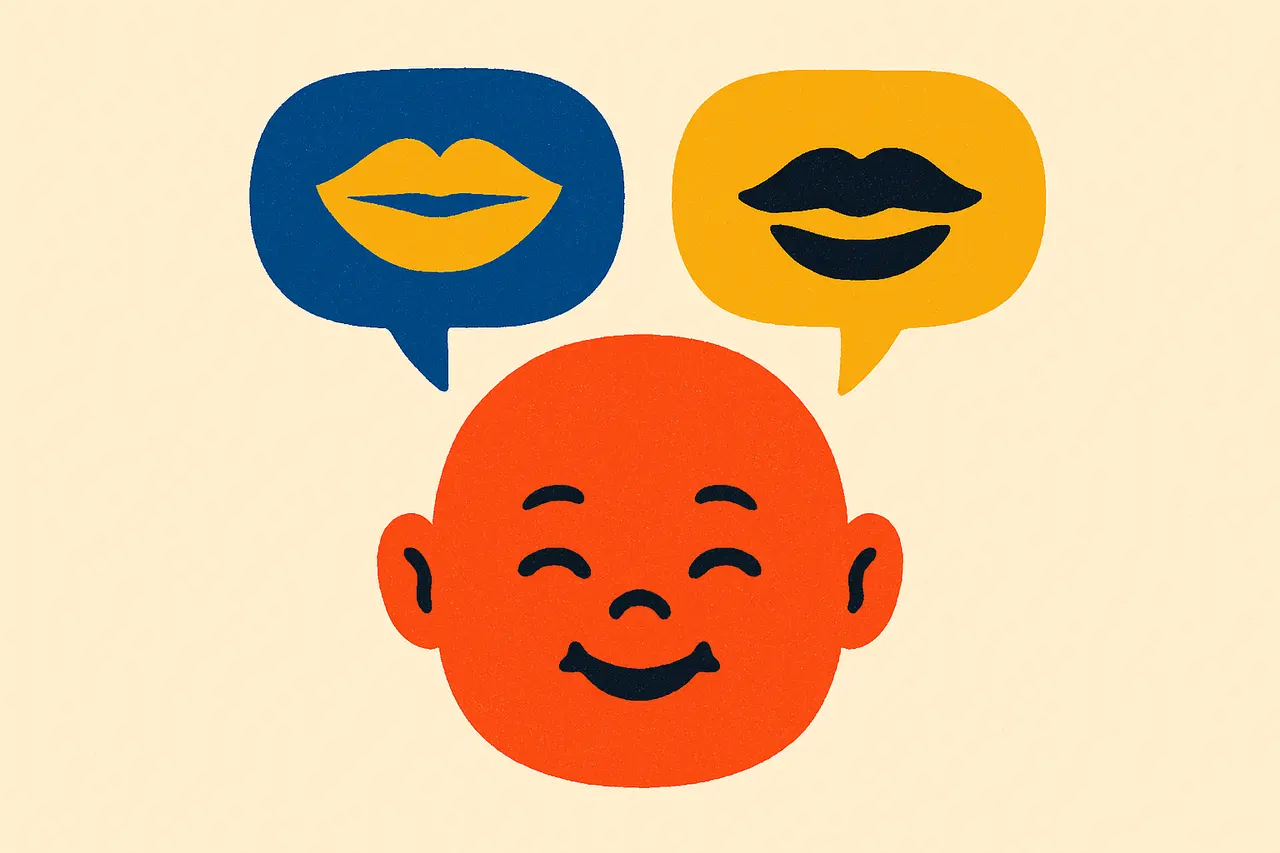
The explanation, set out by the great linguist Roman Jakobson in 1959, is delightfully simple: these are the easiest sounds a baby can make. When infants move from cooing to babbling, the first vowel they produce is the effortless [a] (just open and voice), and the first consonants are the labials [m], [b] and [p] — made by pressing the lips together, no tongue required.

So the universal first babble is mama, then baba and papa.

Doting parents simply claim these noises as their own names. The words aren’t inherited; each new baby reinvents them, which is why they keep recurring everywhere.

470
languages surveyed by Murdoch
52%
used a ma- sound for mother
[m] [a]
easiest sounds for a baby

Sources & references

3 references

Well-established. Corroborated by 3 independent sources.

1 University of Sussex academic essay “The very first babbling sounds produced by young children are usually of the form mama, followed by baba and papa. This is universally true, regardless of the adult language surrounding the child, because these are simply the easiest sounds to make... The correct explanation of the origin of the mama/papa words was provided by Roman Jakobson.” sussex.ac.uk ↗
2 Language Log (University of Pennsylvania) academic linguistics blog “The labial sounds 'm' and 'p' can be made most easily because they only require opening/closing of the mouth, with reference to Roman Jakobson as expounded by Larry Trask.” languagelog.ldc.upenn.edu ↗
3 Wikipedia Community encyclopedia “Mama and papa use speech sounds that are among the easiest to produce: bilabial consonants like /m/, /p/, and /b/, and the open vowel /a/. They are therefore often among the first word-like sounds made by babbling babies; Roman Jakobson hypothesized the explanation.” en.wikipedia.org ↗
✓ Last reviewed Jun 9, 2026

More like this