Sign languages aren't English on the hands — they have their own grammar
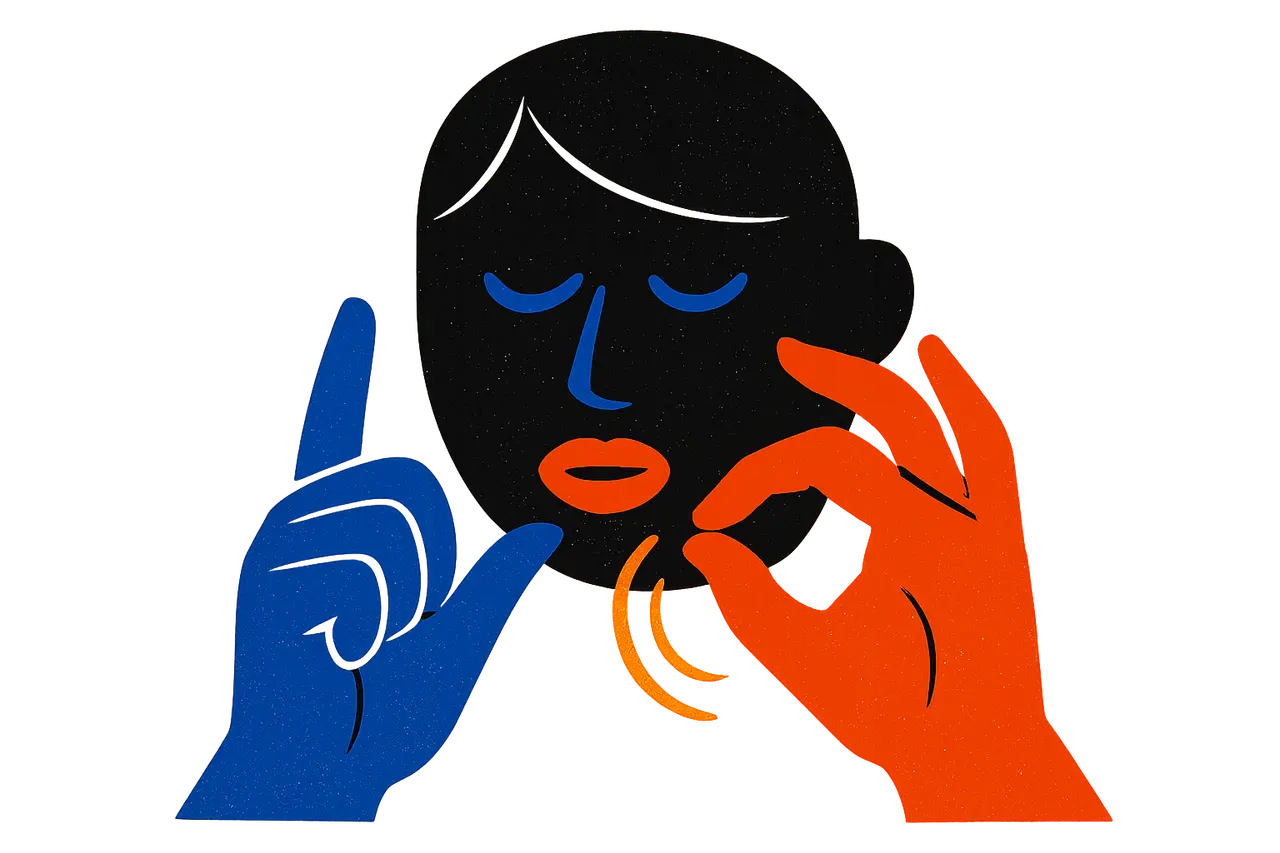
ASL is a full natural language with its own word order and syntax, unrelated to the spoken language around it.
A common myth is that sign language is just a manual code for English. It isn’t. According to the NIDCD (the U.S. National Institute on Deafness and Other Communication Disorders), American Sign Language (ASL) is “a complete, natural language that has the same linguistic properties as spoken languages, with grammar that differs from English.”
Expressed through movements of the hands and face, ASL has its own rules for word order, marking, and sentence structure. It often uses a topic-comment organisation and word orders unlike English, and exploits space and facial expression as grammar — none of it borrowed from the surrounding spoken language.
Because sign languages are independent, they are also not universal: ASL and British Sign Language are mutually unintelligible, even though both countries speak English. Each Deaf community’s language evolved on its own, with grammar suited to the visual-spatial channel rather than the voice.
Sources & references
2 referencesWell-established. Corroborated by 2 independent sources.