The McGurk effect: what you see can change what you hear
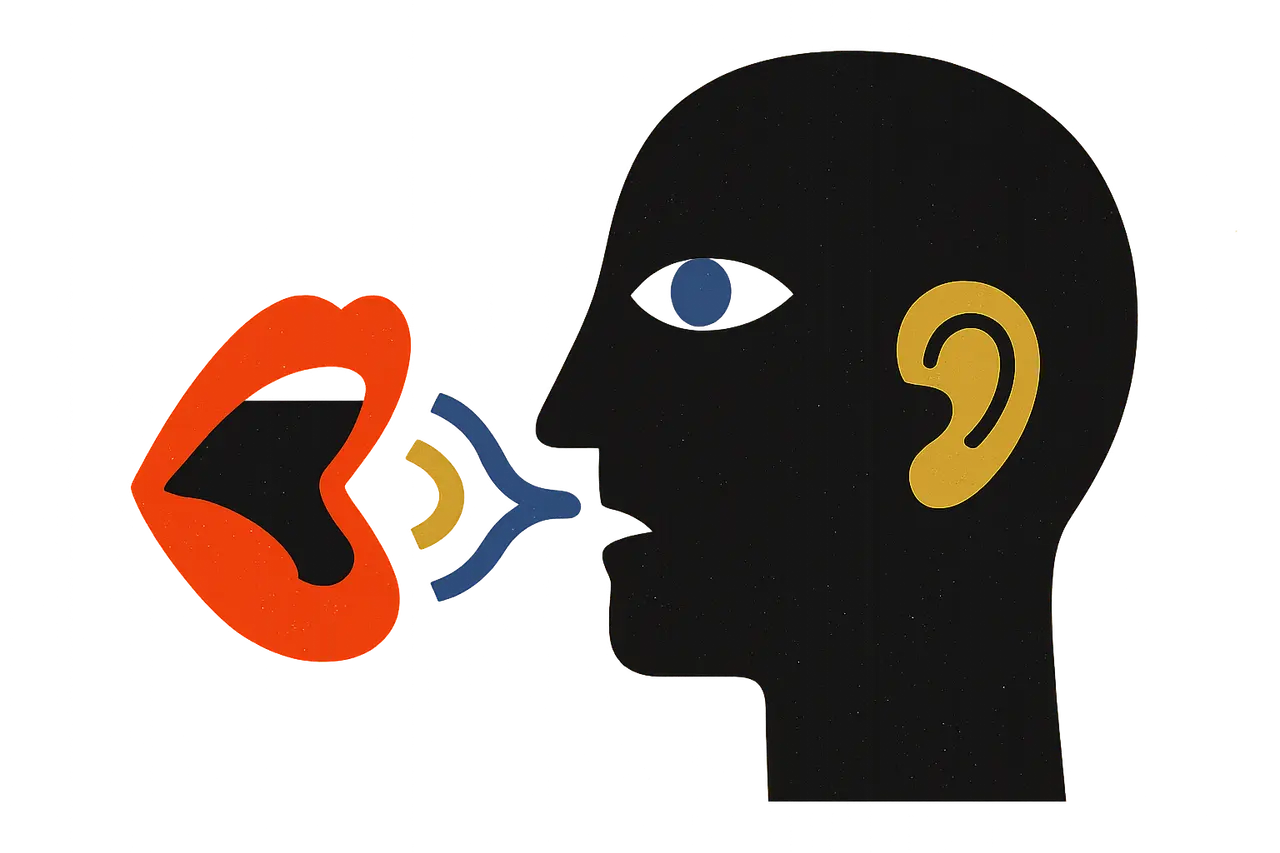
Watch a face mouth one sound while a different sound plays, and your brain may invent a third one entirely.
Hearing feels like a direct readout of the world, but your brain is quietly cross-checking your ears against your eyes. The proof arrived by accident. In 1976, psychologists Harry McGurk and John MacDonald were studying how infants perceive speech when a dubbing mix-up paired one spoken syllable with the wrong moving face — and the result was so strange they dropped the original study to chase it.
They had dubbed the sound “ba” onto video of a face articulating “ga.” Viewers heard neither. Most perceived a third sound, “da” — a compromise. The reason lies in how the syllables are made: “ba” is bilabial, formed by closing the lips, while “ga” is velar, formed at the back of the mouth. The eyes plainly see no lip closure, contradicting the “ba” the ears report, so the brain settles on “da,” a sound made in between that fits both streams of evidence.
Perception is not a recording. Your brain fuses sound and sight into a single best guess.
The illusion, published as Hearing Lips and Seeing Voices, works even when you know the trick: close your eyes and you hear “ba”; open them and the face overrides your ears. It isn’t equally strong for everyone, though. The effect is notably weaker in Japanese and Chinese speakers than in English speakers — partly, researchers think, a matter of cultural habits about how much one looks at a speaker’s face — and it fades when the face is unfamiliar. All of which reveals that speech understanding is fundamentally audiovisual: we read lips constantly without realizing it, which is why conversation is harder in the dark or over a glitchy video call.
Sources & references
3 referencesWell-established. Corroborated by 3 independent sources.