Strong Sunlight May Erase the Word Blue
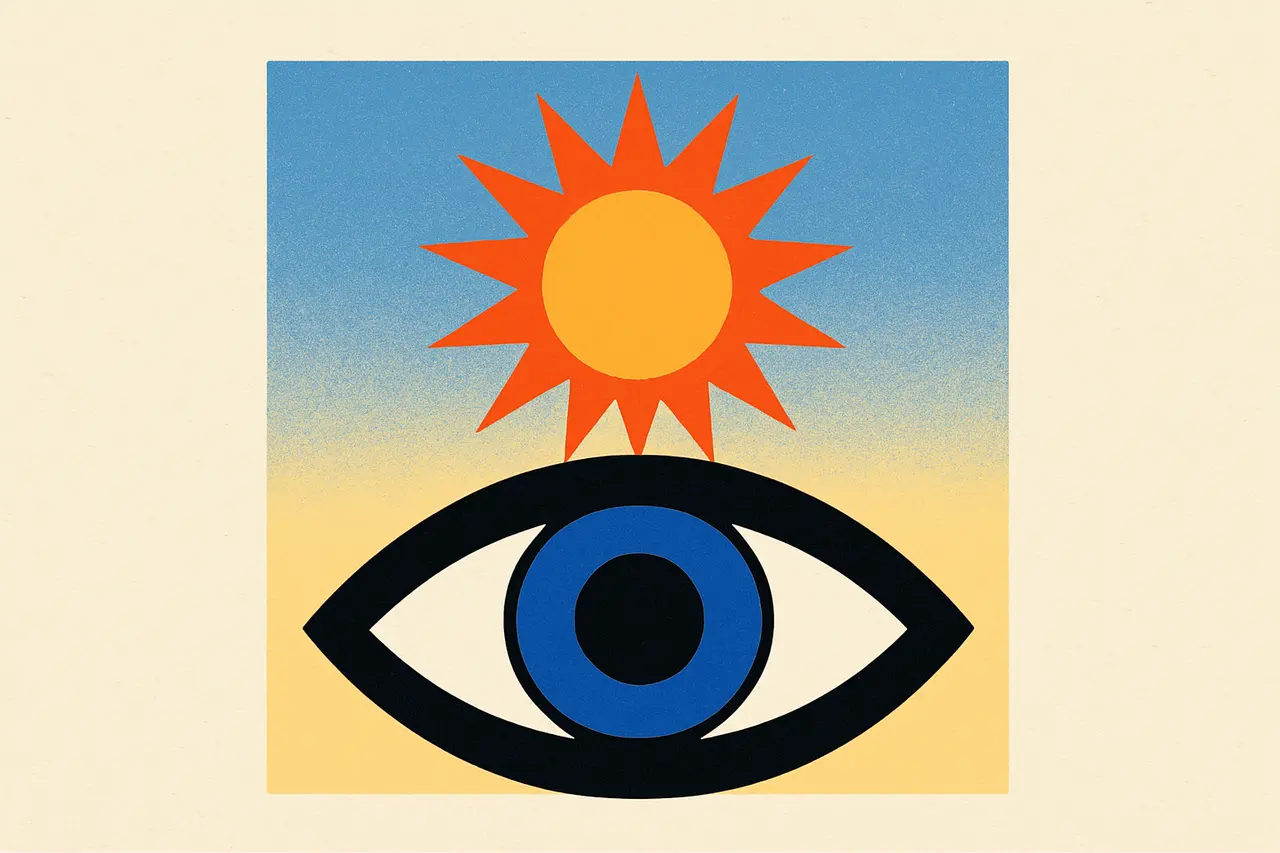
A survey of 834 languages found that the more UV-B sunlight a population gets, the less likely its language is to have a dedicated word for blue.
Not every language carves out a separate word for blue. Many lump it together with green or with “dark,” and a 2023 study suggests the sky’s own light may be part of the reason.
Linguist Dan Dediu analysed 834 languages and matched each to the UV-B sunlight its speakers historically received. Only 549 of those languages — about 66% — had a dedicated blue term, and the ones that lacked it clustered near the equator. As modelled UV-B exposure climbed, the probability of a language carrying a specific word for blue fell from roughly 94% to about 46%.
Where the sun is fiercest, “blue” is the color most likely to go unnamed.
The proposed mechanism is biological, not cultural. A lifetime of intense ultraviolet light causes lens brunescence — a gradual yellowing of the eye’s lens that dims and muddies blue light. If generations of speakers literally see blue less vividly, the pressure to give it its own word weakens. A separate 2004 study had already noted that distinct “blue” words grow rarer toward the equator, hinting at the same sunlit pattern.
Sources & references
2 referencesWell-established. Corroborated by 2 independent sources.