Mount Fuji's Last Eruption Began
On this day · 16 December 1707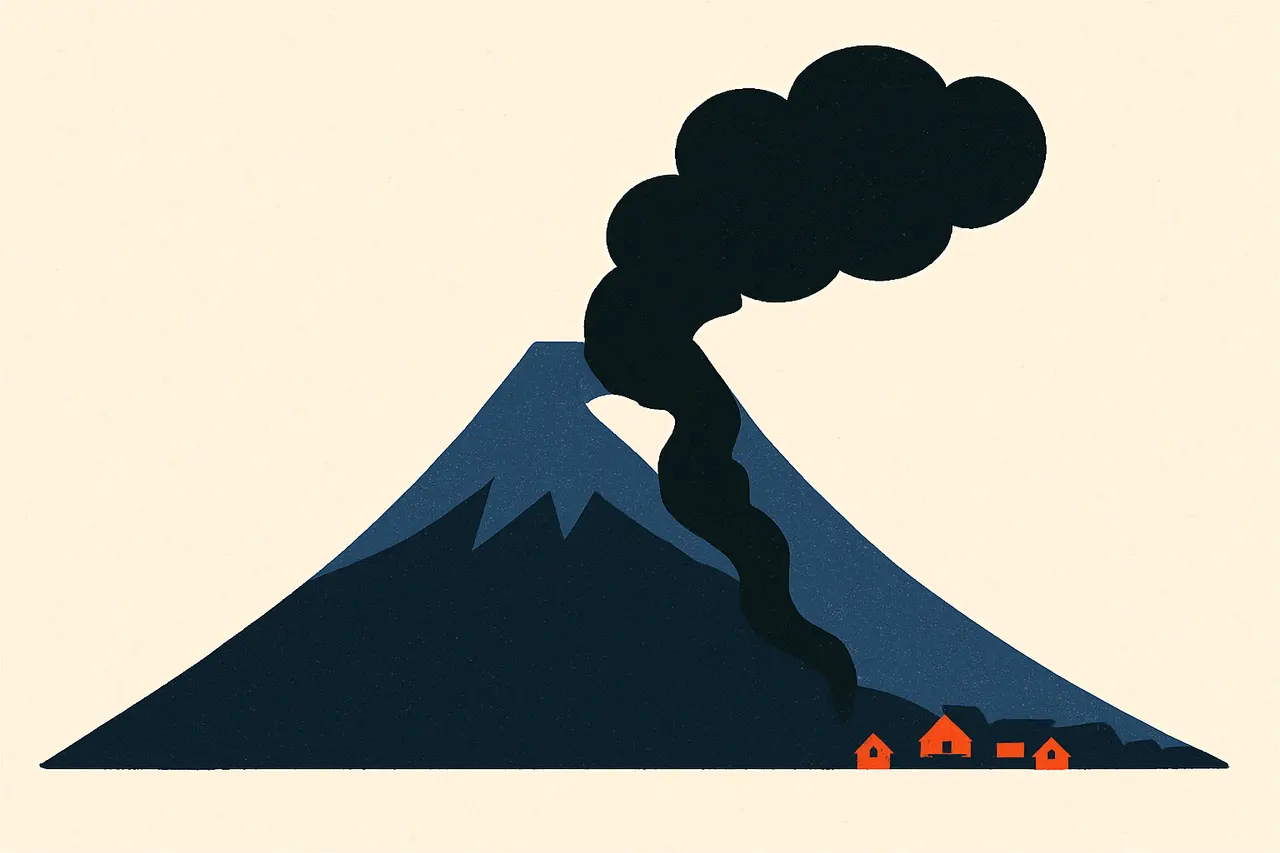
On a winter morning in 1707, Japan's tallest peak roared awake for the last time, raining ash on a city 100 kilometres away.
On 16 December 1707, Mount Fuji entered what would become its most recent eruption, an event named for the Hoei era then underway. Unlike Fuji’s earlier outbursts, this one produced no lava flow. Instead it blasted enormous volumes of ash and pumice from a new crater on the volcano’s southeastern flank.
The blast came just 49 days after the great Hoei earthquake of 1707, a magnitude-8 rupture along the Nankai Trough, and many scientists suspect the quake helped trigger the eruption. Westerly winds carried the fallout far across central Japan, dusting the shogun’s capital of Edo (modern Tokyo), more than 100 kilometres away.
Three centuries on, Fuji has stayed silent, but geologists still watch it closely.
The eruption rumbled on until 24 February 1708, leaving the distinctive bulge known as Hoei-zan on Fuji’s slope. It remains the mountain’s last confirmed activity, making the snow-capped cone one of the world’s most-monitored dormant volcanoes.
Sources & references
2 referencesWell-established. Corroborated by 2 independent sources.