The Tea Act behind the Boston Tea Party cut tea prices
On this day · 16 December 1773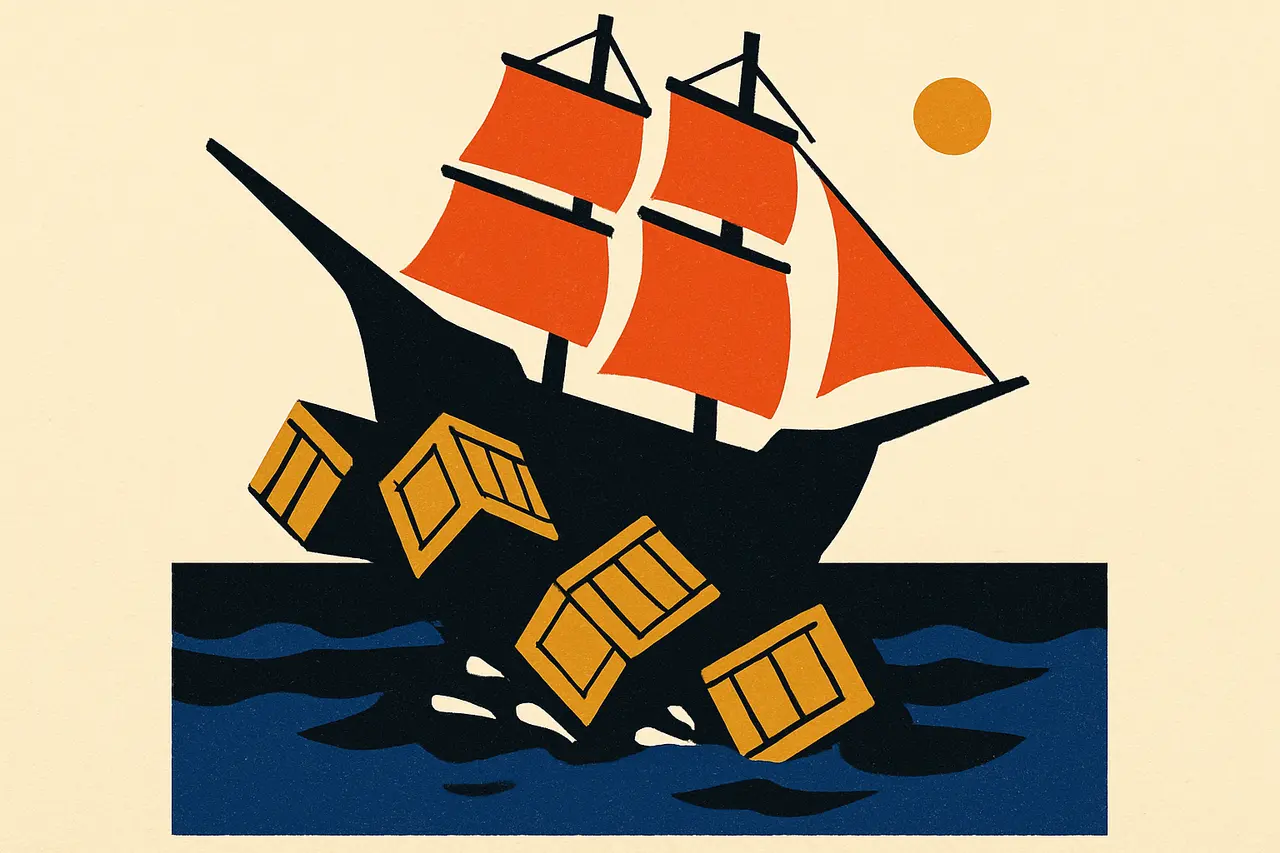
Colonists dumped 342 chests into Boston Harbor in December 1773 over a law that cut the price of tea, and they didn't call it a 'tea party'.
Colonists destroyed 342 chests of East India Company tea in Boston Harbor on the night of December 16, 1773, boarding the Dartmouth, Eleanor and Beaver at Griffin’s Wharf and spending about three hours splitting chests and tipping them overboard. Estimates of the boarding parties run from 30 to 130 men, some disguised as Mohawk warriors.
Did the Tea Act raise the price of tea?
No. It made tea cheaper. The Tea Act of May 10, 1773 let the struggling company ship tea to America without paying British duty, so its legal tea undercut the smuggled Dutch tea many colonists drank. What remained was the Townshend duty on tea, collected in colonial ports and the only one of the 1767 duties Parliament had kept when it repealed the rest in 1770. Paying it meant accepting Parliament’s right to tax people who had no vote there. Add sales through a few appointed consignees and the act was a bailout, a monopoly and a test of principle at once. The quarrel was older than the act: it ran back through the Stamp Act of 1765.
Boston’s crisis had a deadline. If the Dartmouth’s duty was unpaid by December 17, customs officers could seize the ship and land the tea, and Governor Thomas Hutchinson refused to let the ships sail home. The protest followed a mass meeting at Old South Meeting House. Merchant John Rowe wrote that night:
“Tis said near two thousand People were present at this affair.” — John Rowe, diary, 16 December 1773
When was it first called the Boston Tea Party?
Not at the time. Bostonians spoke of the Destruction of the Tea; the cosier name was attached later. John Adams praised an intrepid “exertion of popular power”; Hutchinson called it high treason. Since no ship captain could identify the men responsible, Britain punished the whole town, closing the port until the company was repaid. Boston had not cooled since the 1770 Boston Massacre, and in March 1774 another cargo of tea went into the harbour.
Sources & references
5 referencesWell-established. Corroborated by 4 independent sources.