Henry Ford patents a plastic car body
On this day · 13 January 1942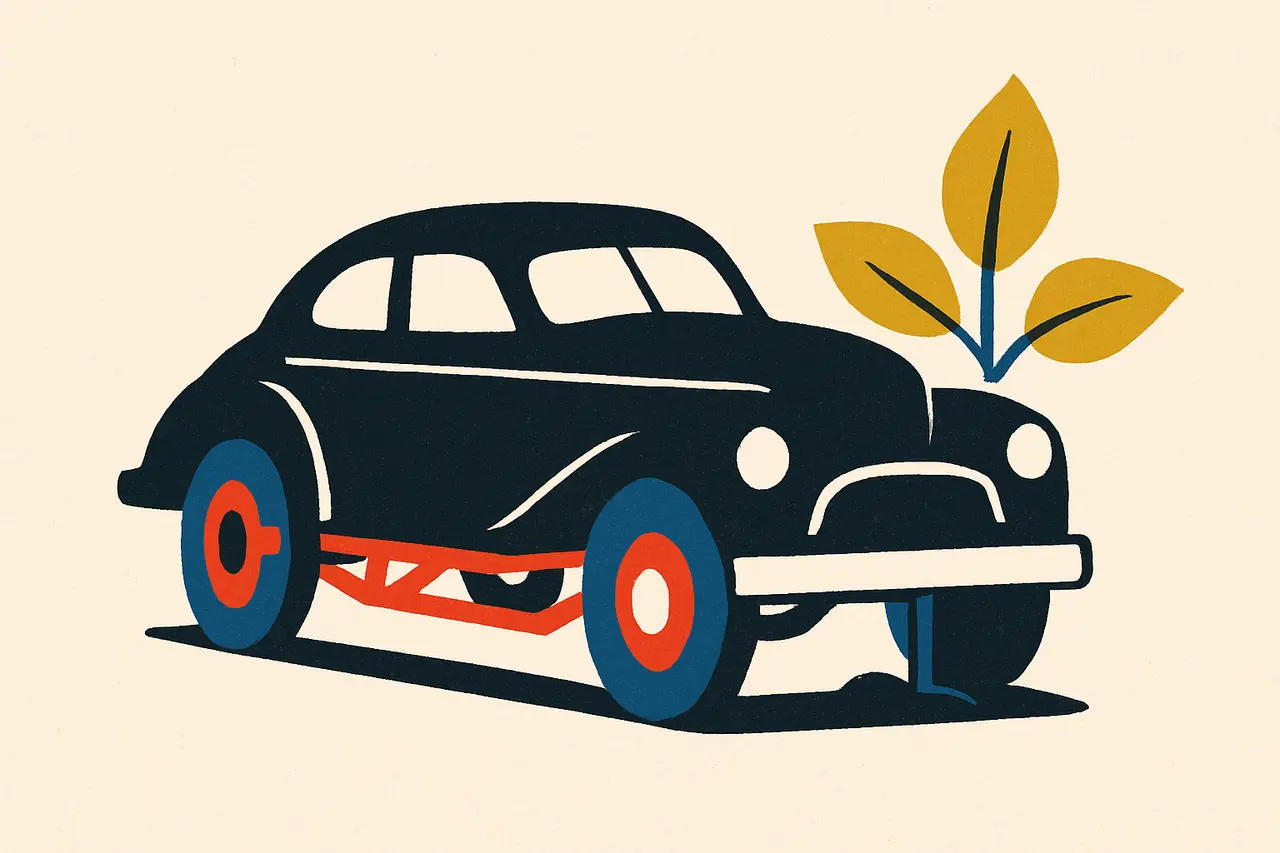
Long before "green" cars, Ford bolted soybean-based plastic panels onto a steel frame and won a patent for it.
On January 13, 1942, the U.S. Patent Office granted Henry Ford and co-inventor Eugene T. Gregorie patent US 2,269,452, titled “Automobile Chassis Construction.” Filed in July 1940, it described a car whose body was built from lightweight plastic panels rather than stamped steel.
The so-called Soybean Car, first shown publicly in 1941, hung 14 plastic panels on a tubular-steel frame. The result weighed roughly 2,000 lbs — about 1,000 lbs, or 30%, lighter than a comparable metal car, with panels said to be just a quarter-inch thick. Ford championed agricultural plastics partly to create a new market for farm crops like soybeans and hemp.
It was 30% lighter than a regular metal car.
The exact recipe is lost; one engineer later recalled soybean fiber in a phenolic resin. World War II halted civilian auto production, and the experiment quietly died — but the idea of bio-based car materials would resurface decades later.
Sources & references
3 referencesWell-established. Corroborated by 3 independent sources.