Charles Lindbergh takes off on the first solo nonstop transatlantic flight
On this day · 20 May 1927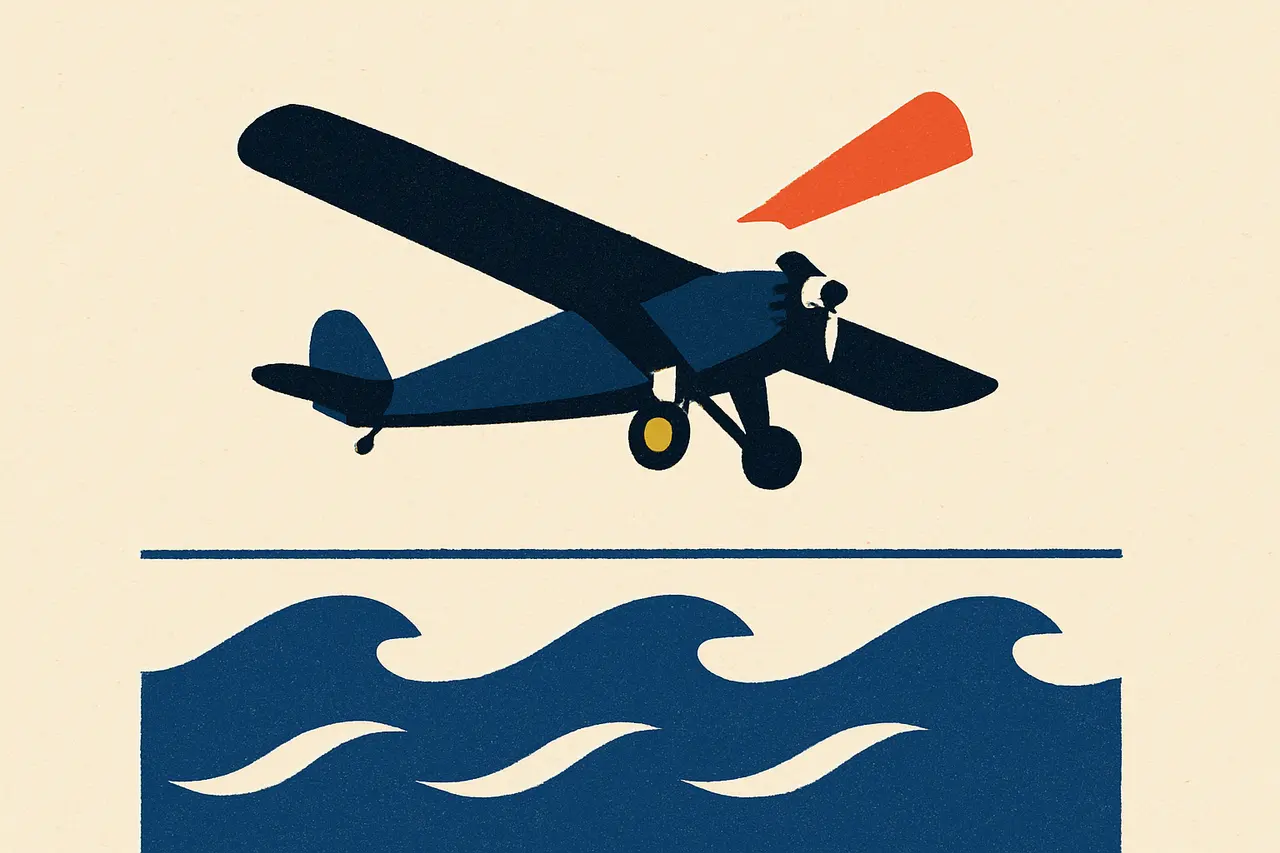
A lone pilot in an overloaded monoplane lifted off a muddy Long Island runway and aimed for Paris.
At 7:52 a.m. on 20 May 1927, Charles Lindbergh coaxed his fuel-laden monoplane, the Spirit of St. Louis, off the rain-soaked runway at Roosevelt Field on Long Island, New York. So heavy with gasoline that it barely cleared telephone wires at the field’s edge, the little Ryan aircraft turned out over the Atlantic with a single man at the controls and no radio.
The Smithsonian’s National Air and Space Museum, which keeps the plane today, records what followed: 33 hours and 30 minutes and 3,610 miles later, Lindbergh set down at Le Bourget field near Paris.
A crowd of about 100,000 surged across the airfield to greet him.
He had become the first aviator to fly the Atlantic solo and nonstop, an instant global celebrity. The flight collapsed the ocean in the public imagination and helped launch the age of commercial aviation.
Sources & references
2 referencesWell-established. Corroborated by 2 independent sources.