Christiaan Huygens discovered Titan on 25 March 1655
On this day · 25 March 1655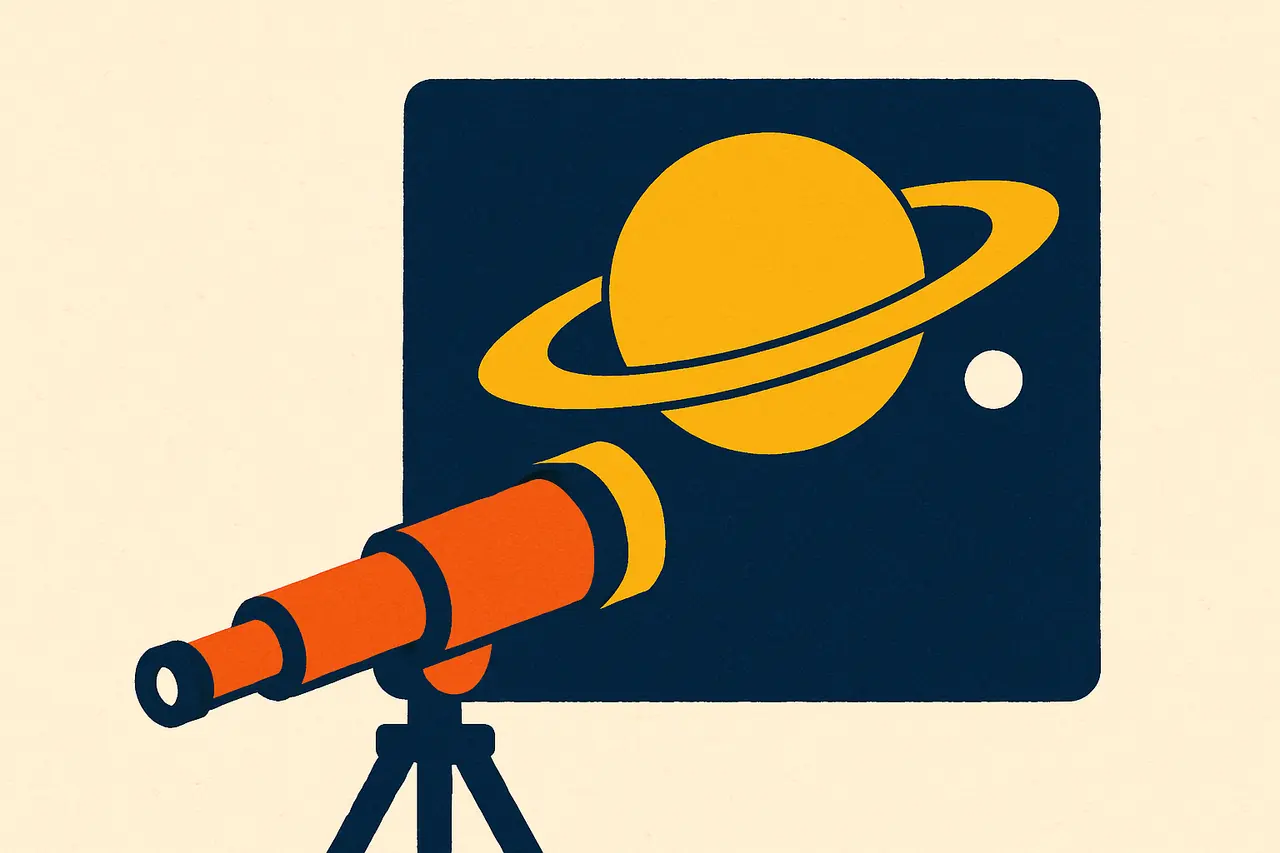
Huygens spotted Saturn's biggest moon with lenses he ground himself. Its haze later fooled scientists about its size until Voyager 1 measured it.
Titan, Saturn’s largest moon, was discovered on 25 March 1655 by Dutch astronomer Christiaan Huygens, using a telescope fitted with a lens he had ground and polished himself. It was the first moon of Saturn anyone had seen.
Huygens was not hunting for moons. He had pointed the telescope at Saturn to study its puzzling rings, and was surprised to find a large companion travelling with the planet. He called it Luna Saturni, Latin for “Saturn’s moon”; the name Titan was later given by John Herschel, son of William. It circles Saturn every 15 days and 22 hours, always showing the planet the same face.
The new moon quickly became a test of equipment. When the French astronomer Ismaël Boulliau failed to see Titan, Huygens concluded that Boulliau’s telescope was inferior to his own, and by 1656 he was confirming his theory that Saturn was encircled by a ring.
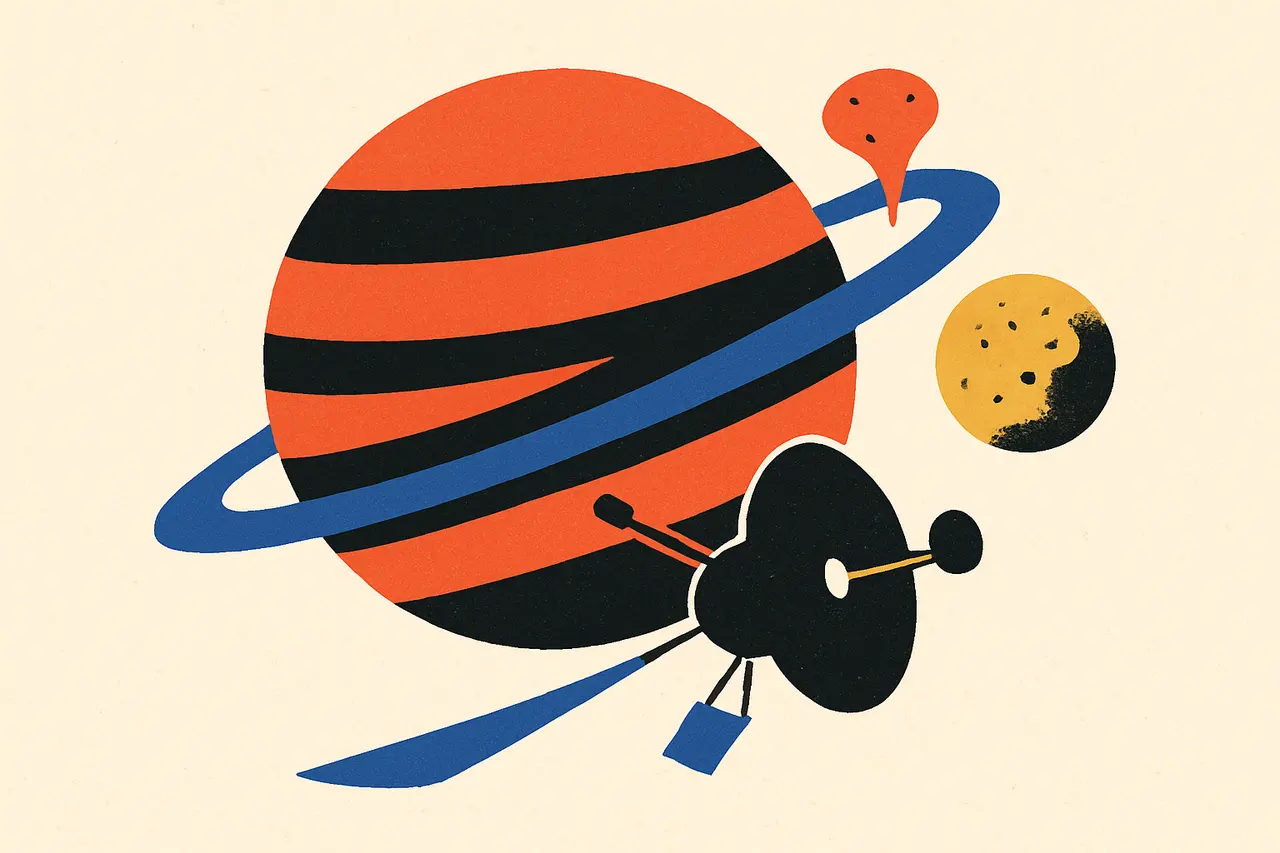
Titan’s haze long hid its true size. Because its thick, opaque atmosphere made it look bigger, scientists at the time of Pioneer 11’s 1979 flyby thought it might be the largest moon in the solar system. Voyager 1 measured its radius the following year and settled the mix-up: Titan is second, behind Jupiter’s Ganymede, which is larger by just 2%. Both moons are bigger than the planet Mercury.
Titan remains the only moon with a dense atmosphere, mostly nitrogen, and the only world besides Earth known to have standing liquid on its surface, in rivers, lakes and seas of methane and ethane. Europe’s Huygens probe, named after the discoverer, landed there on 14 January 2005. NASA’s Dragonfly rotorcraft is due to launch in 2028 and spend three years making multiple landings.
Sources & references
4 referencesWell-established. Corroborated by 3 independent sources.