Herschel found Enceladus in 1789; it was named in 1847
On this day · 28 August 1789
William Herschel spotted Saturn's sixth moon with the world's largest telescope; it waited 58 years for a name and two centuries to reveal its ocean.
Saturn’s moon Enceladus was discovered by William Herschel on 28 August 1789, using his new 40-foot reflecting telescope at Slough, England, then the largest in the world.
The date sometimes appears as 29 August, including in the opening line of NASA’s own anniversary article, but the narrative of that same piece and the European Space Agency both give 28 August. Herschel thought he had found Saturn’s sixth moon, and on 17 September he caught a seventh, later called Mimas.
The telescope behind the find was a mixed success. Its 49-inch mirror weighed about a ton, yet NASA notes its optics did not advance astronomy as much as Herschel had hoped.
From dot to ocean world
- 1789: Herschel logs a bright point orbiting Saturn, but never names it.
- 1847: his son John Herschel proposes names for Saturn’s first seven known moons in his Results of Astronomical Observations made at the Cape of Good Hope. He drew on the Titans and their kin, choosing Enceladus, a giant of Greek myth.
- 1980–81: the Voyagers return the first detailed images, revealing heavily cratered ground beside smooth, crater-free plains that point to a young surface.
- 2005–2015: NASA’s Cassini makes 22 encounters, finds water vapour and ice jetting from “tiger stripe” cracks near the south pole, and in October 2015 dives within 30 miles of the surface through the plume.
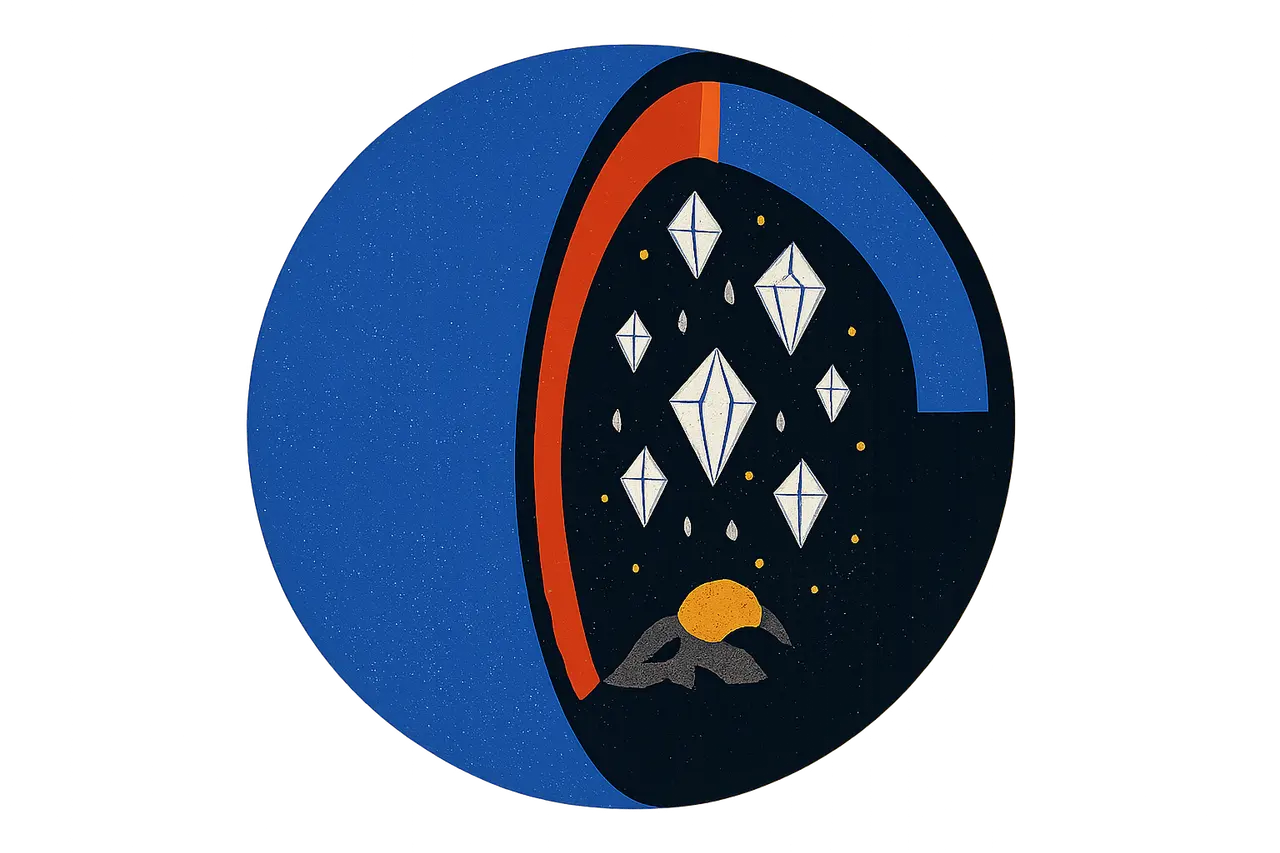
That spray explains a long-standing puzzle. Enceladus, only about 500 km across, is the most reflective body in the solar system, bouncing back almost all the sunlight that hits it, because much of the erupted ice falls back as fresh snow. The jets are fed by a global salty ocean under the ice, and the James Webb Space Telescope has since imaged a water-vapour plume stretching about 40 times the moon’s own size.
Sources & references
3 referencesWell-established. Corroborated by 3 independent sources.