Neptune was predicted by math in 1846, with a dose of luck
On this day · 23 September 1846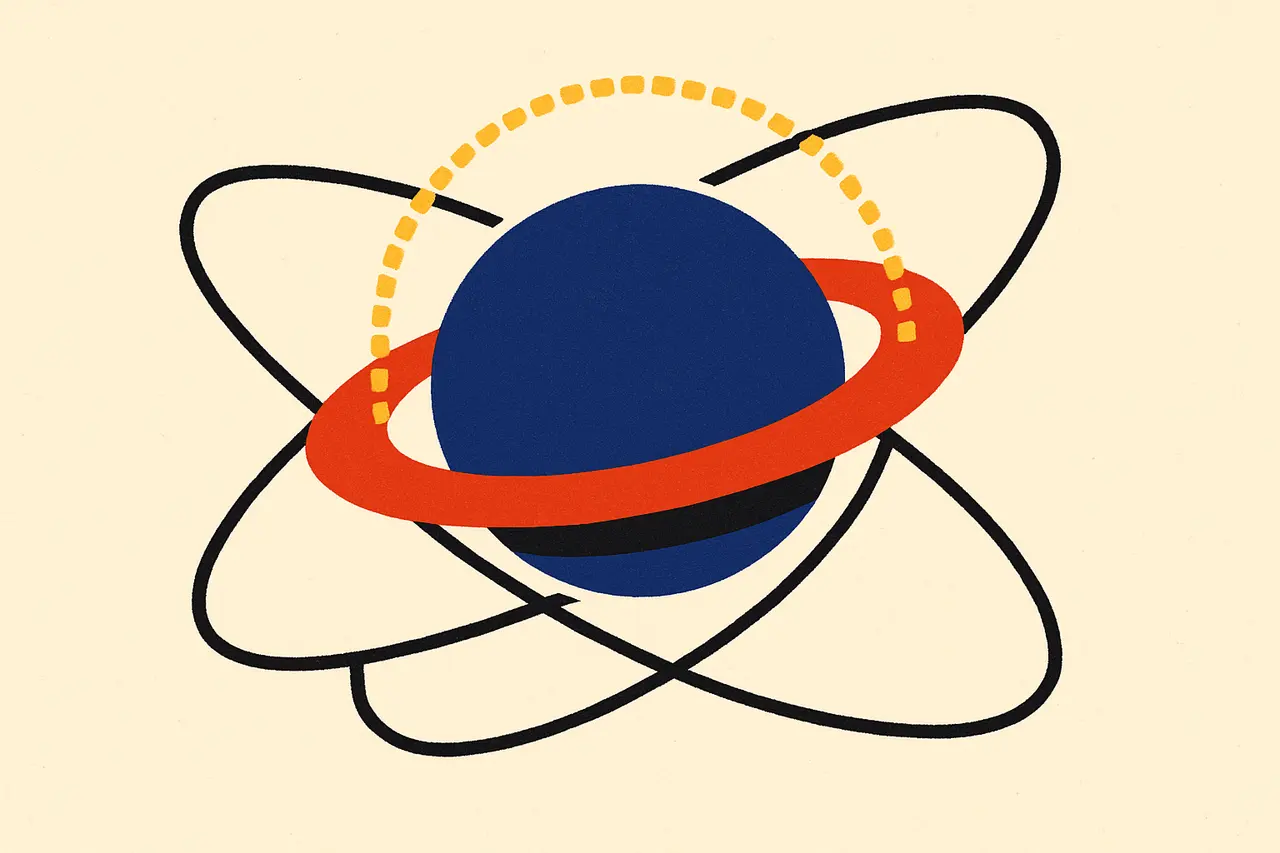
Neptune turned up within one degree of Le Verrier's prediction — but his orbit was wrong, and astronomers had seen the planet before without knowing.
Neptune was found on the night of September 23–24, 1846, by Johann Gottfried Galle at the Berlin Observatory, within about one degree of the position French mathematician Urbain Le Verrier had calculated from irregularities in the orbit of Uranus. (The sighting straddled midnight, which is why sources give both dates.)
The search took less than an hour. Galle’s student Heinrich d’Arrest suggested comparing the sky against a new Berlin Academy star chart; when Galle called out an eighth-magnitude star, d’Arrest replied that it was not on the map. In England, John Couch Adams had reached a similar prediction, but Astronomer Royal George Airy ignored his work until Le Verrier’s paper arrived.
Not quite pure mathematics
The tidy story — a planet caught with a pencil — needs two footnotes. First, Neptune had been seen before and not recognised:
- 1612: Galileo records it.
- 10 May 1795: the French astronomer Lalande logs it.
- Summer 1846: Cambridge’s James Challis actually sights it, but his search method does not let him realise what he has found.
Second, the prediction was less exact than its success implied. Using Lalande’s old position, American astronomers Sears Walker and Benjamin Peirce computed Neptune’s real orbit in 1847 and found it differed widely from Le Verrier’s.
“Its discovery by Galle must be regarded as a happy accident.” — Benjamin Peirce, 1847
Peirce argued that the real planet’s orbit lay outside the region the mathematicians had actually explored, so Galle had found it partly by luck. European astronomers bristled, but even Airy conceded that Le Verrier’s orbital elements were incorrect.
That does not shrink the achievement. The calculation told Galle where to point, and Neptune remains the first planet located by prediction rather than by chance sweeping of the sky.
Sources & references
4 referencesWell-established. Corroborated by 3 independent sources.