The Treaty of Rome created the European Economic Community
On this day · 25 March 1957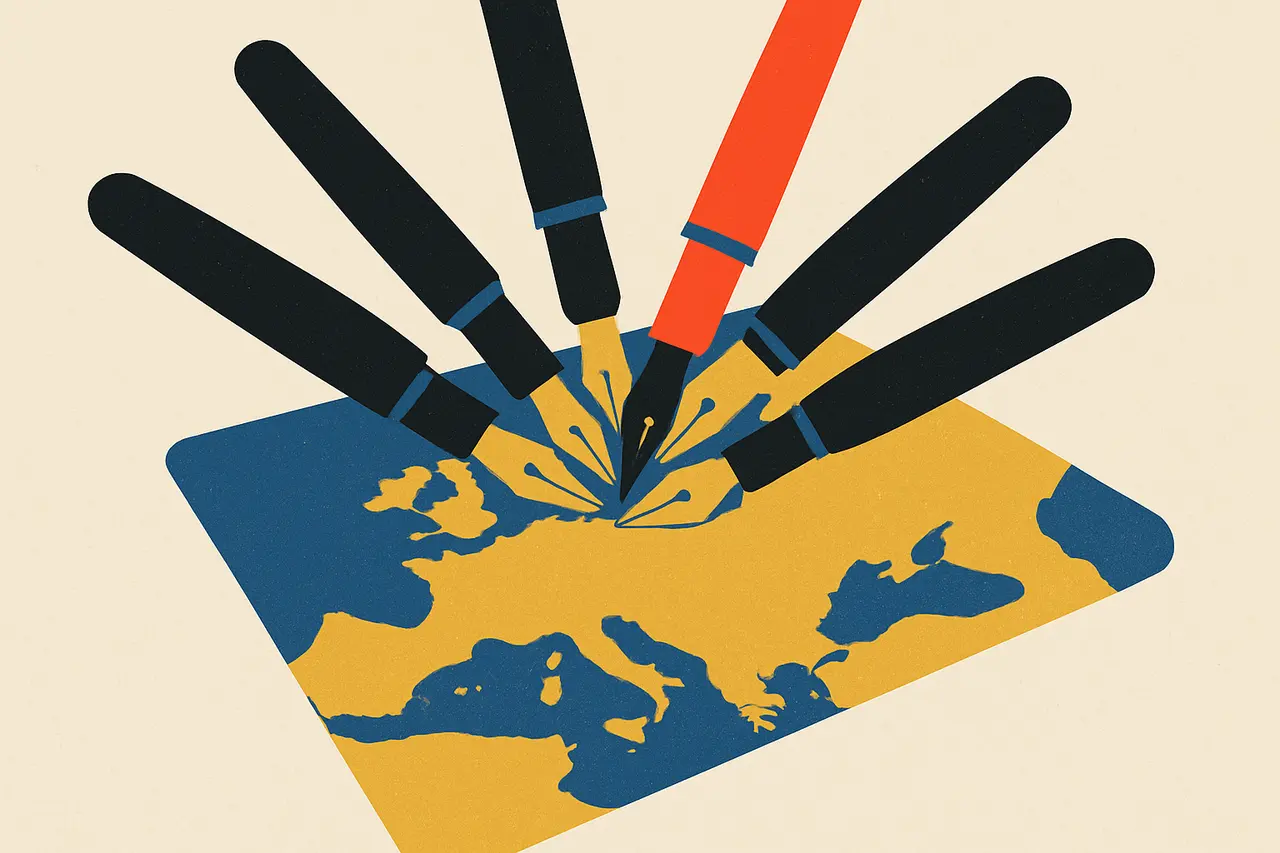
On one March afternoon in 1957, six nations signed a customs deal that quietly grew into the European Union.
On 25 March 1957, in the Renaissance grandeur of Rome’s Capitoline Hill, six nations signed the treaty that built modern Europe. Belgium, France, Italy, Luxembourg, the Netherlands, and West Germany committed to a European Economic Community — a common market for goods, labor, services, and capital, with tariffs between members set to fall away.
The ambition was partly economic and partly a vow: after two world wars launched from the continent, binding old rivals through trade made another war between them harder to imagine. The treaty took effect on 1 January 1958, creating the institutions — a commission, a council, a court — that still run today.
A customs union, signed by six, became a political union of dozens.
The same day, the same governments signed a second pact founding Euratom for atomic energy. The EEC later absorbed new members and new powers, and the treaty itself lives on, renamed the Treaty on the Functioning of the European Union — making 1957 the legal bedrock of the bloc.
Sources & references
2 referencesWell-established. Corroborated by 2 independent sources.