Why broccoli tastes bitter to some people: TAS2R38
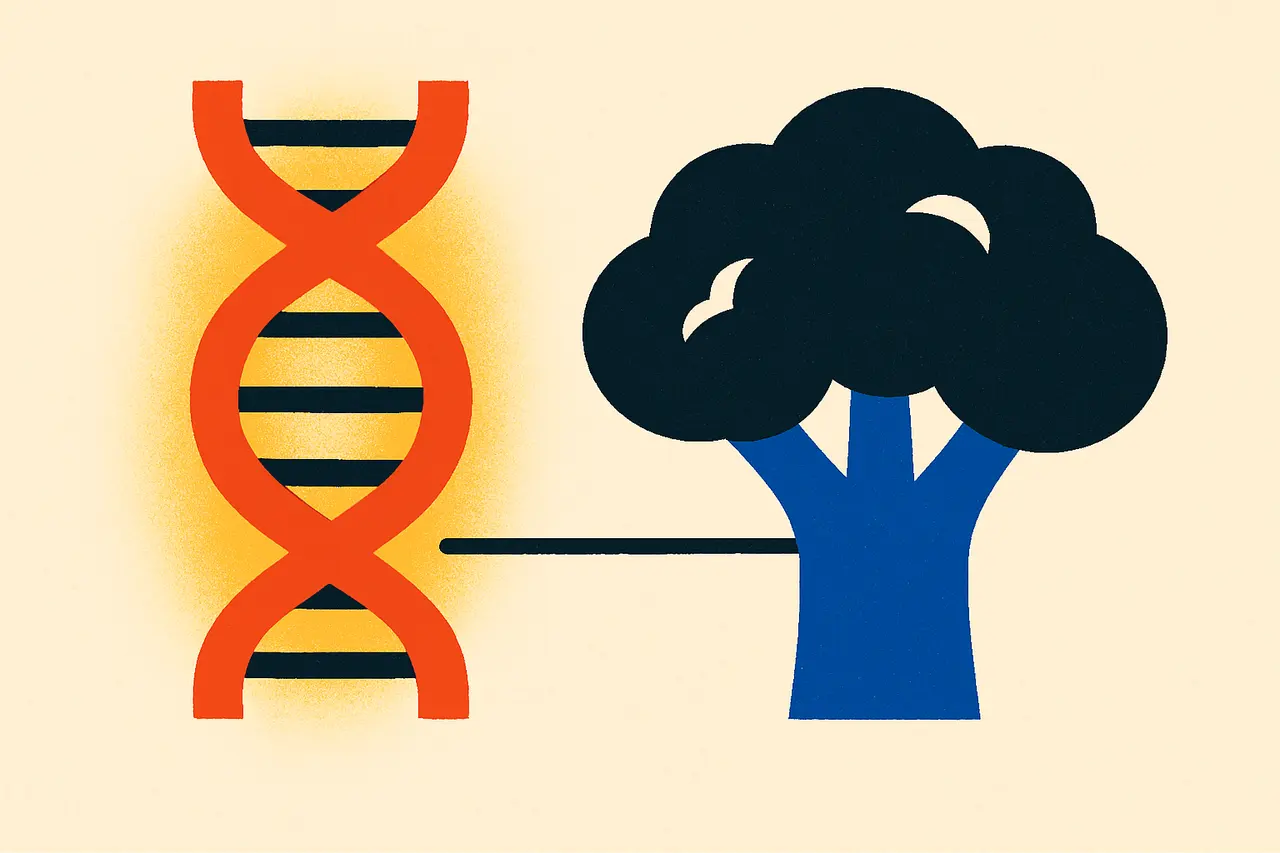
One taste-receptor gene, TAS2R38, explains most of why broccoli tastes harsh to some people and mild to others, a trait discovered by accident in 1931.
Whether broccoli tastes harshly bitter to you depends largely on one gene, TAS2R38, which builds a bitter-taste receptor on the tongue. People who carry its sensitive PAV version pick up the bitter compounds in broccoli, kale and other brassicas readily; people with two copies of the insensitive AVI version barely notice them.
How was the bitter-taste trait discovered?
By accident. In 1931 the chemist Arthur Fox was pouring powdered phenylthiocarbamide (PTC) when some of the dust blew into the air. A colleague complained that it tasted bitter; Fox tasted nothing. He went on to test more than 2,500 people and reported in 1932 that 65% found PTC bitter, 28% found it tasteless and about 6% described something else, which is why sources date the discovery to either year.
PTC tasting became a textbook example of a simple dominant trait: one copy of a taster allele is enough. But the gene itself was not identified until 2003.
Does one gene really explain who tastes it?
Largely, but not entirely. Estimates of its influence range from about 50% to 85% of the variation in PTC sensitivity. Other genes, a dry mouth, or whatever you ate or drank beforehand can shift the result, and tasters differ widely in how intense the bitterness seems.
The balance of versions also varies around the world. In one compilation, PAV made up about 46% of TAS2R38 copies among Europeans but nearly 65% among Asian populations. On average about 75% of people can taste PTC, yet every population tested has both tasters and non-tasters. So do chimpanzees, although non-tasting chimps appear to lack a working PTC receptor altogether. Several studies report that PAV carriers find brassicas more bitter, which may lead them to eat fewer of them, so the gene can shape diets as well as dinner-table arguments.
Sources & references
3 referencesWell-established. Corroborated by 2 independent sources.