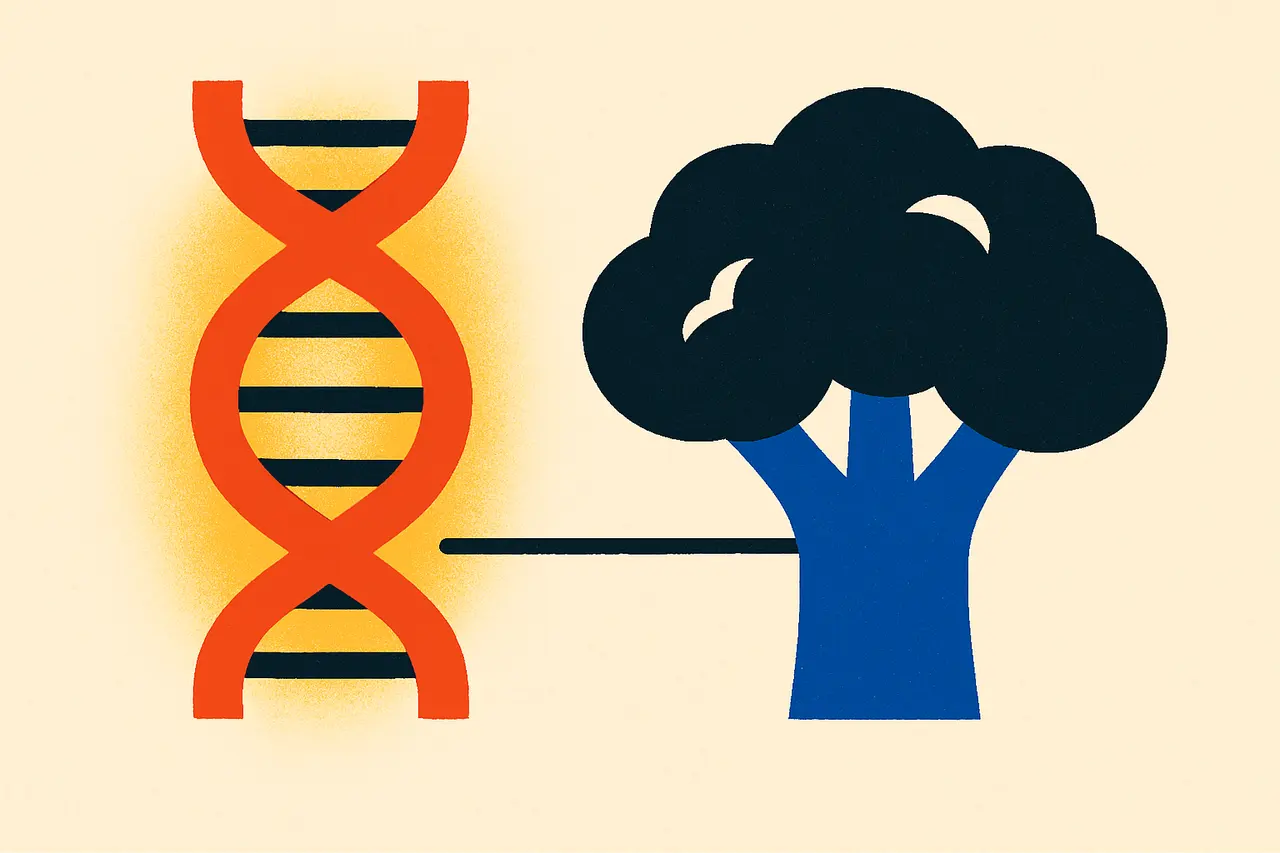
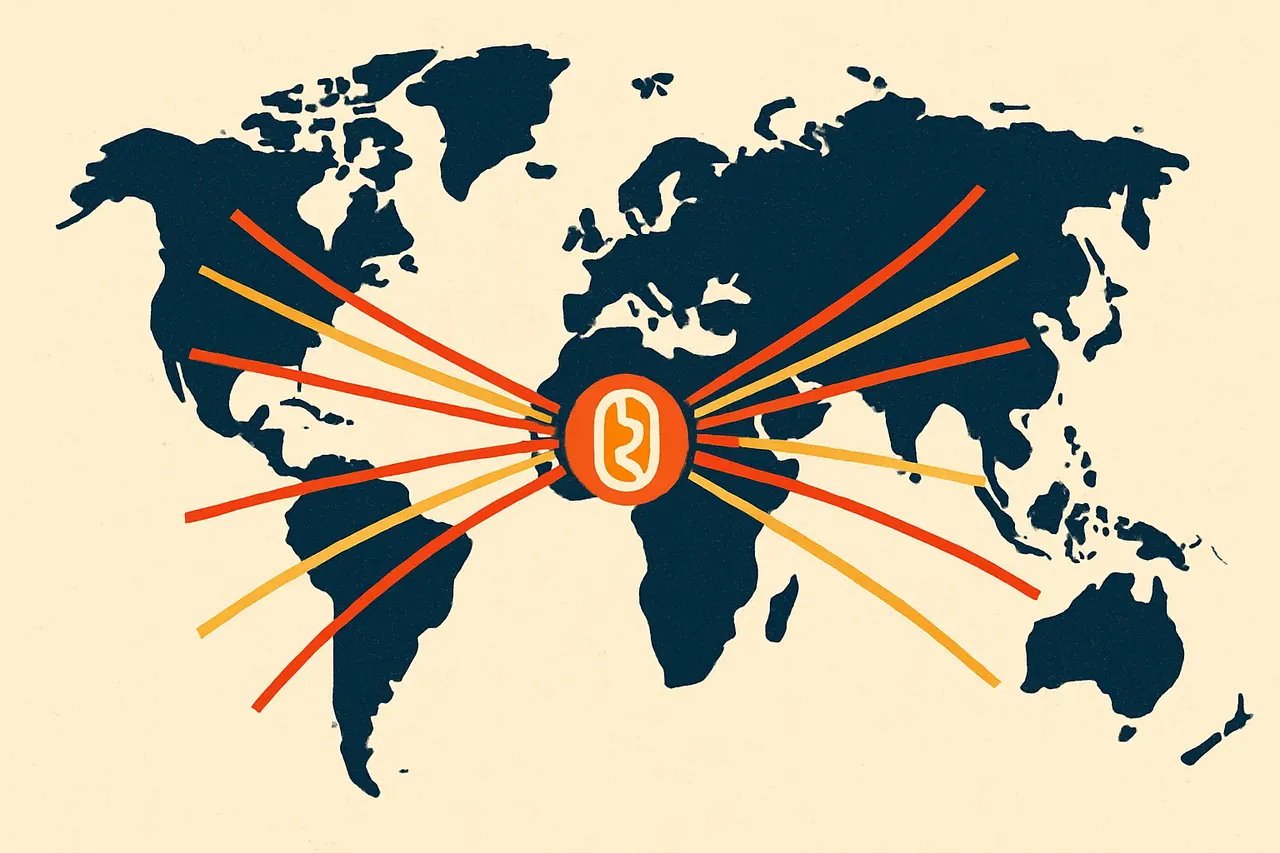
CRISPR gene editing came from a bacterial immune system
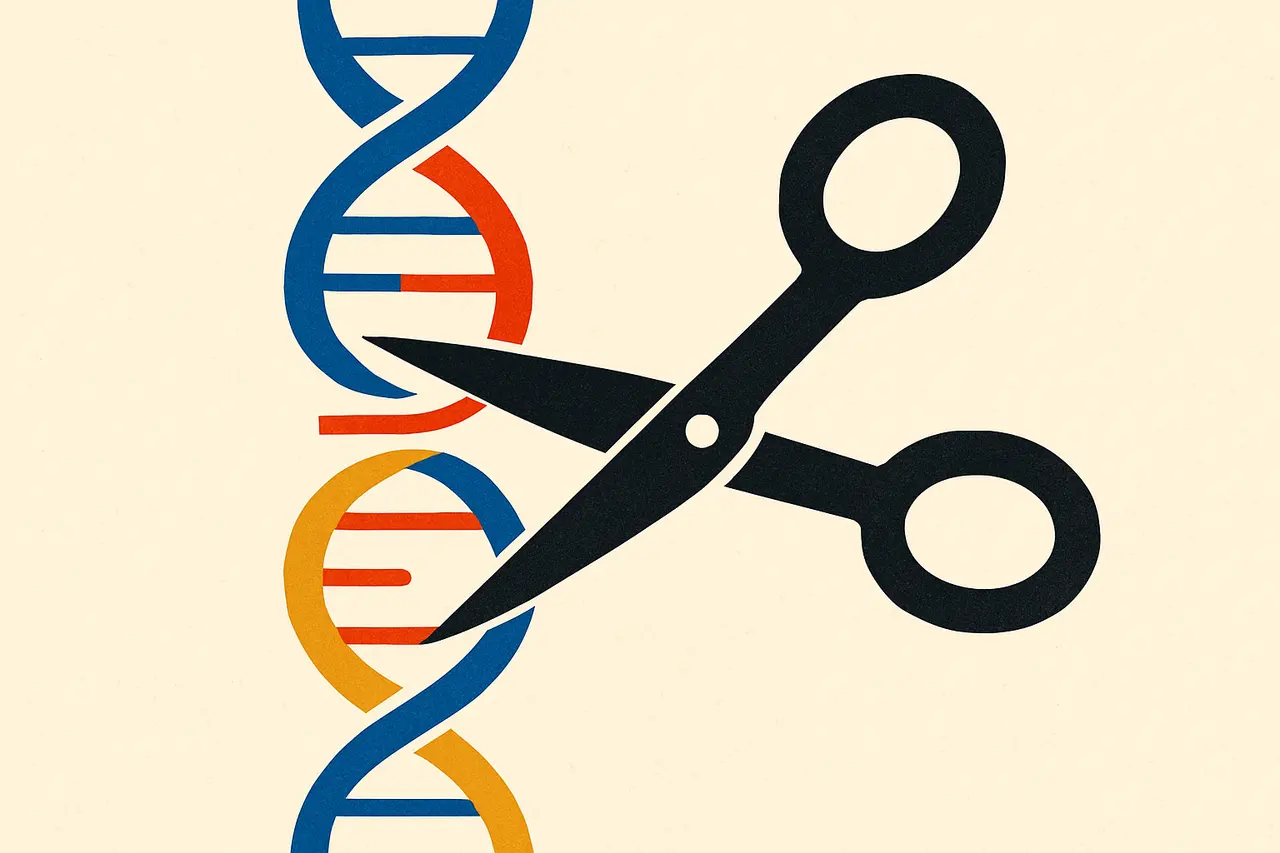
CRISPR began as a defence bacteria use against viruses, took 25 years to understand, and became the first approved gene-editing medicine in 2023.
CRISPR-Cas9, the tool scientists use to cut and rewrite DNA at a chosen spot, was adapted from an immune system that bacteria use against viruses. Bacteria store snippets of viral DNA in their own genome and use RNA copies of them to guide Cas proteins that find and cut returning invaders.
In the lab, a short guide RNA steers the Cas9 enzyme to a matching DNA sequence, where it cuts the strand. Scientists then exploit the cell’s repair of that break to disable a gene or insert new sequence. Because the guide can be rewritten to target almost any sequence, CRISPR is faster, cheaper and more accurate than earlier editing methods.
It took a while to get from odd repeats to medicine:
- 1987: an unusual repeating DNA sequence turns up in E. coli, during a study of phosphate genes; nobody knows what it does.
- 2007: experiments with the lactic acid bacterium Streptococcus thermophilus prove CRISPR is an acquired immune system against viruses.
- 2011–12: Emmanuelle Charpentier and Jennifer Doudna meet at a café in Puerto Rico, then publish Cas9 as programmable genetic scissors in 2012.
- 7 October 2020: the pair win the Nobel Prize in Chemistry.
- 16 November 2023: the UK’s MHRA licenses Casgevy for sickle cell disease and β-thalassemia, the first CRISPR medicine licensed anywhere.
- 8 December 2023: the US FDA approves Casgevy.
Those last two dates matter because Casgevy is often described as the first CRISPR therapy, full stop, when it was the FDA’s first; Britain had approved it more than three weeks earlier. In the trial data the MHRA assessed, 28 of 29 eligible sickle cell patients (97%) were free of severe pain crises for at least a year after treatment.
The therapy works outside the body: a patient’s blood stem cells are collected, edited with CRISPR in the lab, and infused back.
Sources & references
5 referencesWell-established. Corroborated by 5 independent sources.