Pompeii's body casts are plaster that still holds real bones
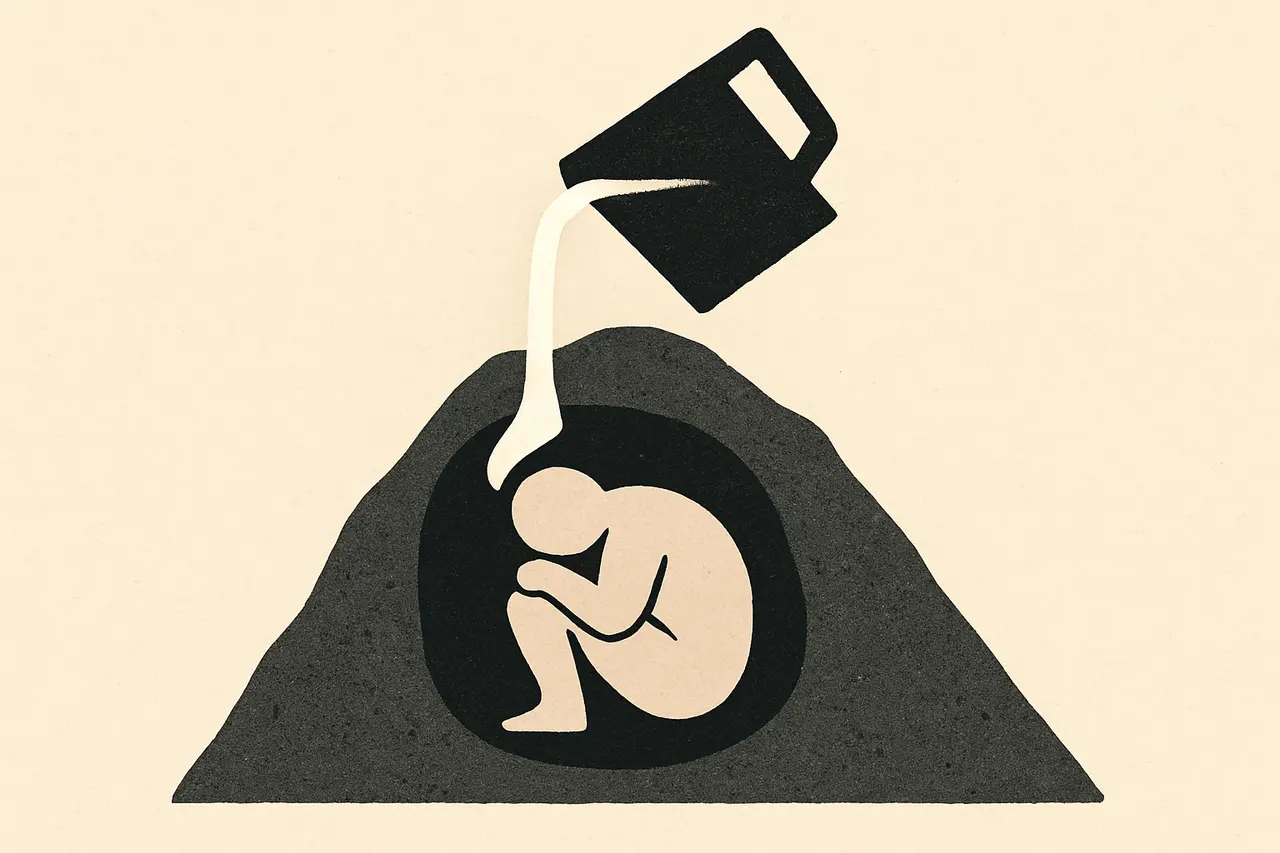
Fiorelli's 1863 method poured plaster into ash hollows around skeletons. In 2024, DNA from inside the casts overturned their best-known stories.
Pompeii’s famous body casts are plaster, not petrified people. From 1863, excavation director Giuseppe Fiorelli poured plaster into the hollows that decayed bodies had left in hardened ash, and a little over 100 casts have been made that way since. Many of the casts still hold the victims’ real bones.
In 2024 geneticists drew DNA from the bones inside 14 of the 86 casts that were being restored, with surprising results.
Why did only some victims leave hollows?
It depended on how they died. Excavators have found the remains of more than 1,000 victims of the 79 AD eruption. In the first phase, falling pumice and lapilli built up to about three metres. People buried then, or crushed by collapsing roofs, left only bones. Later a fast, very hot pyroclastic flow filled the remaining spaces and killed everyone still in the city at once. Fine ash wrapped their bodies and hardened, so the shapes survived after the flesh decayed. Those people became the casts.
Are the stories told about the casts true?
Often not. The 2024 study, by the University of Florence, Harvard and the Max Planck Institute for Evolutionary Anthropology, checked long-told labels against DNA. The “mother and child”, an adult wearing a gold bracelet and holding a child, turned out to be an unrelated adult male and child. A pair thought to be sisters, or a mother and daughter, included at least one genetic male. In the House of the Golden Bracelet, four people shown as a family had no genetic ties at all. Most of the people tested descended from fairly recent immigrants from the eastern Mediterranean.
“The findings challenge enduring notions such as the association of jewellery with femininity or the interpretation of physical proximity as evidence of familial relationships.” — David Caramelli, University of Florence
The team suggests past restorers may even have rearranged poses to tell a better story, and bombing in 1943 destroyed or damaged many casts. For the voices of the living city, see the thousands of graffiti on its walls.
Sources & references
3 referencesWell-established. Corroborated by 3 independent sources.