Egyptian mummification preserved the body as a home for the soul
Seventy days, forty in salt, and a brain pulled out through the nose - all so the dead could live again.
For the ancient Egyptians, death was a transition, not an ending. The soul had several parts — chiefly the ka (life force) and the ba (personality) — which needed a recognizable, intact body to return to. If the corpse decayed, the soul could be lost. Mummification existed to prevent that.
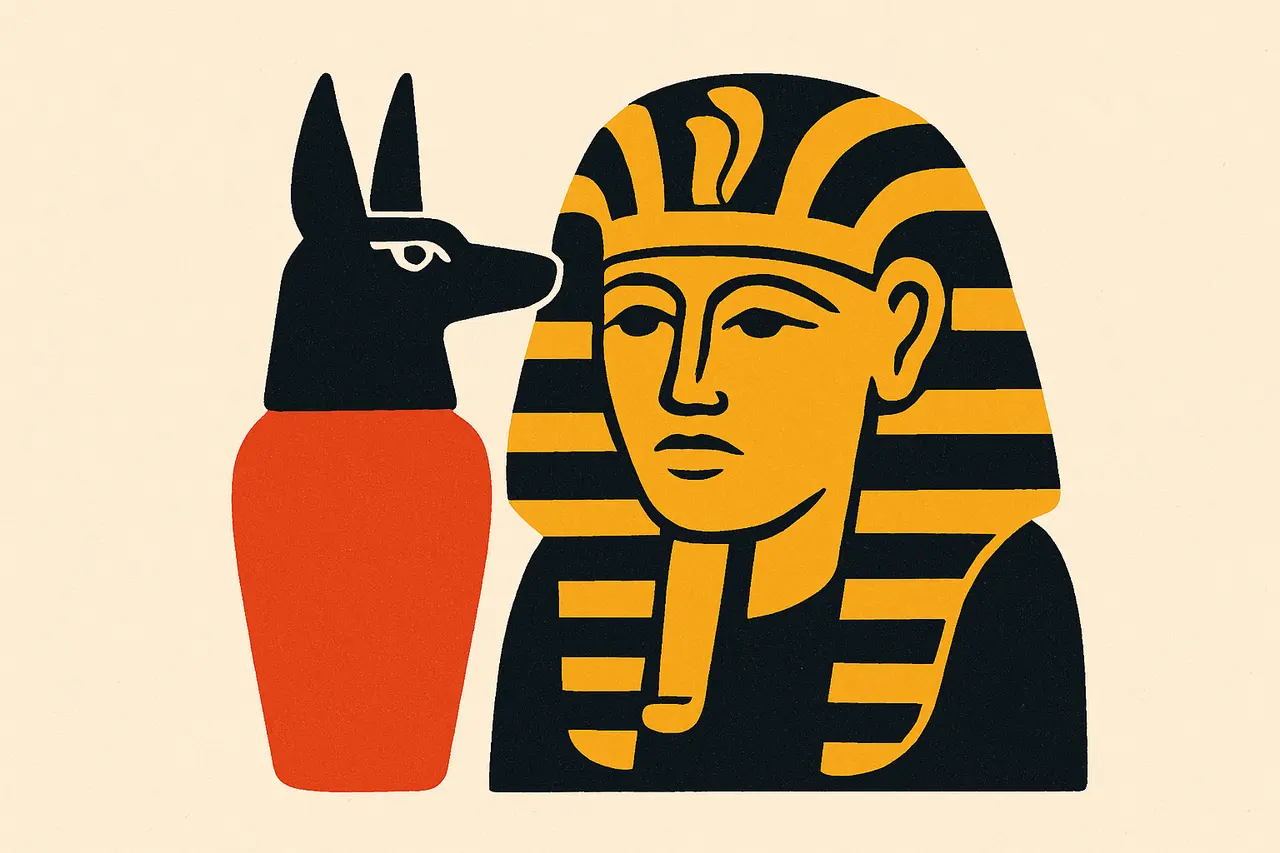
The full process took about 70 days. Embalmers drew the brain out through the nostrils and discarded it as worthless, then removed the lungs, liver, stomach, and intestines through an incision in the side, storing them in canopic jars. The heart was deliberately left in place, since Egyptians believed it, not the brain, was the seat of thought and emotion. The body was then packed in natron — a naturally occurring drying salt gathered from Wadi Natrun — and left for roughly 40 days before wrapping in linen.
The heart’s role carried into the afterlife. Egyptians believed it would be weighed against the feather of Maat before Osiris; a heart heavier than truth meant oblivion. To keep the heart from betraying its owner, a heart scarab inscribed with a spell from the Book of the Dead was bound into the wrappings.
The body had to remain intact for the soul to continue its journey.
The practice evolved. The earliest preservation was accidental — natural desiccation in hot Predynastic sand around 3500 BCE — before deliberate techniques peaked in the New Kingdom. Over time, mummification spread from royalty to commoners, and even to sacred animals.
Sources & references
2 referencesWell-established. Corroborated by 2 independent sources.