Yalta didn't carve up Europe, but it hid a deal on Japan
On this day · 4 February 1945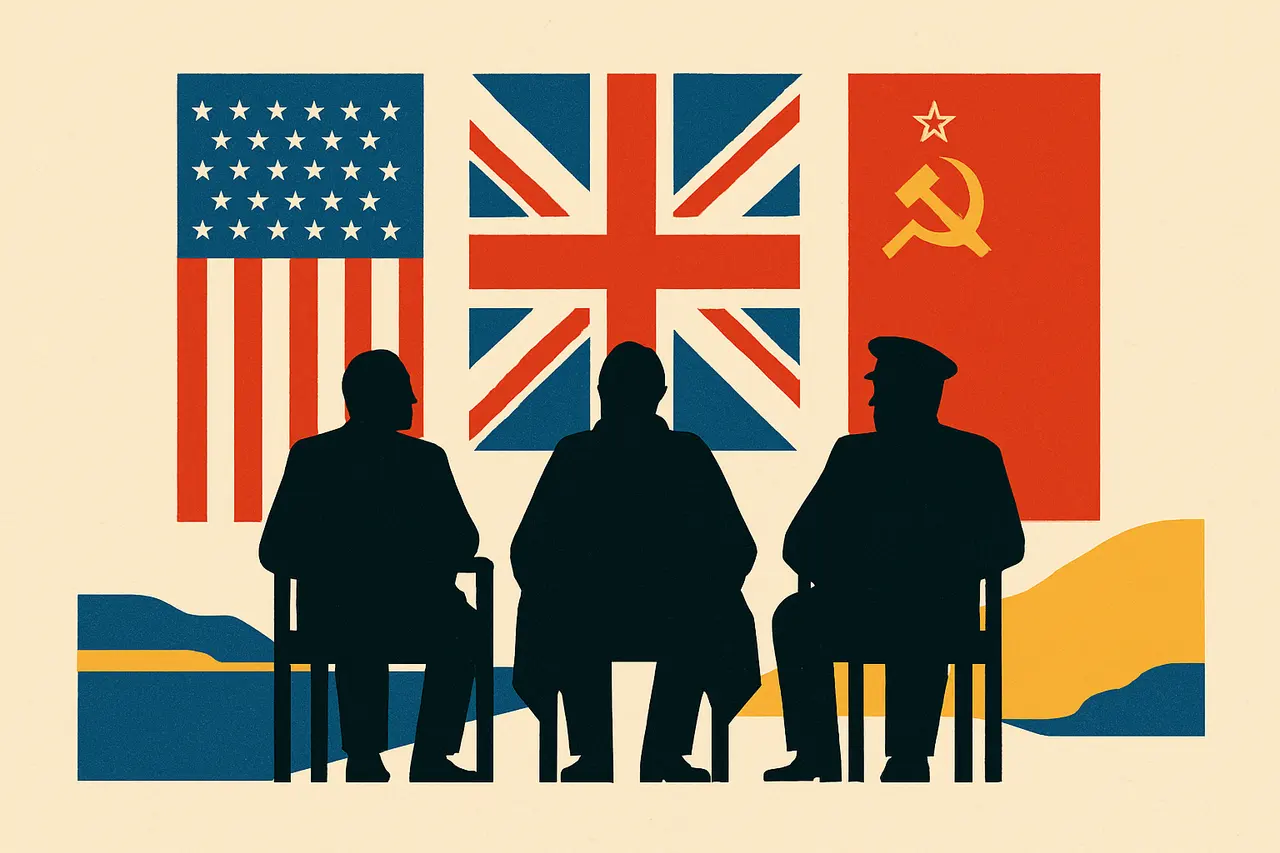
The Big Three's Crimean summit of February 1945 mostly confirmed what the Red Army had already won; its real secret was Stalin's price for fighting Japan.
The Yalta Conference ran from 4 to 11 February 1945 at a Black Sea resort in the Crimea, where Franklin D. Roosevelt, Winston Churchill and Joseph Stalin agreed the occupation of Germany, voting rules for the future UN Security Council, and the price of Soviet entry into the war against Japan.
The venue itself was a show of power. Stalin said his health ruled out flying, so the ailing Roosevelt travelled about 6,000 miles and Churchill, past 70, about 4,000. The Soviets bugged their guests’ quarters, and when Churchill’s daughter remarked that lemon went well with caviar, a fruiting lemon tree appeared overnight.
Did Yalta carve up Europe?
Not in the way the legend says. Britain’s Foreign Office historians call the “carve-up” story the Yalta myth. By February the Red Army already held Poland and stood on the Oder, roughly 40 miles from Berlin; the conference protocol itself credits Poland’s “complete liberation by the Red Army”. Several decisions, including Poland’s frontiers, rubber-stamped earlier deals, and reparations were left for Potsdam. Unlike the Paris Peace Conference after the First World War, Yalta was never a peace settlement. What it added on paper was a Soviet pledge of “free and unfettered elections” in Poland and the Declaration on Liberated Europe — promises Moscow did not keep.
What was kept secret?
The Far East agreement, signed on 11 February. Stalin would join the war on Japan “two or three months” after Germany surrendered; in return he got southern Sakhalin, the Kurile Islands, a lease at Port Arthur and a share in Manchuria’s railways — terms agreed without China at the table, though they touched its territory and needed Chiang Kai-shek’s consent. The text was published only on 11 February 1946, after American press leaks about the Kuriles prompted Washington to release it.
Germany’s surrender took effect on 8 May, and Moscow declared war on Japan exactly three months later, on 8 August 1945, between the atomic bombings of Hiroshima and Nagasaki. Roosevelt did not see it: he died two months after Yalta.
Sources & references
5 referencesWell-established. Corroborated by 4 independent sources.