Germany signs its unconditional surrender, ending WWII in Europe
On this day · 7 May 1945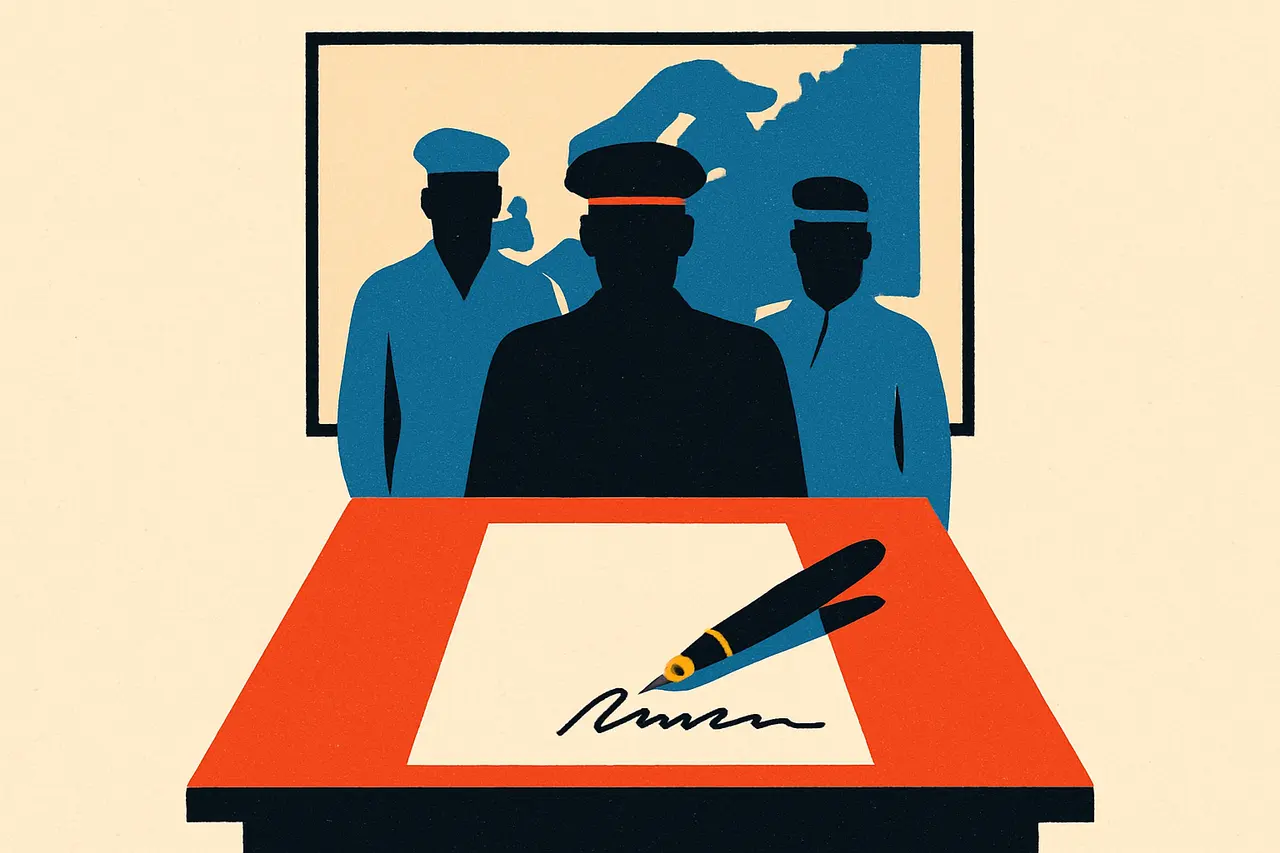
At Eisenhower's headquarters in Reims, General Jodl signed the surrender of all German forces, east and west.
In the early hours of May 7, 1945, in a schoolhouse serving as General Dwight D. Eisenhower’s headquarters in Reims, France, German General Alfred Jodl signed the unconditional surrender of all German forces, east and west.
Jodl had hoped to surrender only to the Western Allies, buying time for German troops to flee the advancing Soviets. Eisenhower refused, demanding total capitulation on every front. Grand Admiral Karl Dönitz, Hitler’s named successor, ordered Jodl to sign.
The instrument took effect the next day, and the guns of the European war fell silent after nearly six years.
Fighting would grind on in the East for almost another day — but in the West, it was over.
Because Moscow wanted the act repeated in conquered Berlin, a second surrender was signed there on May 8, which is why Western nations mark V-E Day on the 8th while Russia commemorates the 9th.
Sources & references
2 referencesWell-established. Corroborated by 2 independent sources.