Spain's Pinzón probably reached Brazil before Cabral
On this day · 26 January 1500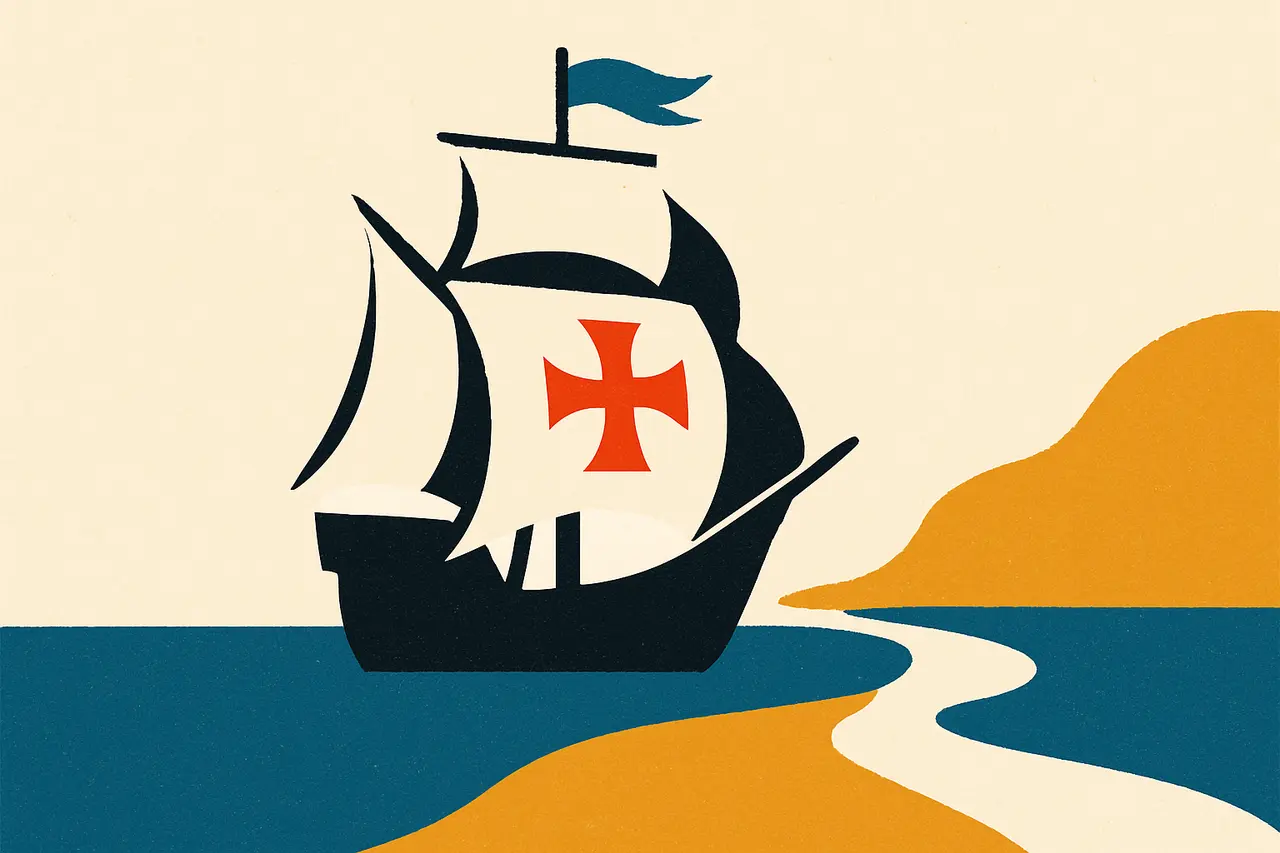
Three months before Portugal's Cabral, a former captain of Columbus's Niña probably landed in Brazil and found the Amazon. So why did Portugal keep it?
Spanish navigator Vicente Yáñez Pinzón landed on Brazil’s north-eastern coast on January 26, 1500, at a cape he named Santa María de la Consolación, near present-day Recife in Pernambuco. That was about three months before Portugal’s Pedro Álvares Cabral arrived. Pinzón had captained the Niña on Columbus’s first voyage in 1492, and he sailed from Palos with four caravels in late 1499 (accounts disagree on November or December).
From his landfall he followed the coast north. Off the coast, his crew noticed the water had changed colour. When they sampled it, it was fresh, not salt. They had reached the outflow of a huge river, almost certainly the Amazon, which Pinzón named Santa María de la Mar Dulce, the “freshwater sea”. His map was so poor that he took it for the Ganges.
Was Pinzón really the first European in Brazil?
Probably, but not certainly. His voyage gives the first recorded account of a European sighting the Brazilian coast. Some historians, though, argue that he actually landed in Venezuela and found the Orinoco. Another rival is Portuguese navigator Duarte Pacheco Pereira: an ambiguous passage in his book Esmeraldo de situ orbis suggests he sighted a large landmass, possibly Brazil, in 1498. Spain’s Diego de Lepe also reached the north-east in the first months of 1500. NOVA University Lisbon’s Encyclopaedia of Portuguese Expansion concludes that Pacheco and the Castilian crews probably beat Cabral.
Why didn’t Spain keep Brazil?
The coast lay on Portugal’s side of the 1494 Treaty of Tordesillas, because King João II had insisted that the dividing meridian run 370 leagues west of Cape Verde rather than 100. Cabral’s April landing made the claim stick. Pinzón himself got little from the voyage. In late July 1500 two of his ships, laden with gold and other cargo, sank in a hurricane near the Turks and Caicos. In 1505 Spain named him governor of the Brazilian coast, but there is no record that he took up the post. He died in Palos in 1514.
Sources & references
4 referencesWell-established. Corroborated by 4 independent sources.