The day a doll's head became television
On this day · 26 January 1926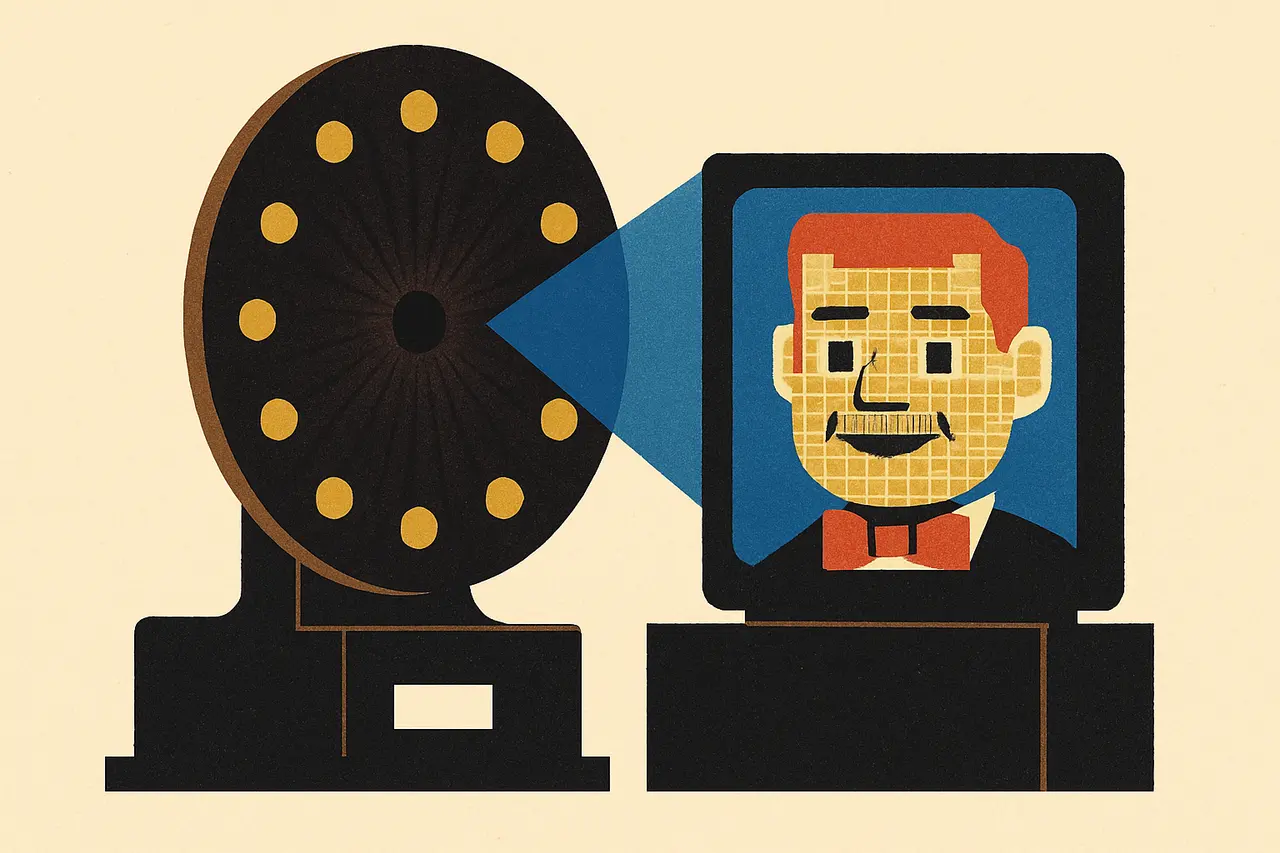
In a cramped Soho attic, a Scottish inventor showed startled scientists the flickering moving image that would reshape the century.
On 26 January 1926, the Scottish engineer John Logie Baird crammed around 40 members of the Royal Institution into his laboratory at 22 Frith Street in London’s Soho. There he gave what is widely accepted as the first public demonstration of true television: live, moving images rendered with genuine tonal gradation rather than mere silhouettes.
Baird’s apparatus was gloriously makeshift. A large revolving disc studded with lenses, a spinning shutter, and a light-sensitive cell swept across whatever sat before the machine, breaking it into lines of varying brightness. To give his audience something with a face, he used the head of a ventriloquist’s dummy, then a real person, transmitting the picture to a receiver in the room and a second set next door.
The image was faint and often blurred, yet it proved that the play of expression on a human face could be sent and reproduced instantly.
The witnesses were not entirely convinced, but the principle was sound. Within months the news of Baird’s “Televisor” had crossed the Atlantic and into Europe, seeding an industry.
Sources & references
3 referencesWell-established. Corroborated by 3 independent sources.