"Don't give up the ship" came from a battle the U.S. lost
On this day · 1 June 1813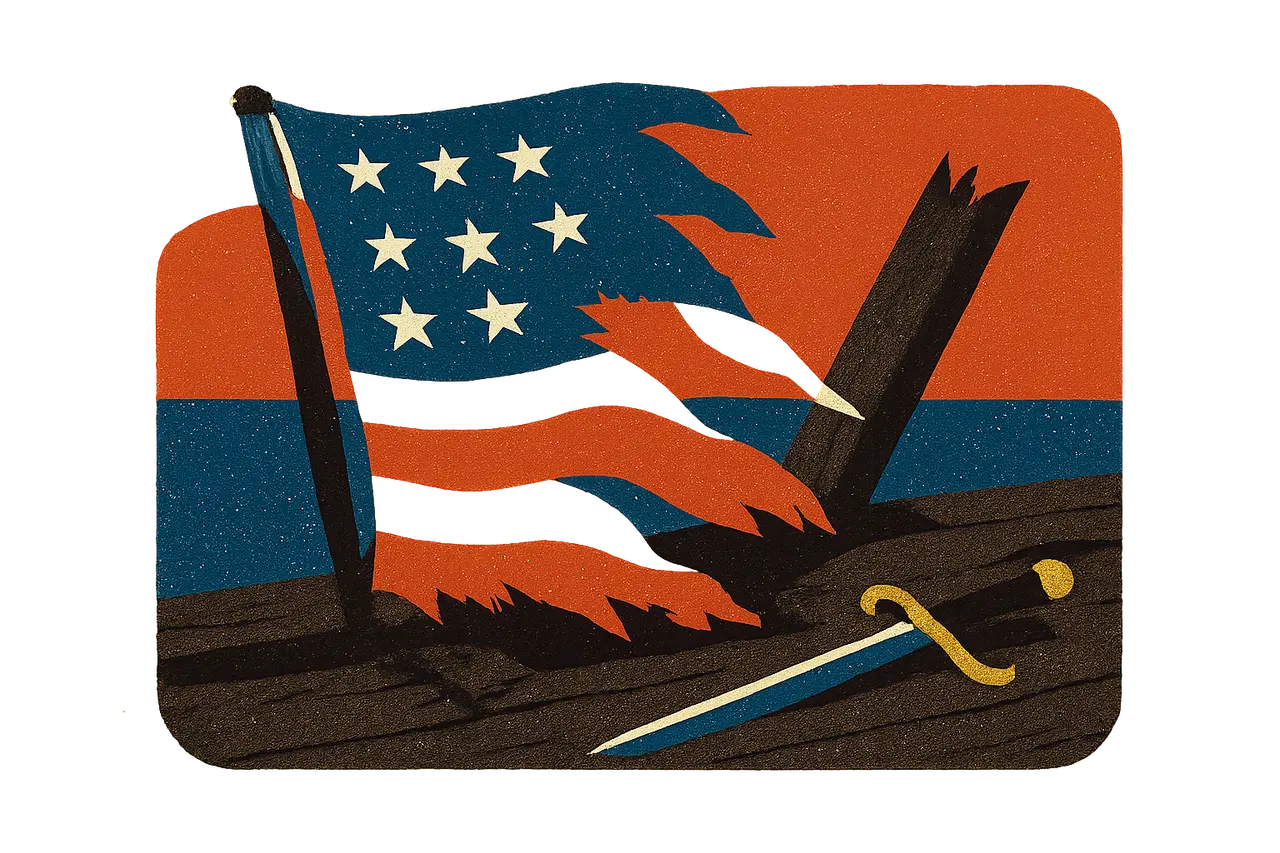
The U.S. Navy's famous battle cry was a dying captain's order on 1 June 1813 — and his frigate was captured within minutes anyway.
“Don’t give up the ship,” the U.S. Navy’s best-known battle cry, was called out by Captain James Lawrence of the frigate USS Chesapeake as he was carried below, mortally wounded, on 1 June 1813 — in a fight his ship lost within minutes.
Chesapeake sailed out of Boston to attack the blockading frigate HMS Shannon. On paper the two were evenly matched, 50 guns to 52. The real gap was the crews. Captain Philip Broke had commanded Shannon for seven years and drilled its gunners relentlessly; Lawrence had taken over Chesapeake just 12 days earlier, with many sailors who had never seen battle. As crowds watched from the shore, Shannon’s broadsides cut down Chesapeake’s officers, and British boarders overran the ship in less than 15 minutes, by the USS Constitution Museum’s count (the Park Service allows under 25).
Were those really his last words?
Not literally. Wounded twice, Lawrence called out the order as Acting Lieutenant William Cox helped carry him below deck, but he lived another three days — and the order was not obeyed in any practical sense. The British sailed the frigate to Halifax; Lawrence died on 4 June, before it arrived, and was buried there in the Old Burying Ground before being reinterred at Trinity Churchyard in Manhattan. The captured ship served the Royal Navy as HMS Chesapeake until 1819.
Who was blamed for the defeat?
Americans hunted for scapegoats. Cox was court-martialled for “unofficer-like conduct” and dismissed from the service; William Brown, a Black bugler, received 100 lashes for failing to sound his bugle at a crucial moment. The Park Service now says none of them should have carried the blame: Shannon’s experience and training decided the fight.
The slogan survived the defeat because of Lawrence’s friend Oliver Hazard Perry. Three months later, on 10 September 1813, Perry flew a battle flag stitched with the words at the Battle of Lake Erie and won. The war itself dragged on into 1814, when British troops burned Washington.
Sources & references
3 referencesWell-established. Corroborated by 3 independent sources.