Napoleon's army entered a burning Moscow
On this day · 14 September 1812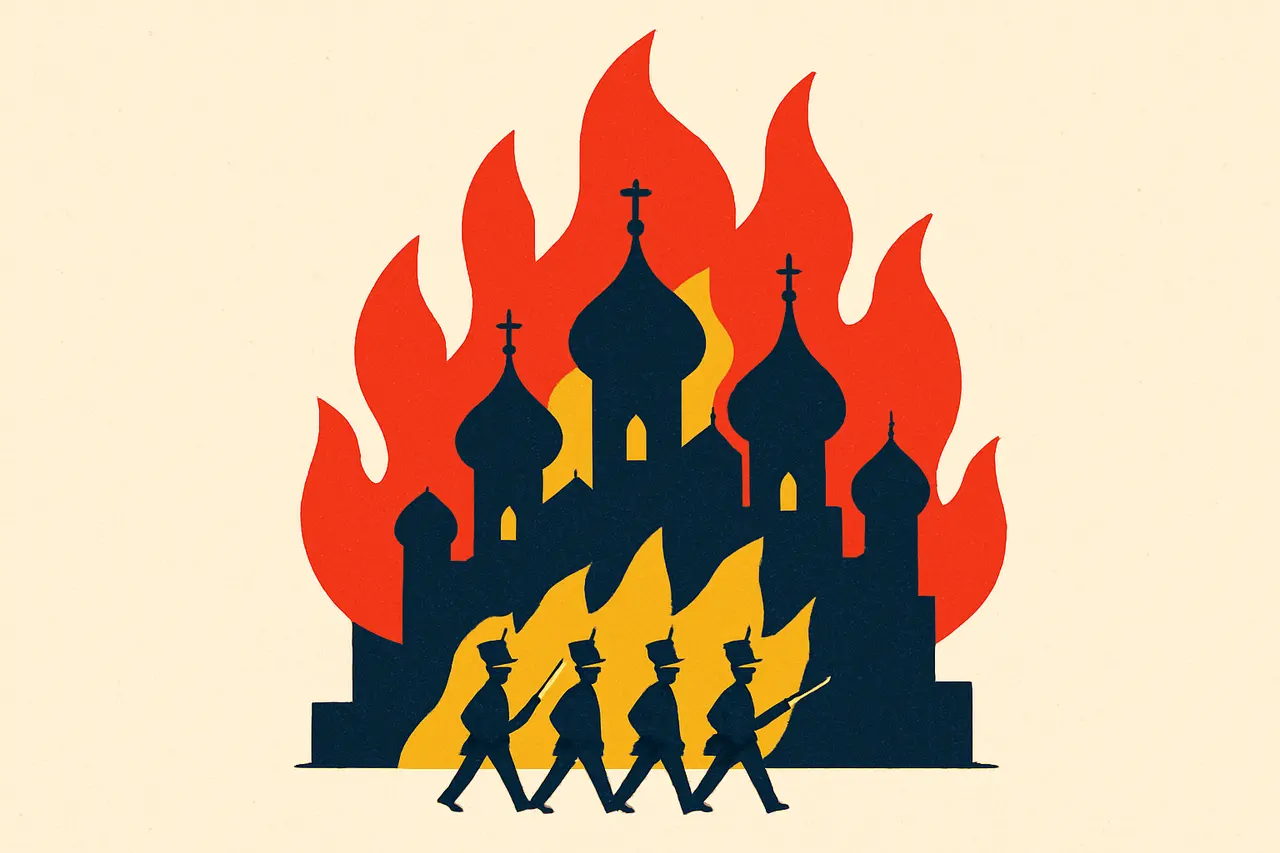
The Grande Armee marched into Russia's capital and found it nearly empty — then watched two-thirds of it go up in flames.
On September 14, 1812, a week after the brutal Battle of Borodino, Napoleon’s Grande Armee marched into Moscow expecting surrender. Instead they found an eerie, near-empty city; almost all of its roughly 275,000 residents had fled.
That same night, fires broke out across the wooden capital. Napoleon, lodged in the Kremlin, was woken in the small hours to watch palaces blaze. The flames spread for days, and when they died down roughly two-thirds of Moscow lay in ruins.
Many believed the Russians had torched their own capital rather than hand it over intact.
Governor-General Fyodor Rostopchin was widely blamed for orchestrating the burning, though he later denied it; historians still debate how much was deliberate and how much was simply chaos in an abandoned, tinder-dry city. Either way, the prize was ashes. With no shelter, dwindling supplies, and the Russian winter closing in, Napoleon lingered about five weeks waiting for a peace offer that never came, then on October 19 began the catastrophic retreat that would destroy his army.
Sources & references
2 referencesWell-established. Corroborated by 2 independent sources.