The 1990 Bush–Gorbachev chemical weapons deal took 33 years
On this day · 1 June 1990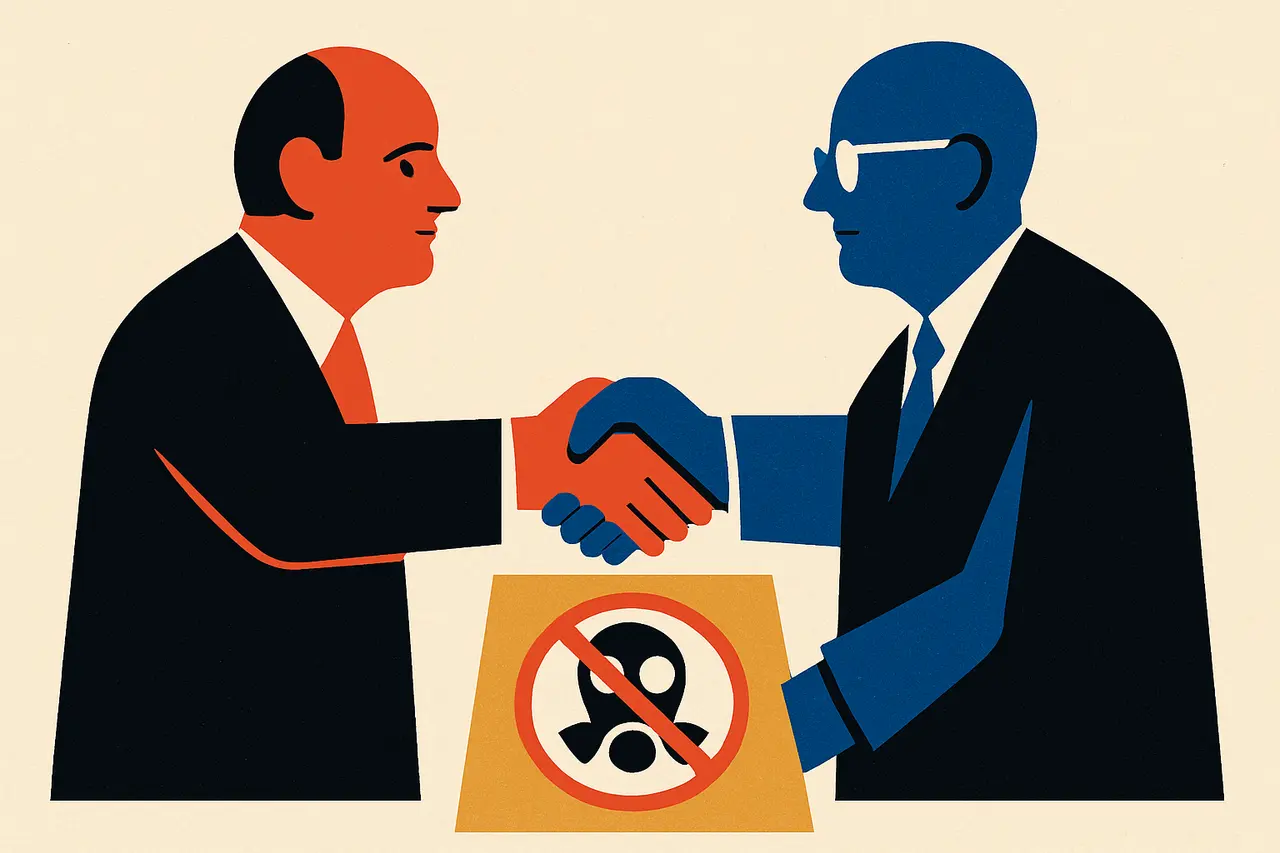
Bush and Gorbachev agreed in June 1990 to stop making chemical weapons. The last U.S. shell was destroyed in July 2023.
U.S. President George H.W. Bush and Soviet leader Mikhail Gorbachev signed an agreement on June 1, 1990, at their Washington summit, to stop producing chemical weapons and begin destroying the two largest stockpiles on Earth, with inspectors from each side watching the other’s destruction. The deal called for cutting both arsenals by about 80%.
The record of that day’s talks, published by the State Department’s historians, shows both sides praising it in the room: Soviet deputy foreign minister Viktor Karpov called the bilateral agreement “a serious breakthrough”, and U.S. Under Secretary Reginald Bartholomew replied that Washington agreed the accord was “a major achievement”. Its larger effect was on others. The OPCW credits the superpower agreement, along with Iraq’s 1988 gas attack on Halabja and the Gulf War, with giving impetus to talks on a worldwide ban.
The arsenals were enormous: Russia later declared about 40,000 tonnes of agent and the United States 28,577 tonnes. Together that is roughly 95% of the 72,304 tonnes the OPCW has verified destroyed worldwide, so emptying them was the main work of global chemical disarmament.
It took far longer than the summit implied:
- 1990: On Johnston Atoll the U.S. begins burning 1,842 tonnes of chemical weapons secretly shipped there from Germany and Okinawa.
- January 13, 1993: The Chemical Weapons Convention opens for signature in Paris; 130 countries sign within days.
- April 29, 1997: The convention enters into force, with deadlines for destroying every declared stockpile.
- September 27, 2017: The OPCW announces that Russia has finished destroying its arsenal.
- July 7, 2023: The last U.S. munition is destroyed at the Blue Grass plant in Kentucky, and the OPCW confirms every declared stockpile is gone.
That ending carries an asterisk. After the Novichok poisonings, the U.S. government said it could not certify that Russia had met its obligations or declared its full stockpile. The weapons first used on a large scale at Ypres in 1915 are banned, but not beyond doubt gone.
Sources & references
5 referencesWell-established. Corroborated by 4 independent sources.