This Bug Is the Only Animal With Real Gears
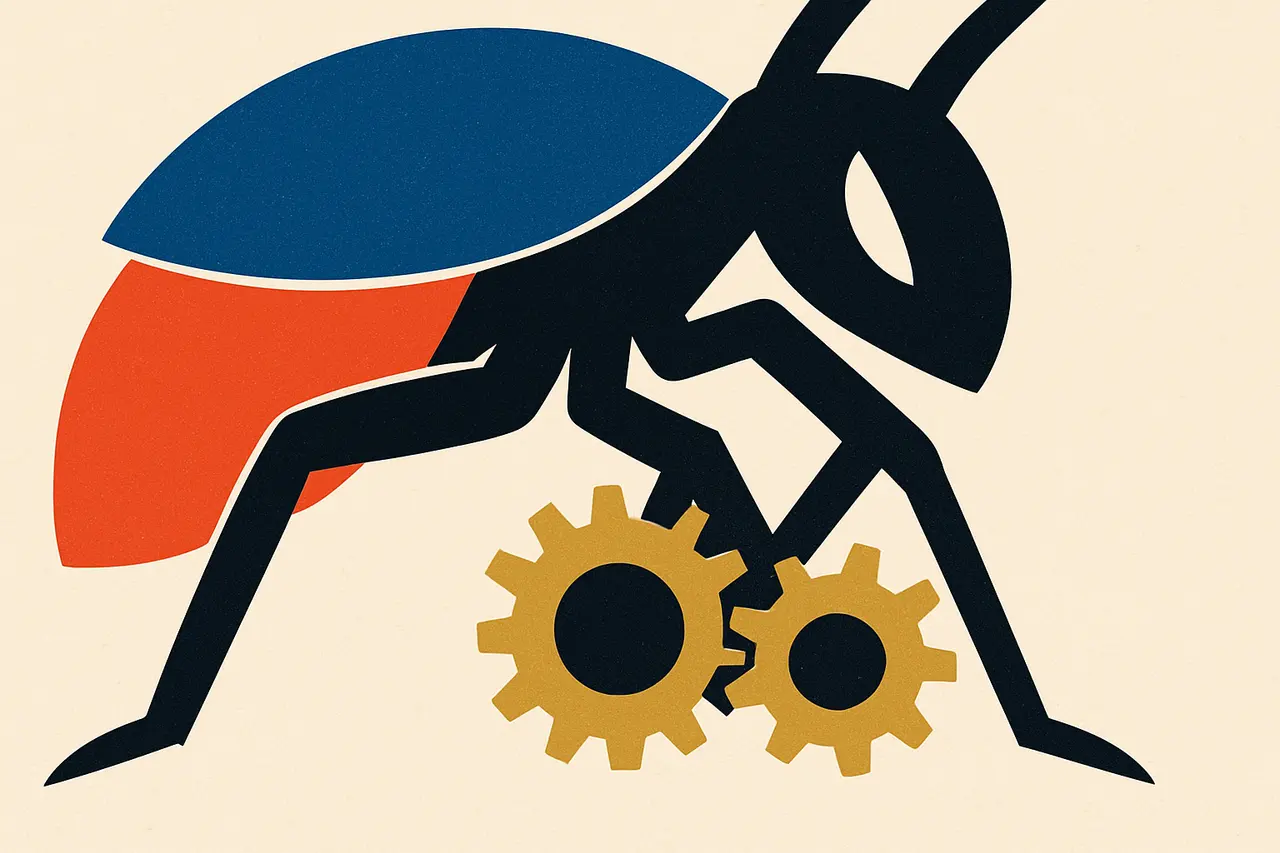
A juvenile planthopper carries interlocking cog-wheels on its legs, the first true mechanical gears ever found in nature.
When a young Issus planthopper springs into the air, it relies on a piece of machinery no engineer designed: two strips of interlocking cog teeth at the tops of its hind legs. Discovered by Malcolm Burrows and Gregory Sutton and published in Science in 2013, these are the first functioning mechanical gears known in any living animal.
The reason is a problem of timing. A planthopper that fired one leg even slightly before the other would spin out of control. Nerve signals are too slow and variable to coordinate the legs precisely enough, so the gears do it mechanically, meshing the legs together so they release within about 30 microseconds of each other.
The skeleton solves a problem the nervous system cannot.
Each curved strip carries roughly 10 to 12 teeth, with rounded bases that act like shock absorbers, exactly as in a car gearbox. Strangest of all, the gears are temporary: the insect loses them at its final molt into adulthood, switching to a friction-based system instead.
Sources & references
2 referencesWell-established. Corroborated by 2 independent sources.