Dragonflies catch up to 95% of the prey they chase
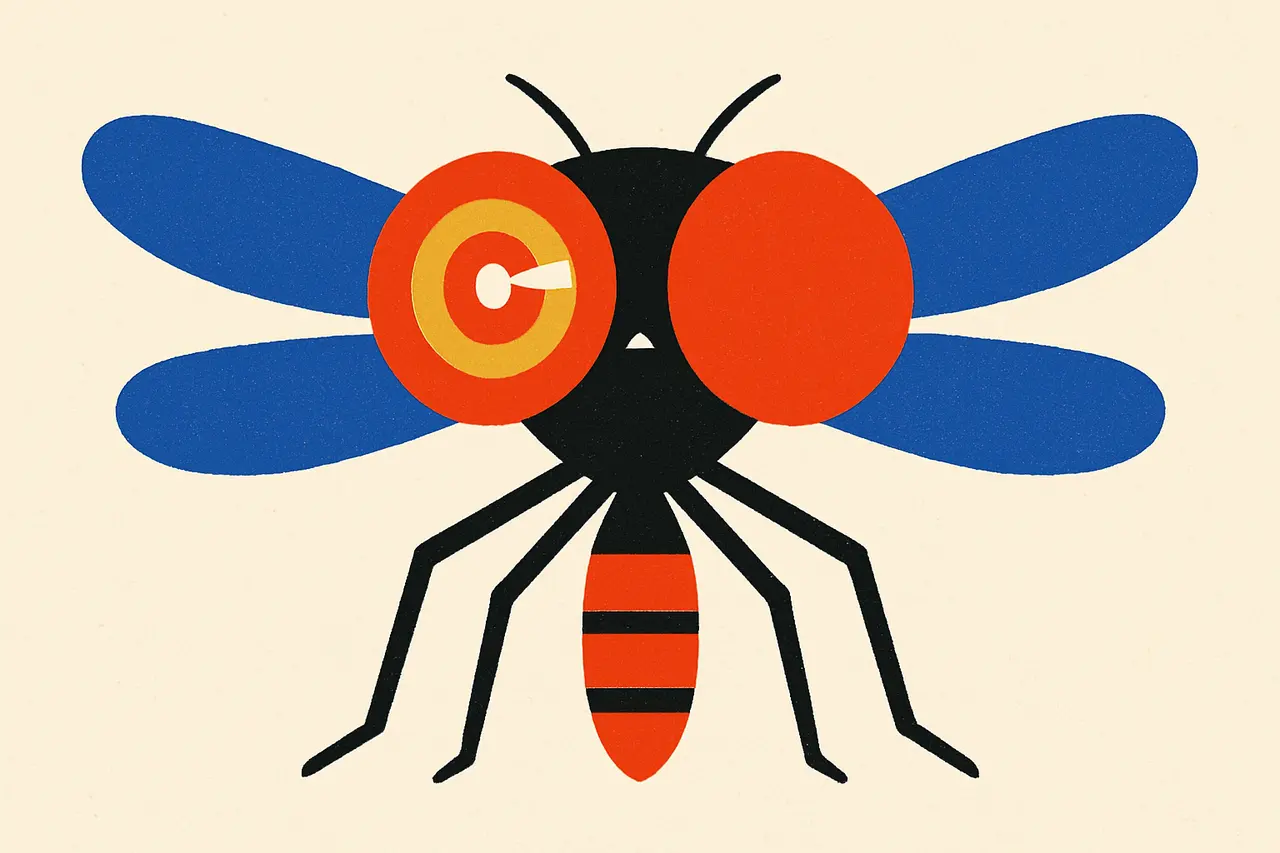
Wrap-around eyes of 30,000 lenses make these insects one of the deadliest hunters on Earth.
A lion’s hunt fails far more often than it succeeds. A dragonfly’s almost never does. In carefully filmed trials, dragonflies pursuing fruit flies captured them with median success rates as high as 95%, ranking them among the most efficient predators ever measured.
The weapon is vision. A dragonfly’s two enormous compound eyes carry roughly 30,000 lenses (ommatidia) each — more than almost any other insect — and they wrap around the head to give near-360-degree sight. They can see in nearly every direction at once, and are still watching you after they’ve flown past.
That panoramic input feeds a hunting brain built for interception. Rather than chasing where prey is, a dragonfly steers to where prey will be, adjusting its flight to keep the target locked in a fixed spot in its visual field — a predictive strategy engineers study for robotics and missile guidance.
Sources & references
2 referencesWell-established. Corroborated by 2 independent sources.