First Saturn V flew as Apollo 4; Apollo 2 and 3 never existed
On this day · 9 November 1967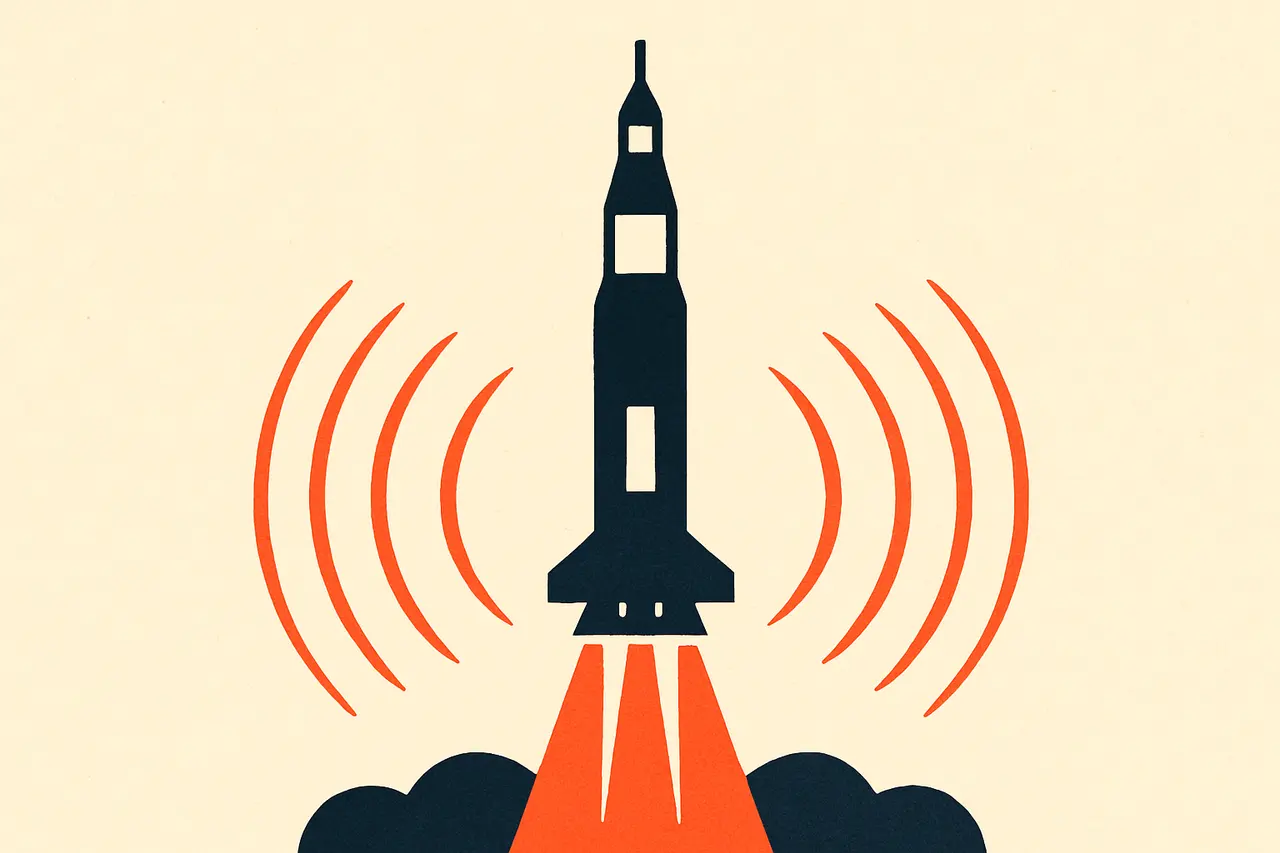
The Moon rocket's 1967 debut tested all three stages at once, and its odd mission number is a legacy of the Apollo 1 fire.
The first Saturn V Moon rocket launched at 7 a.m. on November 9, 1967, from Kennedy Space Center on the uncrewed mission Apollo 4. Its five F-1 engines produced 7.5 million pounds of thrust, and the launch was so loud that vibrations rattled the press site several miles away.
Why “Apollo 4”?
There was never an Apollo 2 or Apollo 3. After the January 1967 fire that killed Gus Grissom, Ed White and Roger Chaffee during a test known as AS-204, NASA’s George Mueller announced that spring that their mission would be called Apollo 1 and the first Saturn V launch Apollo 4. The rocket originally meant for AS-204 later flew uncrewed as Apollo 5. Apollo 4 itself lifted off just over nine months after the fire.
The all-up gamble
NASA had previously proved each stage of a new rocket separately. For the Saturn V, managers chose “all-up” testing: all three stages flew live on the first launch, including a restart of the third stage that later missions would need to head for the Moon. The flight also tested the Apollo spacecraft’s main engine and its heat shield.
It worked. The restarted third stage pushed the spacecraft’s high point to 10,695 miles, and a burn of the spacecraft’s own engine raised it to 11,244 miles, where an onboard camera took 715 colour pictures of Earth. A second burn then drove the capsule back down fast enough to mimic a return from the Moon. It hit the atmosphere at 24,974 mph, and its heat shield reached 5,000°F while the cabin stayed comfortable enough for a crew.
The command module splashed down in the Pacific 12 miles from its target and eight miles from the recovery ship USS Bennington, 8 hours, 27 minutes and 9 seconds after launch.
Sources & references
3 referencesWell-established. Corroborated by 3 independent sources.